 listicle
12 Low Water Xeriscaping Ideas for San Antonio Yards
Table of Contents
- Why San Antonio Yards Need Low Water Xeriscaping
- 12 Low Water Xeriscaping Ideas for San Antonio
- 1. Replace Turf with Decomposed Granite Pathways
- 2. Build a Raised Bed for Native Perennials
- 3. Install a Rainwater Harvesting Barrel
- 4. Use Boulders and River Rock as Focal Points
- 5. Plant a Pollinator Garden with Native Wildflowers
- 6. Group Plants by Water Needs with Drip Irrigation
- 7. Create Shade with a Native Tree Canopy
- 8. Add a Dry Creek Bed for Drainage
- 9. Incorporate Ornamental Grasses for Texture
- 10. Use Mulch to Retain Soil Moisture
- 11. Design a Container Garden for Flexibility
- 12. Install Permeable Pavers for Patios
- Best Drought-Tolerant Plants for Central Texas
- Your Seasonal Xeriscape Maintenance Guide
- Common Mistakes to Avoid When Converting Your Yard
- Conclusion: Start Your Low Water Xeriscaping Project
- Frequently Asked Questions
Last Updated: September 4, 2026
San Antonio summers push lawns to their limits, and the traditional green carpet approach often fails under water restrictions. Low water xeriscaping ideas for San Antonio yards offer a practical alternative that keeps your property looking intentional and vibrant. This guide from Lawnscapingsa.com walks through twelve actionable strategies that reduce irrigation demands while boosting curb appeal. The goal is a landscape that thrives on rainfall alone once established, cutting both your water bill and weekend maintenance time.
Why San Antonio Yards Need Low Water Xeriscaping
Low water xeriscaping minimizes or eliminates supplemental irrigation by using drought-tolerant plants, efficient watering systems, and permeable hardscape materials. The local climate delivers intense summer heat and periodic drought, making water conservation a practical necessity.
Beyond the utility savings, a well-planned xeriscape handles the region's heavy clay soils and flash-flood rainfall patterns better than turf. Native plants develop deep root systems that anchor soil and absorb sudden downpours. The San Antonio Water System Garden Style resources provide localized plant lists and design templates that align with community conservation goals. For homeowners tired of fighting brown patches and constant sprinkler schedules, this shift delivers a landscape that looks deliberate and polished year-round.
12 Low Water Xeriscaping Ideas for San Antonio
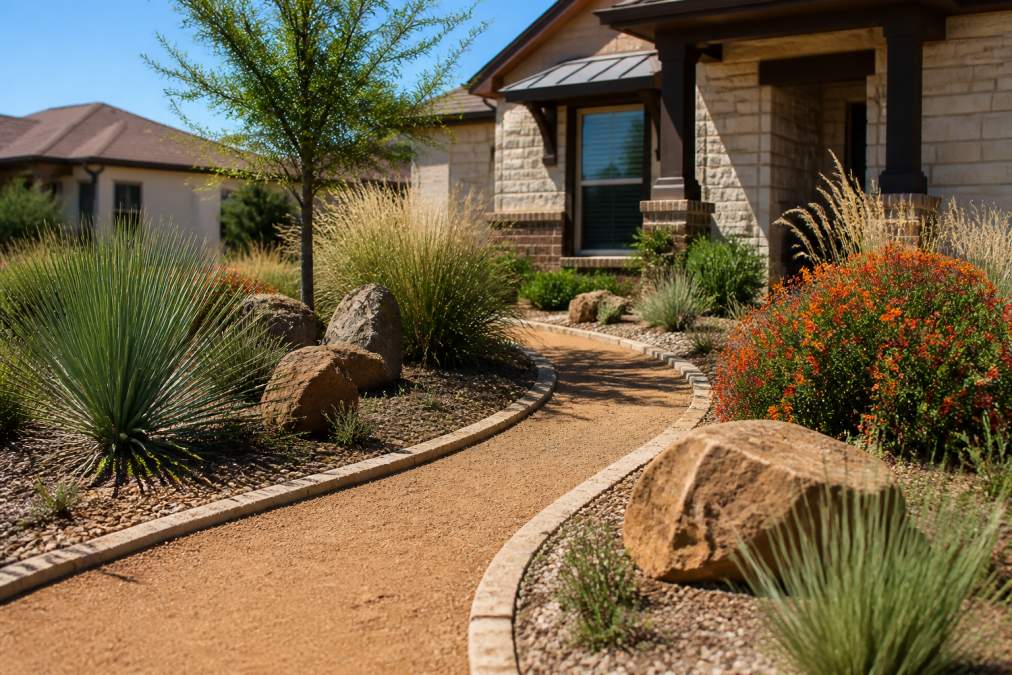
These twelve ideas range from simple weekend projects to full-yard transformations.
1. Replace Turf with Decomposed Granite Pathways
Decomposed granite packs down into a stable, permeable surface that handles foot traffic and directs rainwater into adjacent planting beds. It eliminates the need to water a walkway and creates clean lines that frame your plants. Edge the paths with steel or stone to keep the granite contained during heavy rain.
2. Build a Raised Bed for Native Perennials
Raised beds give you control over soil drainage and composition, which matters when your yard sits on dense clay. Fill them with a sandy loam mix and plant perennials like blackfoot daisy or purple coneflower. The improved drainage prevents root rot during wet spells.
3. Install a Rainwater Harvesting Barrel
A rain barrel connected to your downspout captures runoff from your roof and stores it for dry periods. Use this water for container gardens or newly planted trees during their first year. Position the barrel on a sturdy, level platform and keep a screen over the inlet to block mosquitoes and debris.
4. Use Boulders and River Rock as Focal Points
Large limestone boulders anchor a xeriscape with visual weight and require zero water. Arrange them in clusters of odd numbers, then surround them with river rock or gravel to suppress weeds. This approach is effective on slopes where erosion is a concern.
5. Plant a Pollinator Garden with Native Wildflowers
Native wildflowers like bluebonnet, Indian blanket, and greenthread attract bees and butterflies while surviving on natural rainfall. Sow seeds in the fall for spring blooms, or plant nursery starts for immediate color.
6. Group Plants by Water Needs with Drip Irrigation
Hydrozoning places plants with similar water requirements in the same zone, then delivers water directly to the root zone with drip lines. This prevents overwatering drought-tolerant species and loses far less water to evaporation than overhead sprinklers.
7. Create Shade with a Native Tree Canopy
A mature native tree like Texas red oak or Mexican sycamore cools the surrounding soil, reduces water loss from plants below, and lowers cooling costs by shading walls and windows. Plant in fall or early spring so roots establish before summer heat arrives.
8. Add a Dry Creek Bed for Drainage
A dry creek bed channels stormwater away from your foundation and toward areas where it can soak into the soil. Line the path with landscape fabric, then layer in varying sizes of river rock. This turns a drainage problem into a design element that looks natural even when dry.
9. Incorporate Ornamental Grasses for Texture
Ornamental grasses like Gulf muhly and little bluestem add movement, height, and seasonal color changes. Their fine texture contrasts with broad-leafed shrubs and succulents. Most native grasses need only an annual cutback in late winter, making them one of the lowest-maintenance additions to your yard.
10. Use Mulch to Retain Soil Moisture
A 2 to 3 inch layer of organic mulch, such as shredded cedar or composted leaves, slows evaporation and keeps root zones cooler. Mulch also breaks down over time, adding organic matter that improves the soil's ability to hold water. Replenish the layer once or twice a year as it decomposes.
11. Design a Container Garden for Flexibility
Containers let you move plants to optimize sun exposure or rearrange your patio layout. Use large pots with adequate drainage holes and a potting mix formulated for succulents and drought-tolerant plants. Grouping pots together creates a microclimate that reduces moisture loss.
12. Install Permeable Pavers for Patios
Permeable pavers allow rainwater to infiltrate through the surface and recharge the soil below, rather than running off into storm drains. This reduces the burden on drainage systems and keeps moisture available to nearby plants. Use them for patios, driveways, or walkways where you need a solid, level surface without a concrete slab.
| Idea | Primary Benefit | Water Savings | Maintenance Level |
|---|---|---|---|
| Decomposed granite paths | Defines spaces | Eliminates turf watering | Low |
| Rainwater harvesting barrel | Free irrigation source | Reduces tap water use | Medium |
| Native tree canopy | Shade and cooling | Lowers soil evaporation | Low |
| Dry creek bed | Manages stormwater | Prevents runoff loss | Low once installed |
| Drip irrigation hydrozones | Targeted watering | Cuts evaporation loss | Medium |
Best Drought-Tolerant Plants for Central Texas
Drought-tolerant plants for Central Texas share a few traits: deep root systems, small or waxy leaves that limit moisture loss, and adaptation to alkaline, rocky soils. Esperanza produces bright yellow blooms through the hottest months. Cenizo, also called Texas sage, offers silver foliage and purple flowers that appear after rainfall.
For ground cover, consider horse herb or frog fruit, which spread to form a low, walkable mat that handles light foot traffic. Evergreen shrubs like agarita and yaupon holly provide year-round structure and berries for birds. Native grasses such as sideoats grama add fine texture and support larval host species. Consult the Garden Style San Antonio plant database to filter options by sun exposure, height, and bloom season. A mix of these plants ensures your yard has visual interest in every season without demanding constant irrigation.
Your Seasonal Xeriscape Maintenance Guide
A xeriscape is not a no-maintenance landscape, but the required work shifts from weekly mowing to a few focused tasks each season. This month-by-month calendar keeps your yard healthy through the region's distinct weather patterns.
January
- Prune dormant trees and shrubs. Remove dead or crossing branches from your native trees while they are leafless. This is the ideal time to shape them without stressing the plant.
- Plan your spring projects. Review your garden journal or take photos of your yard to identify bare spots or areas that need more color. Order seeds for spring planting.
- Protect tender plants. Monitor weather forecasts for hard freeze warnings. Cover any cold-sensitive succulents or container plants with frost cloth, or move pots into a garage or under a covered patio.
February
- Finish winter pruning. Complete any remaining tree and shrub pruning before new growth begins.
- Cut back ornamental grasses. Gulf muhly and little bluestem should be cut back to within 4-6 inches of the ground before new green shoots emerge. This clears the way for fresh growth.
- Check irrigation system. Inspect drip lines and emitters for cracks or clogs caused by freezing. Run the system manually to confirm it is working before the growing season begins.
March
- Apply pre-emergent herbicide. To prevent spring and summer weeds, apply a pre-emergent product labeled for use around ornamental plants. Follow label instructions carefully.
- Refresh mulch. Add a fresh 2-3 inch layer of shredded cedar or compost to planting beds. This suppresses weeds and conserves soil moisture as temperatures rise.
- Plant wildflowers. In early March, you can still sow seeds for warm-season wildflowers like Indian blanket, though fall planting is preferred for best germination.
April
- Begin deep watering. As temperatures climb, start your deep, infrequent watering schedule for any plants still in their establishment period. Mature native plants should not need supplemental water yet.
- Inspect for pests. Check new growth for aphids or other insects. A strong blast of water from the hose is often enough to dislodge them.
- Divide perennials. If your blackfoot daisy or other perennials have outgrown their space, divide them now and replant the divisions in other areas.
May
- Monitor rain barrels. Empty and clean rain barrels before the summer storm season begins. Ensure the inlet screens are intact to block mosquitoes.
- Weed after rain. Pull weeds when the soil is moist after a storm. This is far easier than pulling them from dry, hard ground.
- Adjust irrigation timers. If we receive significant rainfall, turn off your drip system to avoid overwatering. Most native plants prefer to dry out between waterings.
June
- Water deeply and infrequently. For new plantings, water deeply once or twice a week, depending on soil type. In heavy clay, water less frequently but for longer durations to encourage deep root growth.
- Raise mower blades. If you maintain any small turf area, raise the mower blade to 3-4 inches. Taller grass shades its own roots and requires less water.
- Add a layer of compost. A thin layer of compost around perennials acts as a slow-release fertilizer and improves soil structure.
July
- Minimize disturbance. Avoid planting or transplanting during the hottest weeks. Focus on watering and weeding only.
- Check for heat stress. Look for signs of heat stress on newly planted trees, such as leaf scorch or wilting. Provide temporary shade cloth if needed.
- Clean dry creek beds. Remove any debris that has accumulated to ensure stormwater can flow freely during summer thunderstorms.
August
- Plan fall plantings. August is the time to plan your fall planting projects. The ideal planting window for trees and shrubs in San Antonio is October through February.
- Order spring-blooming bulbs. While not traditional xeriscape plants, some native bulbs like rain lilies can be ordered now for fall planting.
- Continue deep watering. Newly planted trees need consistent deep watering during their first two summers. Use a soaker hose placed at the drip line.
September
- Prepare for fall planting. Begin soil preparation for new beds. Amend with compost and let the soil rest before planting.
- Sow wildflower seeds. Late September through October is the ideal time to sow bluebonnet and other native wildflower seeds for spring blooms.
- Inspect irrigation. Flush drip lines and check emitters for clogs before the fall planting season begins.
October
- Plant trees and shrubs. This is the best time to plant native trees and shrubs. The cooler temperatures and increased rainfall allow roots to establish before summer.
- Divide and transplant. Move any perennials that need relocating. The cooler weather reduces transplant shock.
- Drain rain barrels. Before the first freeze, drain and store rain barrels to prevent ice damage.
November
- Plant wildflower seeds. Finish sowing wildflower seeds early in the month. They need the winter cold to stratify and germinate in spring.
- Apply winter mulch. Add a thicker layer of mulch around tender perennials to protect roots from freezing temperatures.
- Clean up fallen leaves. Remove leaves from dry creek beds and pathways to prevent them from becoming slippery and to keep drainage paths clear.
December
- Prune evergreens lightly. Shape evergreen shrubs like agarita or yaupon holly, but avoid heavy pruning that could stimulate new growth before a freeze.
- Protect from hard freezes. Cover tender succulents and container plants during hard freeze warnings. Move pots to a sheltered location.
- Review and plan. Use the quiet season to review what worked and what didn't. Sketch out next year's expansion plans and budget for new plants or hardscaping.
Common Mistakes to Avoid When Converting Your Yard
The biggest mistake is removing all plants and covering the ground with gravel, which creates a heat sink that bakes nearby walls and offers no habitat. A functional xeriscape layers ground covers, shrubs, and trees to shade the soil. Another frequent error is installing drip irrigation on the same schedule as a lawn system.
Skipping soil preparation dooms many projects. Compacted clay repels water rather than absorbing it, so amend planting holes with compost and consider aeration before installing beds. Also avoid mixing plants with conflicting water needs in the same hydrozone. Finally, check your HOA covenants before starting; many associations require a design review, and the City of San Antonio water restriction guidelines may affect when you can establish new plantings. Working with a professional who understands local regulations prevents costly rework.
Conclusion: Start Your Low Water Xeriscaping Project
Converting your yard to low water xeriscaping is a significant project, but the payoff arrives every month on your water bill and every summer when your landscape stays green. Start with a single bed or a small pathway, then expand as you learn what thrives in your specific soil and sun exposure. Lawnscapingsa.com offers landscape design and installation services tailored to the unique environmental needs of Texas properties, with 18 years of experience creating customized outdoor spaces from low-water xeriscaping to vibrant native gardens. Contact us to schedule a design consultation and get a personalized plan that balances your aesthetic goals with practical, sustainable solutions.
Frequently Asked Questions
What is the cheapest way to xeriscape a yard?
The most budget-friendly approach is to start small and phase the work. Begin by replacing the most water-hungry turf areas with mulch and drought-tolerant plants. Use free or low-cost materials like local wood chips instead of imported stone. Focus on establishing native plants first, as they need less water and care once rooted. Many San Antonio homeowners reduce costs by doing the design themselves and hiring professionals only for complex tasks like irrigation changes.
Which native plants are best for xeriscaping in San Antonio?
For Central Texas, choose plants that handle heat and poor soil. Cenizo, or Texas Sage, offers silver foliage and purple blooms after rain. Esperanza produces bright yellow flowers all summer. Other strong choices include blackfoot daisy, autumn sage, and Gulf muhly grass. These low water xeriscaping plants thrive with minimal irrigation and attract local pollinators. Group them by water needs to maximize efficiency.
How does xeriscaping help with local water conservation efforts?
San Antonio faces periodic drought restrictions, making outdoor water use a primary concern. Xeriscaping reduces outdoor water consumption compared to traditional turf lawns. By using native plants, improving soil with mulch, and installing efficient drip irrigation, you lower demand on the municipal supply. This approach supports regional conservation goals while keeping your landscape healthy during heat waves.
Can xeriscaping be aesthetically pleasing in a residential setting?
Yes. Modern low water xeriscaping designs focus on texture, color, and structure, not just rocks and cactus. Mix ornamental grasses, evergreen shrubs like cenizo, and colorful perennials such as esperanza. Add hardscape elements like flagstone paths or boulder groupings for visual interest. A well-planned xeriscape can boost curb appeal and property value while requiring far less water than a lawn.
This article was written using GrandRanker
Frequently Asked Questions
Q: What is the cheapest way to xeriscape a yard?
A: The most budget-friendly approach is to start small and phase the work. Begin by replacing the most water-hungry turf areas with mulch and drought-tolerant plants. Use free or low-cost materials like local wood chips instead of imported stone. Focus on establishing native plants first, as they need less water and care once rooted. Many San Antonio homeowners reduce costs by doing the design themselves and hiring professionals only for complex tasks like irrigation changes.
Q: Which native plants are best for xeriscaping in San Antonio?
A: For Central Texas, choose plants that handle heat and poor soil. Cenizo, or Texas Sage, offers silver foliage and purple blooms after rain. Esperanza produces bright yellow flowers all summer. Other strong choices include blackfoot daisy, autumn sage, and Gulf muhly grass. These low water xeriscaping plants thrive with minimal irrigation and attract local pollinators. Group them by water needs to maximize efficiency.
Q: How does xeriscaping help with local water conservation efforts?
A: San Antonio faces periodic drought restrictions, making outdoor water use a primary concern. Xeriscaping reduces outdoor water consumption compared to traditional turf lawns. By using native plants, improving soil with mulch, and installing efficient drip irrigation, you lower demand on the municipal supply. This approach supports regional conservation goals while keeping your landscape healthy during heat waves.
Q: Can xeriscaping be aesthetically pleasing in a residential setting?
A: Yes. Modern low water xeriscaping designs focus on texture, color, and structure, not just rocks and cactus. Mix ornamental grasses, evergreen shrubs like cenizo, and colorful perennials such as esperanza. Add hardscape elements like flagstone paths or boulder groupings for visual interest. A well-planned xeriscape can boost curb appeal and property value while requiring far less water than a lawn.