 how-to
How to Fix Backyard Drainage Issues: 7 Solutions
Table of Contents
- Signs of Yard Drainage Problems You Shouldn't Ignore
- What You'll Need Before Fixing Backyard Drainage
- How to Regrade a Yard for Drainage
- Installing a French Drain and French Drain Installation Cost
- More Backyard Drainage Fixes: Swales, Dry Creek Beds, and Rain Gardens
- Downspout Extensions, Gutter Maintenance, and Permeable Pavers
- Permits, Local Regulations, and Maintenance Schedules
- Common Mistakes to Avoid When Fixing Backyard Drainage
- Frequently Asked Questions
Signs of Yard Drainage Problems You Shouldn't Ignore
Backyard drainage problems accumulate quietly until repairs become expensive. Knowing what to look for is the first step toward solving how to fix backyard drainage issues.
Standing Water and Soil Saturation
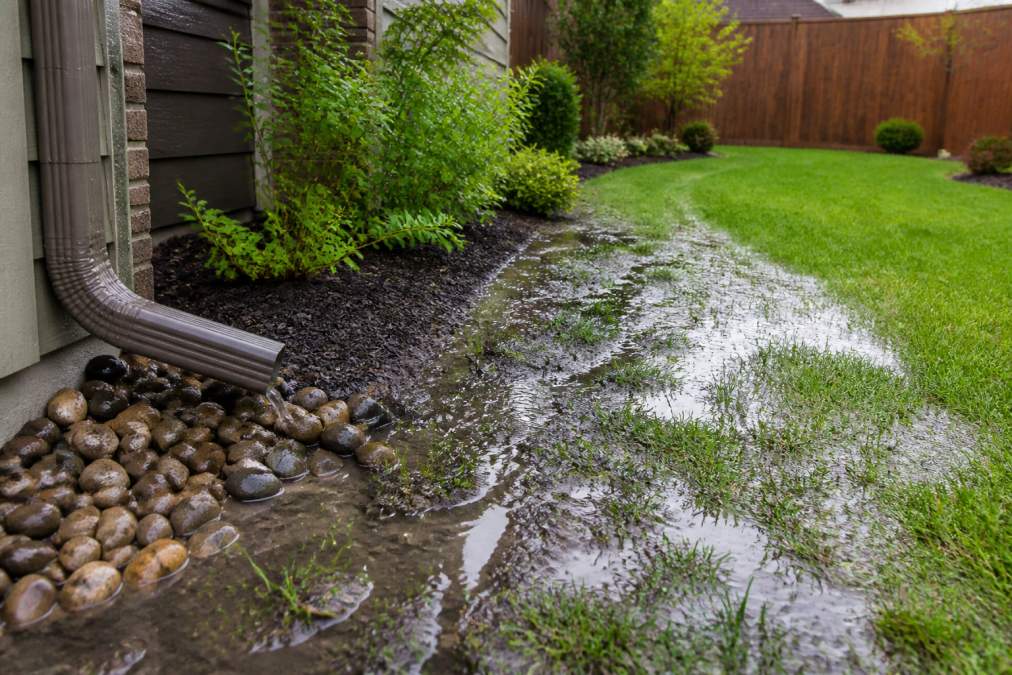
Standing water pooling on your lawn for more than 24 hours after rain indicates the soil's percolation rate can't keep up with runoff. This is especially common in clay-heavy soils, which are widespread across Texas and resist water infiltration.
Press your foot into the lawn a day after rain. If it sinks noticeably or feels spongy, subsurface drainage is compromised. Prolonged saturation suffocates grass roots, invites fungal disease, and creates ideal conditions for mosquito breeding.
Erosion, Compaction, and Foundation Concerns
Erosion shows up as bare patches, exposed tree roots, or channels carved into your lawn where water repeatedly runs the same path. The most serious concern is hydrostatic pressure against your foundation. When water consistently pools near your home's perimeter, it pushes against foundation walls. According to the University of Minnesota Extension on drainage and foundations, water-related foundation damage is one of the most preventable and costly home repair categories. Cracks in basement walls, sticking doors, or efflorescence on concrete all signal that drainage is affecting your structure.
What You'll Need Before Fixing Backyard Drainage
Before touching a shovel, gather these essentials:
- A slope assessment tool (a long level and tape measure work fine)
- A site sketch showing where water enters, pools, and exits your property
- Photos taken during and after a rain event
- Your local municipality's stormwater rules
- Knowledge of your soil type, clay, loam, or sandy, which determines which solutions will work
Understanding the problem source matters more than the fix itself. Water pooling near your foundation may need regrading. Water collecting in a low corner may need a French drain or dry well. Surface runoff from a neighbor's property may need a swale.
How to Regrade a Yard for Drainage
Regrading is the foundational fix for backyard drainage. The goal is simple: the ground should slope away from your home at a consistent grade so gravity moves water where you want it.
Checking Your Slope and Grading Baseline
A proper grading baseline requires the ground to fall at least 6 inches over the first 10 feet from your foundation, according to the International Residential Code grading standards. To check your slope: drive a stake near your foundation and another 10 feet out. Run a string line between them and use a line level to make it perfectly horizontal. Measure the vertical drop at the outer stake. Less than 6 inches means you need to regrade.
Adding Topsoil and Adjusting Surface Runoff Direction
For minor adjustments, adding topsoil and grading by hand or with a lawn roller is effective. Use a mix of topsoil and compost rather than pure fill dirt, which compacts too aggressively. Work in lifts of no more than 2 inches at a time, tamping each layer before adding the next. Avoid covering grass crowns by more than an inch in a single session, or you'll suffocate the turf. For significant grade changes of more than 6 inches, professional equipment and a licensed contractor are worth the cost.
Installing a French Drain and French Drain Installation Cost
A French drain is a subsurface drainage system that intercepts groundwater or surface runoff and redirects it away from problem areas. It consists of a gravel-filled trench containing a perforated drainage pipe, wrapped in geotextile fabric to prevent soil infiltration. French drains are one of the most reliable solutions for persistent wet zones, clay soil conditions, and areas where regrading alone isn't sufficient.

Step-by-Step French Drain Installation
- Mark the drain path from the problem area to a suitable outlet (street, storm drain, dry well, or low point on property)
- Dig the trench, typically 12 to 24 inches deep and 6 inches wide, sloping at least 1% (1 inch per 8 feet) toward the outlet
- Line the trench with geotextile fabric, leaving excess on both sides to fold over later
- Add a 2-inch gravel aggregate base at the bottom
- Lay the perforated pipe with holes facing down on top of the gravel bed
- Cover the pipe with additional gravel to within 3 inches of the surface
- Fold the geotextile fabric over the top of the gravel to seal out fine soil particles
- Backfill with topsoil and restore turf or landscape cover
DIY vs. Professional Installation: Cost-Benefit Breakdown
French drain installation is within reach for a capable DIYer on a simple, straight run. It becomes a professional job with long runs, hard clay requiring a trenching machine, or proximity to utilities and structures.
| Factor | DIY | Professional |
|---|---|---|
| Typical scope | Short runs, accessible soil | Complex layouts, clay soil |
| Equipment needed | Shovel, level, fabric, pipe, gravel | Trenching machine, grade laser |
| Permit handling | Owner responsibility | Usually managed by contractor |
| Risk of error | Incorrect slope, fabric gaps | Lower, experienced crew |
| Timeline | Weekend project | 1-2 days for most installs |
Pricing varies based on trench length, soil conditions, and region. Contact Lawnscapingsa.com for a project-specific assessment rather than relying on generic estimates.
More Backyard Drainage Fixes: Swales, Dry Creek Beds, and Rain Gardens
Not every drainage problem needs a buried pipe. Surface drainage solutions are often more cost-effective, more sustainable, and better-looking than underground systems.
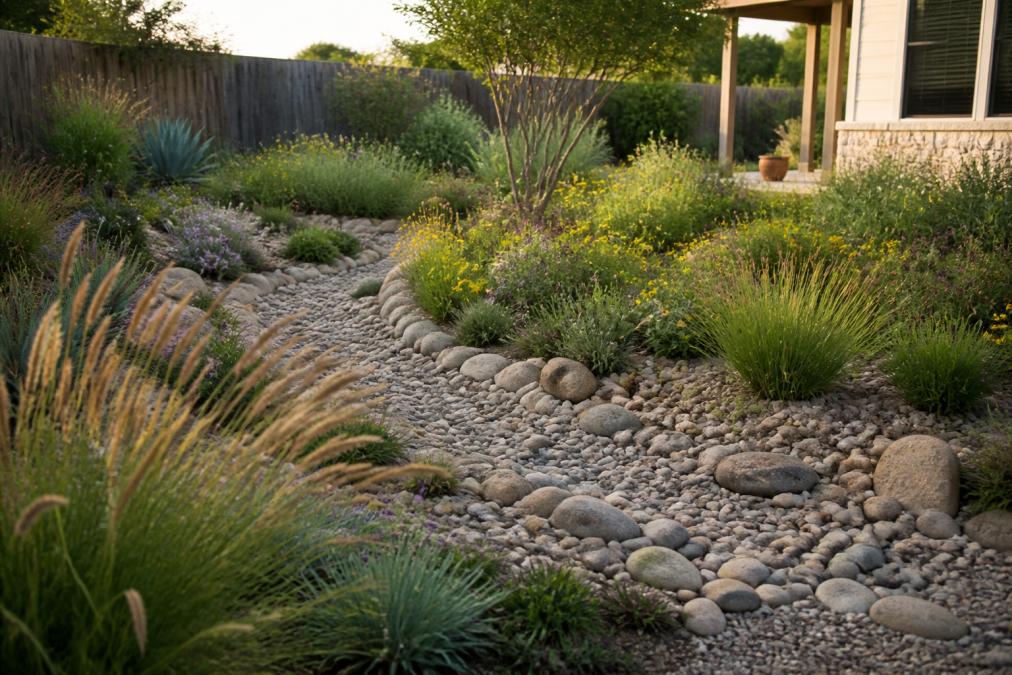
A swale is a shallow, vegetated channel that guides surface runoff across a landscape without concentrating it into erosive flows. A dry creek bed uses rounded river rock and native plantings to mimic a natural streambed. Rain gardens are shallow, planted depressions designed to capture and infiltrate runoff from roofs, driveways, and lawns. According to the EPA's guide on rain gardens and stormwater management, a properly designed rain garden can absorb 30 to 40 percent more water than a conventional lawn area of the same size.
Dry Wells and Catch Basins for Subsurface Drainage
A dry well is an underground chamber, typically made of perforated concrete or plastic, that collects water and allows it to slowly percolate into surrounding soil. A catch basin is a surface-level inlet grate connected to underground drainage pipe that captures standing water from low points and channels it away.
Plant Selection for Clay Soil and Drainage Zones
Plants chosen for wet zones and drainage features matter enormously. In Texas, getting this wrong means replacing dead plants after every wet season. For clay soil and consistently moist drainage zones, prioritize Gulf muhly grass, Texas sedge, Turk's cap, inland sea oats, and black-eyed Susan. Avoid plants that require sharp drainage in wet zones.
Downspout Extensions, Gutter Maintenance, and Permeable Pavers
The most overlooked source of backyard drainage problems isn't the yard at all. It's the roof. Gutters that are clogged or pitched incorrectly dump water directly against your foundation. Downspouts that terminate 6 inches from your house concentrate roof runoff into a single saturated zone. Before spending anything on yard drainage, walk your gutters after a rain and confirm water is actually moving through them and discharging well away from the structure.
Downspout extensions are the cheapest drainage fix available. A rigid or flexible extension that carries water at least 6 to 10 feet from the foundation costs very little and eliminates a major source of soil saturation near the house. Permeable pavers address hardscape runoff by allowing water to pass through joints and into a gravel aggregate base below, where it percolates into the soil.
Permits, Local Regulations, and Maintenance Schedules
Many municipalities require permits for grading that moves more than a certain volume of soil, for drainage systems that discharge to the street or storm sewer, and for structures like dry wells and catch basins. Before starting any significant drainage project, contact your local building department or public works office. You cannot legally direct water onto a neighbor's property.
For maintenance, drainage systems need regular attention:
- Gutters and downspouts: Clean twice yearly, inspect after major storms
- French drains: Flush with a garden hose annually; watch for surface settling
- Catch basins: Clear debris from grates after every significant rain event
- Rain gardens: Remove invasive plants seasonally; top-dress with compost annually
- Swales and dry creek beds: Check for erosion after heavy rain; reposition displaced rock as needed
Common Mistakes to Avoid When Fixing Backyard Drainage
Most drainage projects fail not because the solution was wrong, but because execution missed something fundamental.
Fixing symptoms instead of causes. Adding a catch basin to a low spot that floods because the grade slopes toward the house treats the symptom. Until the grade is corrected, you're managing a problem you could eliminate.
Installing French drains without adequate slope. A perforated pipe that doesn't slope consistently toward its outlet becomes a water storage vessel, not a drainage system. The minimum slope is 1%, 1 inch of drop for every 8 feet of run.
Skipping geotextile fabric. Gravel aggregate without fabric silts in within a few seasons in clay soil.
Discharging water to a neighbor's property. Beyond the legal issue, this creates an adversarial situation that complicates future property transactions.
Planting the wrong species in drainage zones. A beautiful plant that can't handle periodic inundation becomes a dead plant.
Ignoring the roof-to-yard connection. Solving yard drainage while leaving gutters clogged or downspouts discharging at the foundation is like bailing a boat without plugging the leak.
| Common Drainage Problem | Best Solution | Maintenance Frequency |
|---|---|---|
| Water pooling near foundation | Regrading + downspout extensions | Annual grade check |
| Persistent wet zone in lawn | French drain | Annual flush |
| Runoff from hardscape | Permeable pavers or swale | Seasonal inspection |
| Low corner with no outlet | Dry well or catch basin | After each major storm |
| Roof runoff concentration | Rain garden + downspout extension | Seasonal planting care |
| Erosion along slope | Dry creek bed with native plants | Post-storm rock check |
Persistent backyard drainage problems don't resolve on their own, and the longer they go unaddressed, the more damage accumulates in soil, turf, and structure. Lawnscapingsa.com brings 16 years of experience diagnosing and solving drainage challenges on Texas properties, with a particular focus on solutions that work within the realities of clay soil, intense rain events, and the dry-wet cycles that define this region. From regrading and French drain installation to rain gardens built with native plants suited to your specific site, every project starts with an honest assessment of what's actually causing the problem. Contact us to schedule a consultation and get a drainage plan built around your yard, not a generic template.
Frequently Asked Questions
Q: What are the signs of poor yard drainage?
A: The clearest signs include standing water that lingers for 24 hours or more after rain, soggy or spongy patches of lawn, visible erosion channels where surface runoff has carved paths through topsoil, moss or algae growth in low spots, and soil pulling away from your home's foundation. Basement dampness and hydrostatic pressure cracks in foundation walls are also strong indicators that subsurface drainage is failing around your property.
Q: Can I fix backyard drainage issues myself?
A: Many homeowners can handle simpler fixes, adding downspout extensions, aerating compacted soil, or installing a short swale. French drain installation and regrading are more involved: they require accurate slope measurement, proper trench depth, geotextile fabric placement, and gravel aggregate selection. Errors in grading or pipe placement often make drainage worse. For persistent standing water, clay soil conditions, or drainage that threatens your foundation, a professional assessment is worth the cost before you dig.
Q: How much does it cost to fix backyard drainage?
A: Costs vary widely based on the solution and yard size. Simple fixes like downspout extensions or soil aeration are low-cost DIY tasks. French drain installation cost depends on trench length, pipe diameter, and whether you hire a contractor, longer runs and difficult soil conditions raise the price significantly. Regrading a yard involves equipment rental or labor that adds up quickly. For an accurate estimate tailored to your specific drainage problems and property layout, request a professional consultation.
Q: How do I fix a waterlogged backyard?
A: Start by identifying where water is entering and pooling. Check your yard's slope, water should drain away from structures at roughly a 2% grade. Aerate compacted areas to improve percolation. For persistent waterlogging, a French drain or dry well can capture and redirect subsurface drainage. In clay soil conditions, amending with organic material improves absorption. A rain garden planted with moisture-tolerant native species can also absorb significant runoff in low-lying areas without requiring major excavation.
This article was written using GrandRanker
Frequently Asked Questions
Q: What are the signs of poor yard drainage?
A: The clearest signs include standing water that lingers for 24 hours or more after rain, soggy or spongy patches of lawn, visible erosion channels where surface runoff has carved paths through topsoil, moss or algae growth in low spots, and soil pulling away from your home's foundation. Basement dampness and hydrostatic pressure cracks in foundation walls are also strong indicators that subsurface drainage is failing around your property.
Q: Can I fix backyard drainage issues myself?
A: Many homeowners can handle simpler fixes—adding downspout extensions, aerating compacted soil, or installing a short swale. French drain installation and regrading are more involved: they require accurate slope measurement, proper trench depth, geotextile fabric placement, and gravel aggregate selection. Errors in grading or pipe placement often make drainage worse. For persistent standing water, clay soil conditions, or drainage that threatens your foundation, a professional assessment is worth the cost before you dig.
Q: How much does it cost to fix backyard drainage?
A: Costs vary widely based on the solution and yard size. Simple fixes like downspout extensions or soil aeration are low-cost DIY tasks. French drain installation cost depends on trench length, pipe diameter, and whether you hire a contractor—longer runs and difficult soil conditions raise the price significantly. Regrading a yard involves equipment rental or labor that adds up quickly. For an accurate estimate tailored to your specific drainage problems and property layout, request a professional consultation.
Q: How do I fix a waterlogged backyard?
A: Start by identifying where water is entering and pooling. Check your yard's slope—water should drain away from structures at roughly a 2% grade. Aerate compacted areas to improve percolation. For persistent waterlogging, a French drain or dry well can capture and redirect subsurface drainage. In clay soil conditions, amending with organic material improves absorption. A rain garden planted with moisture-tolerant native species can also absorb significant runoff in low-lying areas without requiring major excavation.