 listicle
Benefits of Xeriscaping in Texas Heat: 2026 Guide
Table of Contents
- Why Xeriscaping Outperforms Traditional Lawns in Extreme Heat
- Water Conservation Benefits: Slash Outdoor Water Usage
- Drought Resistant Landscaping Tips for Texas Summers
- Xeriscaping Design Principles: From Soil Prep to Hardscaping
- Native Plants for Landscaping: The Backbone of a Heat-Proof Yard
- HOA and Legal Compliance: Navigating Xeriscaping Rules
- Step-by-Step Conversion Costs: Budgeting Your Xeriscape
- Seasonal Maintenance Calendar for a Thriving Xeriscape
- Frequently Asked Questions
Last Updated: September 28, 2026
Why Xeriscaping Outperforms Traditional Lawns in Extreme Heat
The benefits of xeriscaping in Texas heat start with a simple reality: conventional turfgrass was never built for months of triple-digit temperatures and Stage 2 water restrictions. Xeriscaping is a landscaping method that uses drought-tolerant plants, efficient irrigation, and soil-focused design to create a yard that survives extreme heat without constant watering. At Lawnscapingsa.com, we've spent 18 years watching traditional lawns burn out by August while water-wise landscapes hold their color.
The core problem is evapotranspiration, the combined loss of water from soil and plant leaves. In extreme heat, that loss accelerates, and a thirsty lawn pulls hundreds of gallons a week just to stay green. Xeriscaping flips the equation by putting plants in place that evolved for this climate. The result is a landscape that looks intentional, not abandoned.
Here's what most guides get wrong: they treat xeriscaping as a subtraction, as if removing grass is the whole job. It isn't. It's a redesign built around water conservation, soil health, and native plants. Below, we break down the real advantages, the compliance rules, and the costs nobody mentions.
Water Conservation Benefits: Slash Outdoor Water Usage
Water conservation is the headline benefit, and it's the one that shows up on your bill. A well-designed xeriscape can cut outdoor water usage dramatically compared to a traditional lawn, because it replaces high-demand turf with drought-resistant plants and drip irrigation.
The mechanics matter. Traditional sprinkler systems spray water into the air, where heat and wind steal a large share before it ever reaches roots. Drip irrigation delivers water directly to the root zone, so far less is lost to evaporation. Pair that with mulching techniques that hold soil moisture, and the same plant gets by on a fraction of the water.
- Drip irrigation targets roots instead of spraying into the air
- Mulch layers slow evaporation and cool the soil surface
- Native plants need little supplemental water once established
- Permeable surfaces let rainfall soak in rather than run off
Runoff reduction is the quiet bonus. When rain finally arrives, a xeriscaped yard absorbs it instead of channeling it into the street. That's water conservation working twice.
Drought Resistant Landscaping Tips for Texas Summers
Drought resistant landscaping tips for Texas summers come down to three moves: plant for the climate, water deeply but rarely, and protect the soil. None of these require exotic equipment, but each one separates a yard that survives July from one that doesn't.
Start with timing. Water early in the morning, before the heat peaks, so moisture reaches the roots instead of evaporating off the surface. Water deeply and less often to push roots downward, where soil stays cooler and holds moisture longer.
Then think about what covers the ground. Bare soil bakes and cracks; mulched soil stays workable and alive. A generous mulch layer does more for drought resistance than almost any gadget you can buy.
Finally, group plants by water need. Putting thirstier species next to desert-adapted ones forces you to overwater one to save the other. Zoning by water requirement is one of the xeriscaping design principles that pays off every single month.
Xeriscaping Design Principles: From Soil Prep to Hardscaping
Xeriscaping design principles begin with soil, not plants. Healthy soil holds moisture, feeds roots, and buffers temperature swings, which is why soil prep comes before any planting decision. Skip it, and even the toughest plants underperform.
The seven traditional principles are planning and design, soil improvement, limited turf, appropriate plant selection, efficient irrigation, mulching, and maintenance. In practice, that means analyzing your site first: sun exposure, drainage, slope, and soil type. A yard that floods after heavy rain needs drainage addressed before a single plant goes in.
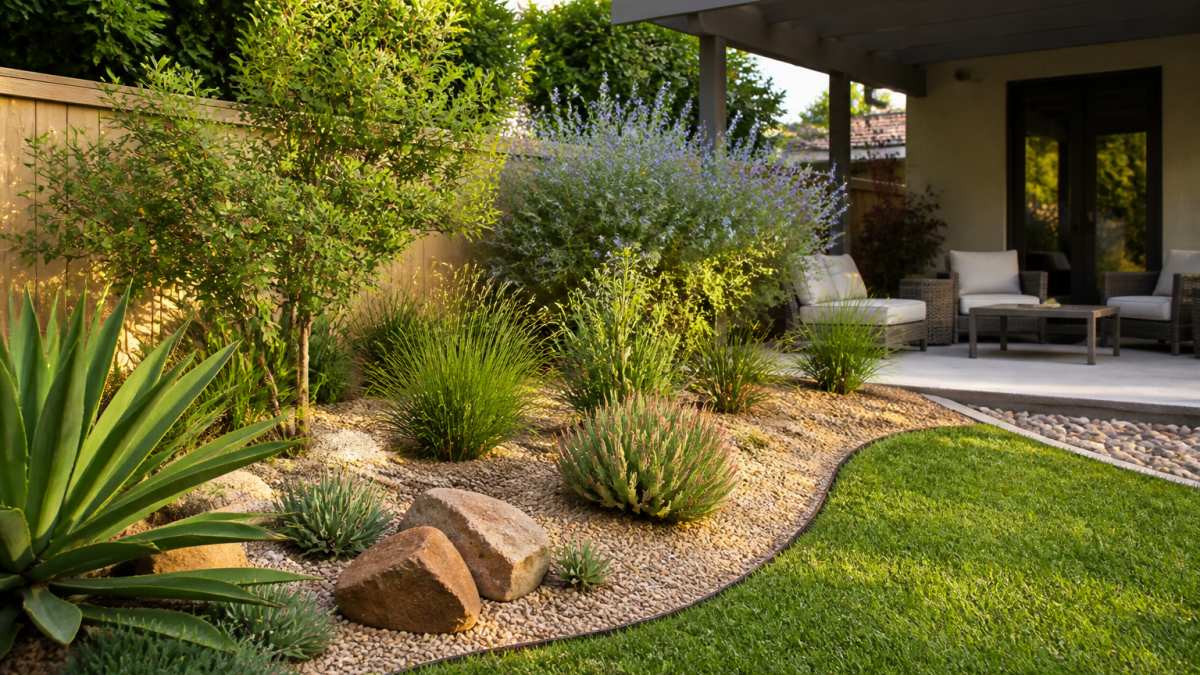
Hardscaping carries much of the design weight. Flagstone paths, paver patios, and gravel beds reduce planted area that needs water while adding structure and curb appeal. Permeable surfaces let water pass through instead of pooling, which helps both drainage and runoff reduction.
- Soil prep: amend compacted ground, improve drainage, test before planting
- Limited turf: keep grass only where it earns its place
- Hardscaping: flagstone, pavers, and gravel define spaces and cut water demand
- Mulching: lock in moisture and suppress weeds
Good design is what keeps a xeriscape from looking like a gravel lot. Structure, color, and texture do the work that a green lawn used to.
Native Plants for Landscaping: The Backbone of a Heat-Proof Yard
Native plants for landscaping are the backbone of any heat-proof yard because they evolved here. They tolerate the local soil, the swing between drought and downpour, and the summer heat without coddling. That's the difference between a landscape that merely survives and one that thrives.
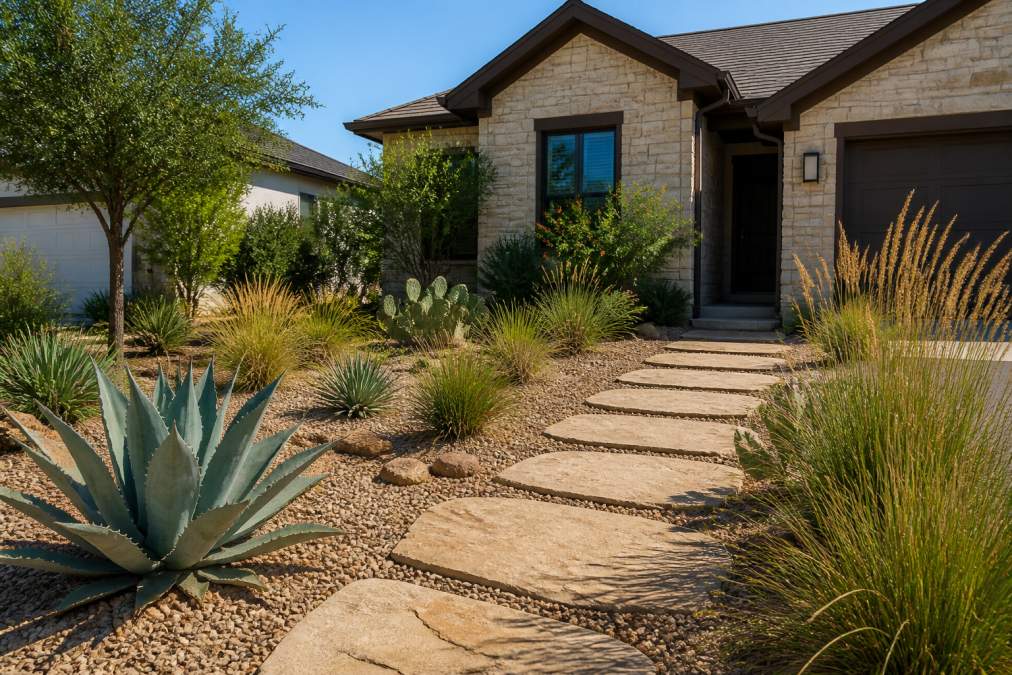
Biodiversity is the payoff beyond water savings. Native plantings feed pollinators and birds, and a diverse yard resists pests better than a monoculture lawn. For homeowners who want low-maintenance, this is where the promise actually delivers.
HOA and Legal Compliance: Navigating Xeriscaping Rules
The practical path:
- Request your HOA covenants in writing and read the landscaping and architectural-control sections line by line. Ask for the architectural review committee's written design guidelines, not just the CC&Rs.
- Submit a design plan for approval before installation, not after. Include a plant list with botanical names, a site plan showing turf percentage, and irrigation details.
- Document water-saving intent by citing the drought-tolerant nature of each species and the irrigation method (drip, not spray).
- Cite the applicable statute if the association pushes back. Texas Property Code Chapter 202 gives you a specific hook; a polite letter referencing it often resolves the issue without a lawyer.
- Keep records of every approval, email, and committee meeting note. If a dispute escalates, the paper trail is your case.
If your association's guidelines are silent on drought-tolerant landscaping, that silence usually works in your favor, but you still need the committee's sign-off on the design itself. When in doubt, submit the plan and let them respond in writing.
Step-by-Step Conversion Costs: Budgeting Your Xeriscape
Conversion costs depend on scope, site conditions, and how much you do yourself, so any honest budget starts with a range rather than a single number. What most articles skip is the second half of the equation: what you stop paying for after the conversion. That is where xeriscaping earns its reputation.
| Step | What Happens | What Drives Cost |
|---|---|---|
| 1. Site analysis and design | Sun, slope, drainage, soil test | Yard size, drainage complexity, whether grading is needed |
| 2. Turf and plant removal | Strip existing lawn, remove root mass | Square footage, whether removal is by hand or machine |
| 3. Soil prep and amendment | Break up compaction, add organic matter, fix drainage | Current soil condition; compacted clay costs more |
| 4. Hardscaping | Flagstone, pavers, gravel beds, paths | Largest single line item; material choice swings the total |
| 5. Plant installation | Native and adapted species, sized at install | Larger specimens cost more; quantity scales with area |
| 6. Irrigation conversion | Cap spray heads, run drip zones, add a smart controller | Whether you retrofit an existing system or build new |
| 7. Mulch and finish | 3-4 inch organic mulch layer, edging, cleanup | Area covered, mulch type |
Seasonal Maintenance Calendar for a Thriving Xeriscape
Maintenance for a xeriscape is lighter than a lawn, but it isn't zero. The calendar below keeps a water-wise yard healthy across the year without turning weekends into chores.
| Season | Key Tasks | Frequency |
|---|---|---|
| Spring | Refresh mulch, check drip lines, plant warm-season natives | Once, plus spot checks |
| Summer | Deep-water new plants, inspect for heat stress | Weekly for new plantings |
| Fall | Plant perennials, reduce irrigation, clear debris | Once, plus as needed |
| Winter | Prune dormant plants, plan spring projects | Monthly |
Frequently Asked Questions
What are the disadvantages of xeriscaping?
Xeriscaping can have higher upfront costs than maintaining a traditional lawn, especially if you need professional design or hardscaping. Some homeowners also miss the look of lush green grass, though native plants and decorative elements can fill that gap. Maintenance isn't zero; you'll still need occasional pruning and weeding. In Texas, poorly planned xeriscapes that rely too heavily on gravel can contribute to urban heat island effects. Working with a designer who understands xeriscaping design principles helps avoid these pitfalls.
What is the best plant for Texas heat?
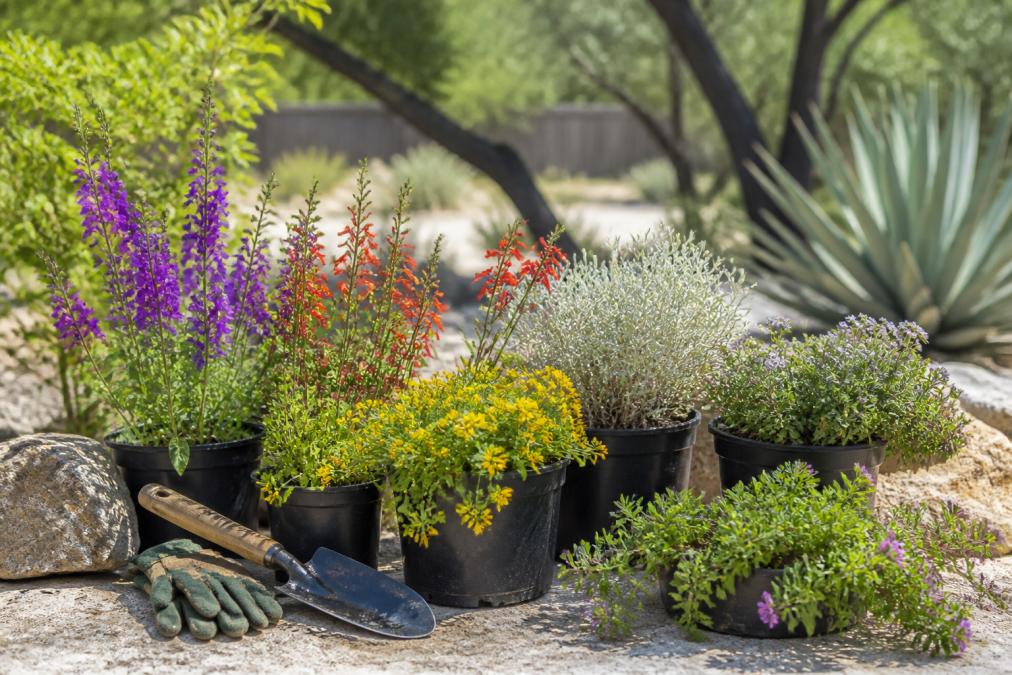
Native plants like blackfoot daisy, Texas sage, and red yucca thrive in high heat and require minimal water once established. Succulents such as agave and prickly pear also perform well. For grasses, consider little bluestem or muhly grass. These plants are adapted to local soil and climate, making them ideal for drought resistant landscaping tips. Always match the plant to your specific sun exposure and soil type, and group plants with similar water needs together for efficient irrigation.
Does xeriscaping lower property value?
No, a well-designed xeriscape can increase property value by improving curb appeal and reducing water bills. In Texas, where water restrictions are common, buyers appreciate low-maintenance, water-wise landscapes. Professionally designed xeriscapes that include attractive hardscaping and native plants can boost resale value. Poorly executed rock-only yards may deter buyers, so investing in quality design matters.
How does xeriscaping help with water conservation?
Xeriscaping reduces outdoor water usage compared to traditional lawns. It uses drought-resistant plants, efficient drip irrigation, and mulching to retain soil moisture. In Texas heat, this means less evaporation and runoff. By choosing native plants and grouping them by water needs, you can water deeply but infrequently.