 listicle
Low Maintenance Backyard Design Ideas for 2026
Table of Contents
- Low Maintenance Backyard Design Ideas That Cut Weekend Chores
- Start With a Maintenance Audit
- Plan Zones Before You Plant Anything
- Drought Tolerant Landscaping: The Core of a Low-Water Yard
- Native Plant Garden Benefits: Less Water, Less Work, More Life
- Hardscape vs Softscape Balance: Where the Real Labor Savings Come From
- Automated Irrigation and Smart Watering
- Mulch, Ground Cover, and Weed Suppression
- Small Space and Vertical Gardening Solutions
- Climate-Specific Maintenance Calendars and Long-Term Savings
- Bringing It All Together
- Frequently Asked Questions
Last Updated: September 27, 2026
Low Maintenance Backyard Design Ideas That Cut Weekend Chores
Most homeowners spend their weekends mowing, weeding, and dragging hoses around a yard that never quite looks finished. The fix isn't working harder. It's designing a space that does most of the work for you.
Low maintenance backyard design ideas start with one principle: fewer moving parts, better materials, and plants that belong where you put them. At Lawnscapingsa.com, we design yards that hold their shape through heat, drought, and heavy rain with far less hands-on effort.
Below, we'll walk through the design decisions that actually reduce labor, from zoning your space to choosing drought tolerant landscaping that thrives on its own.
Start With a Maintenance Audit
Before buying a single plant, walk your yard and write down every recurring chore. Mowing, edging, watering, weeding, pruning, and pest control all show up on that list.
A maintenance audit is a simple walkthrough where you note which areas demand the most time and why. Most homeowners find that two or three problem zones cause the bulk of their work. A strip of thirsty grass along a fence line, a bed that never stops sprouting weeds, or a low spot that floods after every storm.
Once you know the culprits, you can redesign around them instead of fighting them every season.
Plan Zones Before You Plant Anything
Dividing your yard into zones before you buy plants prevents costly mistakes later. Think of each zone by how you'll use it: dining, lounging, play, or pure visual interest.
- Active zone: patio or deck for seating and grilling
- Transition zone: pathways and ground cover that connect spaces
- Low-traffic zone: native plantings and mulch beds that need little attention
- Utility zone: irrigation controls, storage, and drainage
Zoning keeps high-maintenance elements clustered where you can reach them easily, and pushes low-effort plantings to the edges. It also makes irrigation design simpler, since you can group plants with similar water needs together.
Drought Tolerant Landscaping: The Core of a Low-Water Yard
Drought tolerant landscaping is the practice of selecting plants and materials that survive on natural rainfall and minimal supplemental watering. It's the single biggest lever for cutting both your water bill and your weekly chores.
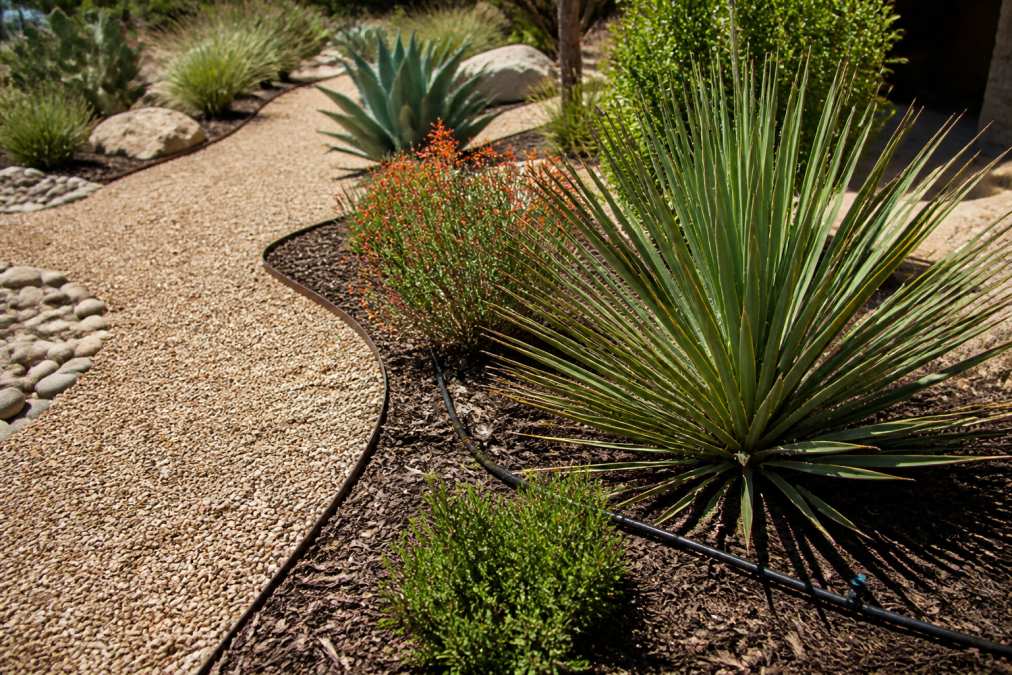
The U.S. Environmental Protection Agency's WaterSense program notes that outdoor watering can account for a large share of household water use, which is why plant selection matters so much. Choose species adapted to your region's rainfall and soil, and you'll water far less once they're established.
Xeriscaping Without the Desert Look
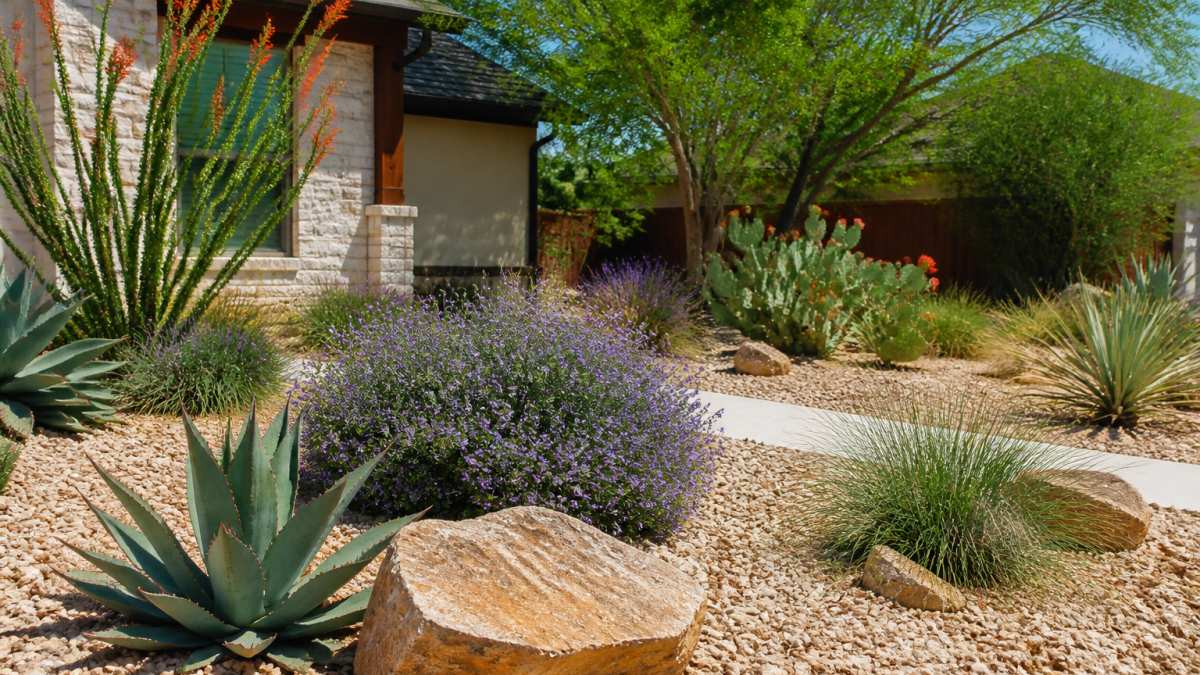
Xeriscaping is a landscaping method that reduces or eliminates supplemental irrigation through plant choice, soil improvement, and efficient watering. The word often conjures images of gravel and a few lonely cacti. That's a design failure, not a requirement.
Layered plantings, colorful perennials, ornamental grasses, and stone pathways can create a lush look with almost no irrigation.
Native Plant Garden Benefits: Less Water, Less Work, More Life
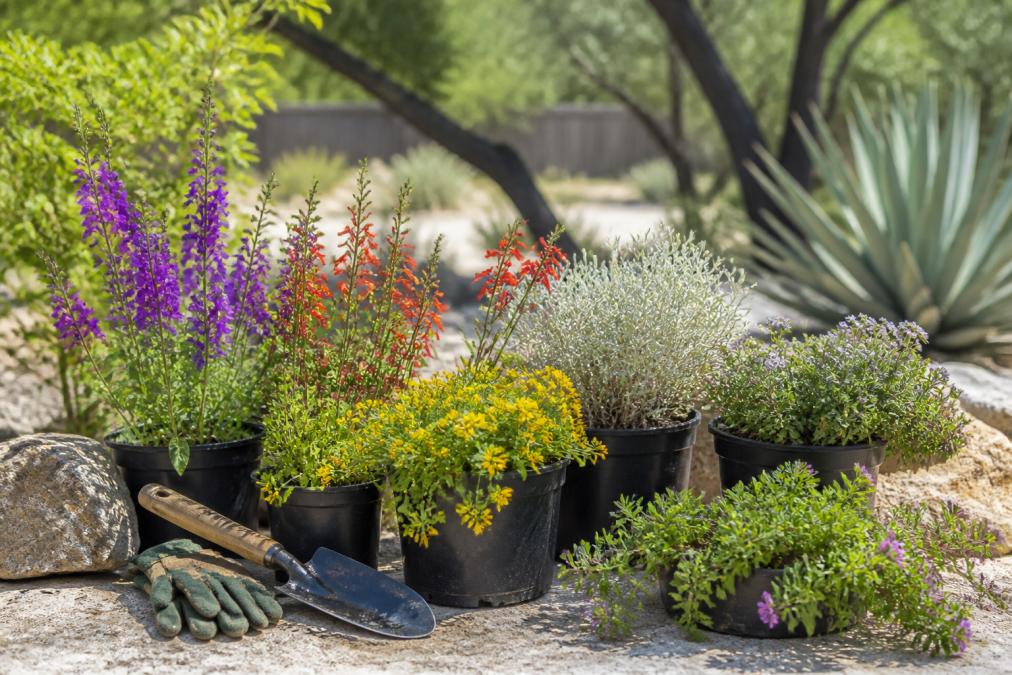
Native plant garden benefits go beyond water savings. Native species evolved in your local soil and climate, so they need less fertilizer, fewer pesticides, and almost no coddling once established.
Hardscape vs Softscape Balance: Where the Real Labor Savings Come From
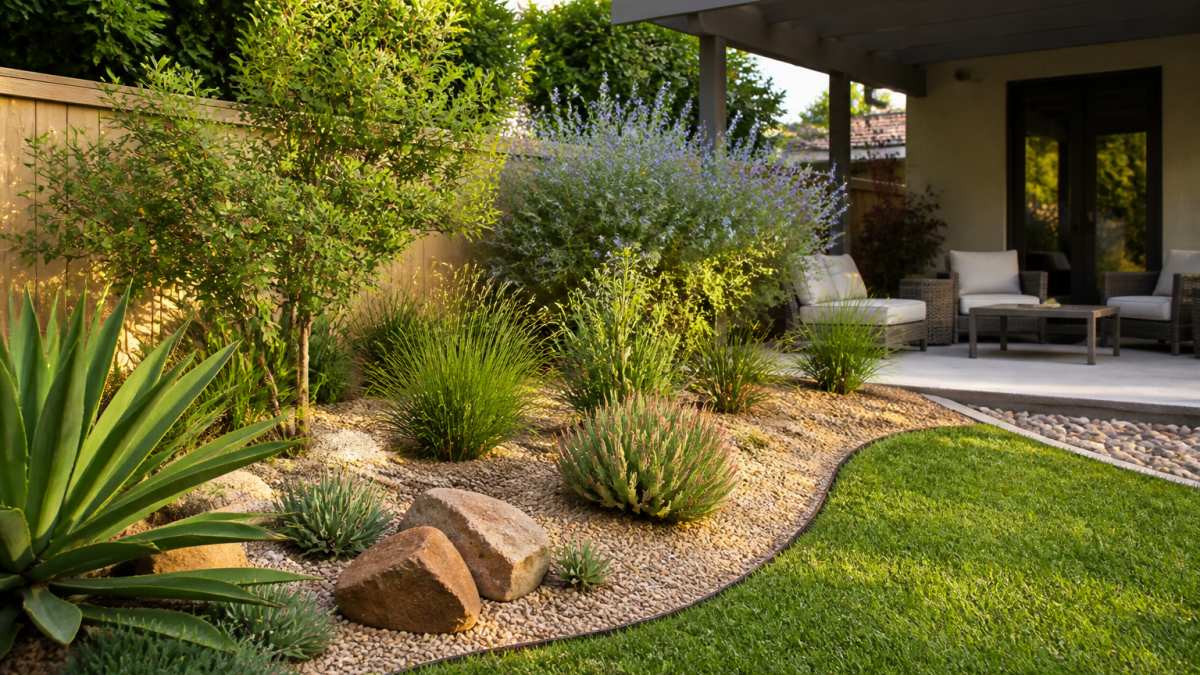
Hardscape vs softscape balance is the ratio of built surfaces, like patios and paths, to planted areas. Getting this ratio right is where most of your long-term labor savings come from.
| Element | Upfront Cost | Ongoing Maintenance | Best For |
|---|---|---|---|
| Permeable pavers | Higher | Very low | Patios, driveways, paths |
| Mulch beds | Low | Moderate | Planting areas |
| Ground cover | Low | Low | Slopes, filler spaces |
| Native perennials | Moderate | Low | Color and pollinator habitat |
Permeable Pavers and Drainage
Permeable pavers let water drain through the surface instead of pooling or running off. For yards that flood after heavy rain, they solve two problems at once: they reduce standing water and they cut maintenance on those surfaces.
Automated Irrigation and Smart Watering
Irrigation automation removes the daily guesswork from watering. A drip system delivers water straight to plant roots, and a smart controller adjusts the schedule based on local weather.
Mulch, Ground Cover, and Weed Suppression
Mulch and ground cover are your first line of defense against weeds, but the type and depth you choose determine how well they actually work. A three-inch layer of organic mulch blocks sunlight from reaching weed seeds, holds soil moisture, and slowly feeds the soil as it breaks down. Go thinner than two inches and weeds push through; go thicker than four inches and you risk suffocating plant roots and creating a habitat for rodents.
| Mulch Type | Weed Suppression | Longevity | Best Use |
|---|---|---|---|
| Shredded hardwood | High | 1-2 years | General beds, slopes |
| Pine straw | Moderate | 6-12 months | Acid-loving plants, natural look |
| Bark chips | High | 2-3 years | Pathways, tree rings |
| Gravel or rock | Very high | Permanent | Succulent beds, drainage zones |
| Leaf mold | Moderate | 6-12 months | Woodland gardens, soil building |
Ground Cover That Actually Replaces Lawn
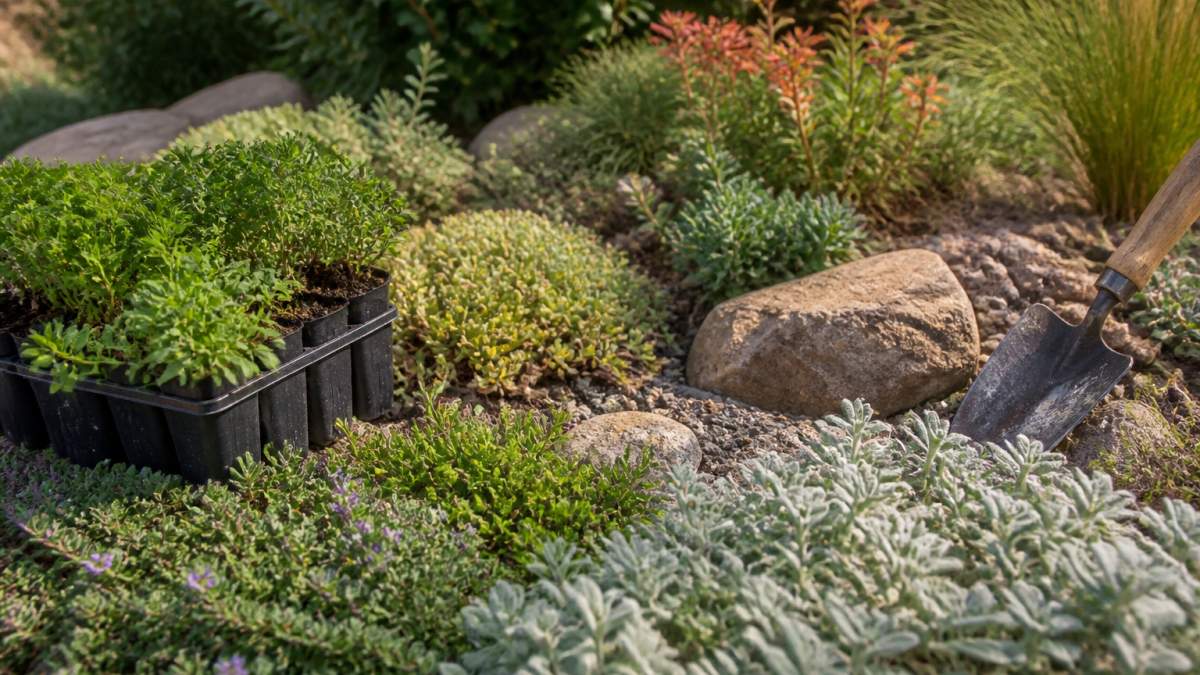
If you want to eliminate mowing entirely, ground cover is the workhorse. Unlike turf, it doesn't need weekly cutting, edging, or fertilization. The trade-off is establishment time: most ground covers take one to two full growing seasons to fill in, and they need regular watering during that period. After that, they're largely self-sustaining.
The most reliable low-maintenance options for most climates are:
- Creeping thyme, drought-tolerant, fragrant, handles light foot traffic
- Sedum, succulent, thrives in poor soil, needs almost no water
- Vinca minor, evergreen, spreads quickly, tolerates shade
- Liriope, grass-like, handles heat and drought, stays green year-round
Small Space and Vertical Gardening Solutions
Small yards and courtyards can still deliver big visual impact with vertical gardening. Wall-mounted planters and trellises use height instead of ground area, which means less weeding and easier access.
Climate-Specific Maintenance Calendars and Long-Term Savings
Most low-maintenance landscaping guides give you the same spring-and-fall checklist no matter where you live. That's a problem, because a yard in the desert Southwest has almost nothing in common with one in the humid Southeast or the cool Pacific Northwest. Planting at the wrong time and then overwatering to compensate is one of the most common, and most expensive, mistakes homeowners make.
| Climate Zone | Primary Planting Window | Peak Maintenance | Hands-Off Season |
|---|---|---|---|
| Hot-arid (Southwest) | Oct-Mar | Spring cleanup, irrigation checks | Jun-Sep |
| Hot-humid (Southeast) | Mar-May, Sep-Oct | Mowing, pest watch | Dec-Feb |
| Temperate (Mid-Atlantic) | Apr-May, Sep-Oct | Leaf cleanup, pruning | Jul-Aug |
| Cool-maritime (Pacific NW) | Mar-May, Sep-Oct | Drainage checks, moss control | Jul-Aug |
The Long-Term Cost-Benefit Math
This is where most guides stop, and it's where the real value is. A low-maintenance yard typically costs more upfront and less every year after. The question is how long it takes to break even.
Consider two common scenarios:
- Traditional lawn: Lower installation cost, but recurring costs for water, mowing, fertilization, and pest control every year.
- Low-maintenance design: Higher upfront cost for hardscape, native plants, and drip irrigation, but dramatically lower recurring costs once established.
Pet-Friendly and Accessible Low-Maintenance Design
Two segments most guides ignore are pet owners and people designing for aging-in-place or limited mobility. Both have specific needs that change what "low maintenance" means.
Bringing It All Together
The ideas above work best when they're planned as one system rather than a series of weekend projects. Zoning, plant selection, hardscape, and irrigation all influence each other, and getting the sequence right is what keeps a yard genuinely low maintenance instead of just low maintenance for a season.
Frequently Asked Questions
What is the lowest maintenance yard?
A yard with a high ratio of hardscape to planted area is the lowest maintenance. Permeable paver patios, stone pathways, and mulch beds with drought-tolerant perennials need far less mowing, watering, and weeding than a full lawn. Add native plants, drip irrigation, and a smart controller, and weekly upkeep drops to a quick walkthrough. Lawnscapingsa.com designs these low-water, low-labor yards for Texas properties.
How can I design a backyard that requires minimal watering?
Start with drought tolerant landscaping: choose native or well-adapted plants, group them by water need, and cover bare soil with mulch or ground cover. Install drip irrigation on a smart controller so watering skips automatically after rain. Permeable pavers and gravel areas replace thirsty turf. These choices cut water use and keep plants healthier because moisture goes straight to the roots instead of evaporating.
What are the benefits of using native plants in backyard landscaping?
Native plant garden benefits include lower water needs, fewer pests, and less fertilizing because the plants evolved in local soil and climate. They also support pollinators and birds. Once established, most native perennials need little beyond seasonal trimming. For Texas yards, this means a landscape that survives heat and drought without constant attention.
How do I incorporate hardscaping into a low maintenance design?
Use hardscaping where you want zero mowing: patios, walkways, fire pit areas, and retaining walls. Permeable pavers handle drainage while providing a stable surface. The key is hardscape vs softscape balance: about half hardscape for living space, half planted beds for shade and color. This mix reduces lawn area and the maintenance that comes with it.