 how-to
How to Design Xeriscaping Without Rocks
Table of Contents
- What Xeriscaping Without Rocks Actually Looks Like
- Step 1: Apply the Core Xeriscape Principles to a Plant-Based Design
- Step 2: Build Your Drought Tolerant Garden Design
- Step 3: Choose Native Ground Cover Plants Instead of Rock
- Step 4: Understand the Organic Mulch Benefits for Xeriscaping
- Step 5: Design Permeable Pathways and Functional Hardscape
- Maintenance Schedules for a Rock-Free Xeriscape
- Hardscape vs. Softscape: Cost and Long-Term Value
- Frequently Asked Questions
Last Updated: September 2, 2026
What Xeriscaping Without Rocks Actually Looks Like
Most people picture gravel and river rock when they hear "xeriscape," but this myth keeps homeowners from pursuing water-wise designs that actually look beautiful.
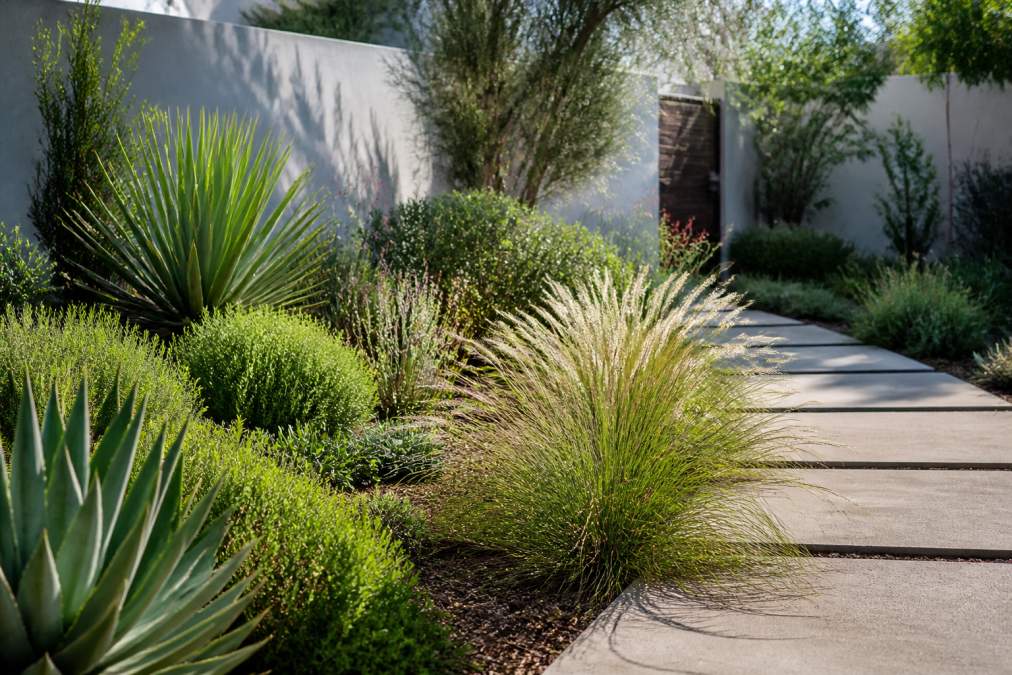
Xeriscaping without rocks is a plant-based approach to water conservation that replaces stone mulch with organic ground covers, native perennials, ornamental grasses, and living mulch layers. The result is a landscape that uses significantly less water than conventional turf while looking lush and intentional.
At Lawnscapingsa.com, we've spent 16 years helping Texas property owners move away from rock-heavy defaults toward designs that work with soil, climate, and aesthetic goals. The core insight: water conservation is about soil management and plant selection, not stone. Rock absorbs heat and can increase evapotranspiration, while a well-mulched, well-planted bed outperforms it in moisture retention and soil health.
Step 1: Apply the Core Xeriscape Principles to a Plant-Based Design
Xeriscaping without rocks follows the same foundational principles as any xeriscape, but replaces inorganic mulch with layered, living systems.
According to EPA WaterSense program guidance on landscape water efficiency, outdoor water use accounts for nearly a third of residential consumption, much of it wasted through inefficient irrigation and poor plant selection. A plant-based xeriscape addresses both directly.
Hydrozoning: Group Plants by Water Needs
Hydrozoning groups plants with similar water requirements into the same irrigation zones, reducing waste and simplifying maintenance.
Divide your yard into three zones:
- High-water zone near the house or shaded areas for plants needing supplemental irrigation during establishment
- Moderate-water zone in mid-yard with afternoon shade, using drought-adapted perennials and grasses
- Low-water zone in full sun with only true xerophytes and natives, requiring zero irrigation after the first season
Soil Amendment and Infiltration Before You Plant
Soil infiltration is the make-or-break factor in xeriscape design. Compacted, clay-heavy soil repels water, causing runoff and plant stress even with drought-tolerant species.
Before planting, work organic matter into the top 6 to 8 inches of soil. Compost improves both drainage in clay and water retention in sandy soils.
Step 2: Build Your Drought Tolerant Garden Design
A drought-tolerant garden without rocks relies on grasses for form and texture, paired with flowering perennials for color and pollinator value.
Ornamental Grasses as Structure and Texture
Ornamental grasses provide year-round structure, require minimal water once established, and create layered texture that reads as intentional design.
For Texas climates, strong performers include:
- Gulf muhly (Muhlenbergia capillaris), dramatic pink-purple plumes in fall, thrives in full sun
- Lindheimer's muhly (Muhlenbergia lindheimeri), taller, silver-tipped, extremely heat tolerant
- Sideoats grama (Bouteloua curtipendula), the Texas state grass, low-growing and drought-adapted
- Inland sea oats (Chasmanthium latifolium), handles part shade
Plant grasses in drifts rather than single specimens for maximum visual impact.
Wildflowers and Low-Water Perennials for Color
Native perennials handle color work with minimal supplemental irrigation after establishment. Select species adapted to your specific soil type and sun exposure.
Reliable low-water perennials for Texas include:
- Black-eyed Susan (Rudbeckia hirta), summer bloomer, reseeds readily
- Mealy blue sage (Salvia farinacea), long bloom season, attracts pollinators
- Autumn sage (Salvia greggii), nearly year-round color
- Pavonia (Pavonia lasiopetala), soft pink blooms, excellent in part shade
- Lemon beebalm (Monarda citriodora), fragrant, self-seeding annual
The first year looks thin. Resist over-planting or supplemental irrigation. By year two, a well-chosen palette fills in and self-seeds, reducing long-term maintenance.
Step 3: Choose Native Ground Cover Plants Instead of Rock
Native ground cover plants suppress weeds, protect soil moisture, reduce erosion, and eliminate the need for rock or landscape fabric.
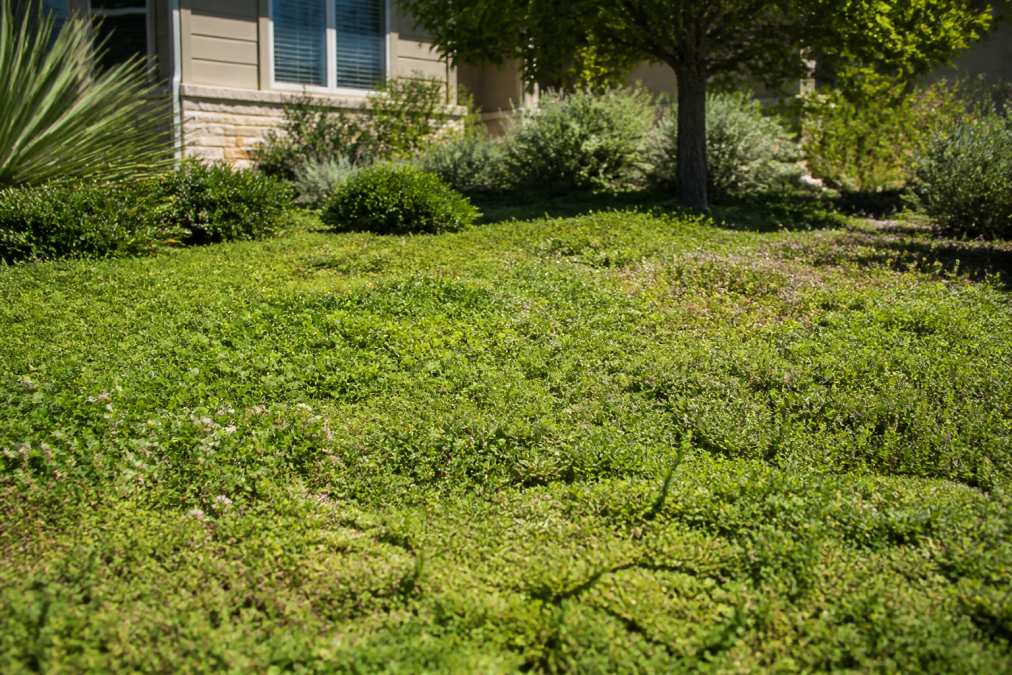
Native ground cover plants spread horizontally to cover bare soil, outcompete weeds through density, and require minimal maintenance once established.
Effective native ground covers for Texas include:
- Frogfruit (Phyla nodiflora), spreads aggressively, handles foot traffic
- Horseherb (Calyptocarpus vialis), thrives in shade
- Clover (Trifolium spp.), fixes nitrogen, attracts pollinators
- Creeping thyme (Thymus serpyllum), aromatic, handles light foot traffic
- Buffalo grass (Bouteloua dactyloides), true Texas native, can replace turf entirely
Weed Suppression Without Landscape Fabric or Gravel
Dense foliage shades the soil surface and prevents weed seeds from germinating. Combine that with a 2- to 3-inch organic mulch layer during establishment, and weed pressure drops dramatically within the first growing season.
Plant at recommended spacing for mature coverage, not to save money on plants. Wide spacing means more bare soil and more weed pressure.
Step 4: Understand the Organic Mulch Benefits for Xeriscaping
Organic mulch is the single most important non-plant element in a rock-free xeriscape. It feeds the soil, moderates temperature, and improves water infiltration over time.
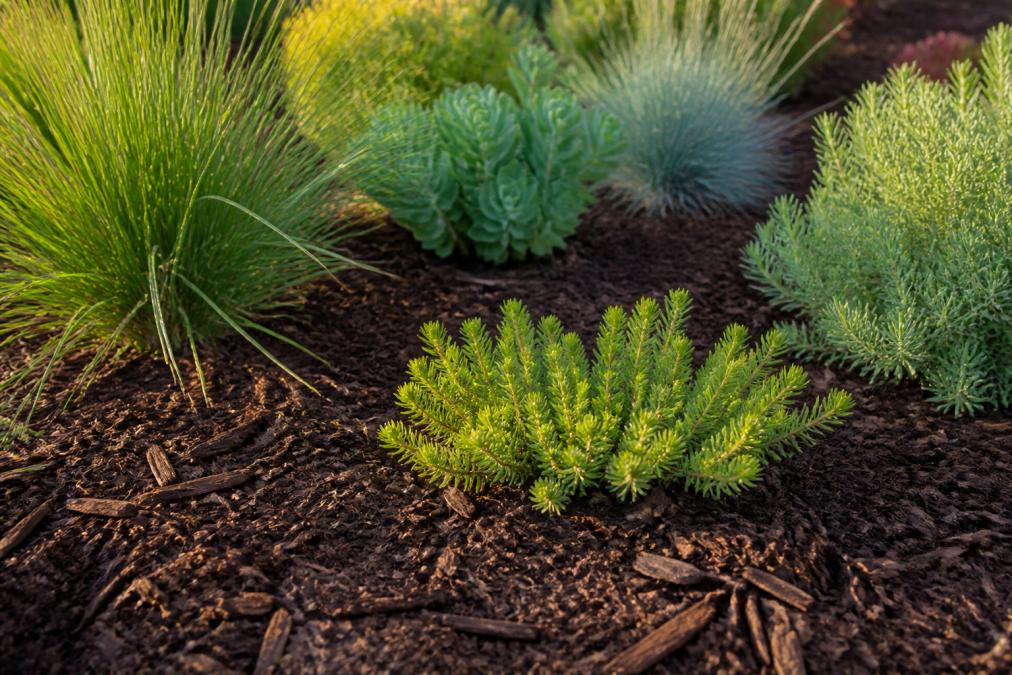
As wood chips decompose, they add organic matter to the soil, improving water retention and building soil structure that makes plants more drought-resilient. Rock mulch stays inert while soil beneath it slowly depletes.
Practical guidelines:
- Apply mulch at 2 to 3 inches deep
- Keep mulch 2 inches away from plant stems
- Refresh the mulch layer once per year in early spring
- Use shredded hardwood, wood chips, or pine straw
According to Texas A&M AgriLife Extension guidance on mulching landscape plants, organic mulches can reduce soil moisture loss by up to 70% compared to unmulched soil.
Step 5: Design Permeable Pathways and Functional Hardscape
Impermeable surfaces shed water rather than absorbing it, increasing runoff and reducing soil infiltration. Permeable pathway design allows water to pass through and infiltrate the soil below.
Effective permeable options include:
- Flagstone with planted gaps, set in sand with creeping thyme or frogfruit in joints
- Decomposed granite paths, fine-textured material allowing water infiltration
- Gravel stepping paths, narrow strips contained with steel or aluminum edging
- Permeable pavers, engineered pavers with void spaces filled with sand or fine gravel
Hardscape should serve circulation and function, not fill space plants could occupy. A good rule: hardscape should be minimal and purposeful.
Maintenance Schedules for a Rock-Free Xeriscape
A rock-free xeriscape requires more attention in year one, then maintenance drops significantly below conventional lawn demands.
Seasonal Tasks by Region
| Season | Key Tasks | Time Investment |
|---|---|---|
| Early Spring (Feb-Mar) | Cut back ornamental grasses, refresh mulch layer, divide overcrowded perennials | Moderate |
| Late Spring (Apr-May) | Monitor irrigation during establishment, pull early-season weeds | Low-Moderate |
| Summer (Jun-Aug) | Reduce irrigation for established plants, deadhead perennials | Low |
| Fall (Sep-Nov) | Plant new natives and ground covers, allow grasses to stand | Moderate |
| Winter (Dec-Jan) | Leave seed heads for wildlife, cut back frost-damaged foliage | Minimal |
Weed early and often in year one. Ground covers and perennials need time to establish density. Pull weeds before they set seed and the problem solves itself by year two.
As documented in Lady Bird Johnson Wildflower Center's native plant database, established native plant landscapes typically require significantly less supplemental irrigation and maintenance than conventional turf after the first two growing seasons.
Hardscape vs. Softscape: Cost and Long-Term Value
Hardscape has higher upfront costs and lower ongoing costs. Softscape has lower upfront costs and moderate ongoing costs that decrease as plants establish.
For a rock-free xeriscape, the softscape-heavy approach delivers better long-term value:
Soil health compounds over time. Organic mulch and native plants build soil biology year after year, reducing irrigation needs and increasing plant resilience.
Plant replacement costs are lower than hardscape repair. A ground cover that thins gets divided and replanted. A settled flagstone pathway requires professional repair.
Water savings scale with plant establishment. A mature native garden requires minimal supplemental irrigation in most Texas climates, translating to meaningful water bill reductions.
Invest in quality hardscape where you need function and durability, and invest in plant density everywhere else. A rock-free xeriscape following this principle costs less to maintain and performs better as a water-wise landscape.
According to EPA's WaterSense landscaping resources for water-efficient design, water-efficient landscapes designed with appropriate plant selection and soil management can reduce outdoor water use substantially compared to conventional designs, with benefits that grow as plantings mature.
Designing a beautiful yard without rocks takes a clear plan, the right plant palette, and solid soil understanding. At Lawnscapingsa.com, our landscape design service covers every step of this process, from hydrozoning your property and selecting regionally appropriate native plants to specifying permeable hardscape and building a maintenance plan that fits your schedule. With 16 years of experience creating water-wise Texas landscapes, we design systems that get better with every season.
Frequently Asked Questions
What can I use as a ground cover instead of rocks in xeriscaping?
Several plant-based options replace rock effectively. Creeping thyme, clover, buffalo grass, and native sedges form dense, low-growing mats that suppress weeds and retain soil moisture. Organic mulches like shredded hardwood or cedar bark also work well between plants, breaking down over time to add organic matter to the soil. These alternatives support soil health in ways that rock mulch simply cannot, while still keeping maintenance low.
Is it possible to have a lush-looking xeriscape without gravel?
Absolutely. Xeriscaping without rocks relies on layering drought-tolerant plants at different heights: ornamental grasses for structure, native perennials and wildflowers for color, and low groundcovers to fill gaps. The result looks far more like a traditional garden than a desert. Hydrozoning, soil amendment, and a well-planned irrigation schedule ensure plants thrive with minimal water, producing a full, green appearance even through dry months.
How do you maintain a rock-free xeriscape?
A rock-free xeriscape needs seasonal attention rather than constant upkeep. Replenish organic mulch once or twice a year to maintain a 3-inch layer. Cut back ornamental grasses in late winter before new growth appears. Divide spreading groundcovers every two to three years to prevent overcrowding. Pull weeds while they are young, before they set seed. Once established, most drought-tolerant native plantings need watering only during extended dry spells.
How does organic mulch compare to rock mulch for soil health in xeriscaping?
Organic mulch outperforms rock mulch for soil health in almost every way. It moderates soil temperature, reduces evapotranspiration, and decomposes gradually to add organic matter that improves drainage and soil structure. Rock mulch, by contrast, absorbs and radiates heat, raises the temperature around plant roots, and contributes nothing to soil fertility. For a water-wise landscape focused on long-term plant health, organic mulch is the better choice.
This article was written using GrandRanker