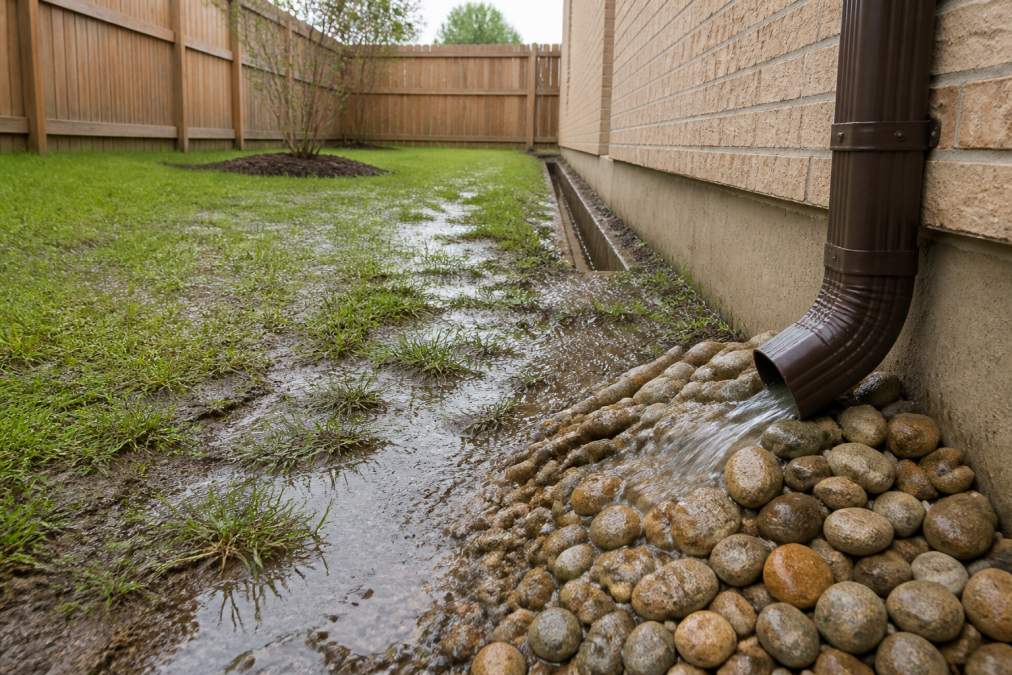
 how-to
How to Fix Backyard Drainage Problems in San Antonio
Table of Contents
- Why Does My San Antonio Yard Flood After Every Rain?
- Before You Dig: A Simple Yard Drainage Assessment
- Yard Grading Services: Fix the Slope, Fix the Pooling
- French Drain Installation to Move Standing Water
- Extend Downspouts and Add Catch Basins for Surface Runoff
- Preventing Soil Erosion in Backyards With Permeable Surfaces
- DIY vs. Professional: What's Worth Your Weekend?
- Conclusion: Stop Water Pooling Before It Reaches Your Foundation
- Frequently Asked Questions
Last Updated: September 7, 2026
Backyard drainage problems in San Antonio are rarely about the rain itself. They are about what sits beneath your grass: the dense, expansive clay and rock-hard caliche that act more like concrete than soil. When water cannot soak in, it pools, erodes, and creeps toward your foundation, turning a simple storm into a structural threat.
Understanding how to fix backyard drainage problems in San Antonio starts with accepting that surface solutions fail on subsurface soil. At Lawnscapingsa.com, we have spent 18 years designing landscapes around Texas dirt, and the most effective fixes always address both the slope above and the soil below. Below, we will walk through the exact assessment and installation steps that stop water pooling for good.
Why Does My San Antonio Yard Flood After Every Rain?
Flooding after a storm is a sign that your landscape lacks both drainage and absorption capacity. The water has nowhere to go because the soil will not accept it and the grade does not move it away. But in San Antonio, the 'why' is more specific than in most other markets, and understanding that is the first step to a permanent fix.
The Real Culprit: The Mechanics of Clay and Caliche Soils
San Antonio sits on two notoriously difficult soil types, and they fail in different ways. Heavy clay, often the dark 'Houston Black' variety found in the area, is expansive. When dry, it shrinks and cracks. When wet, it swells and seals itself, creating a nearly impermeable surface layer. This is why a light rain can cause a puddle that lingers for days, the water isn't soaking in; it's sitting on a self-sealing cap.
Caliche is a different beast. It's a cemented layer of calcium carbonate that forms a hardpan just below the topsoil. Water cannot penetrate this layer, so it pools on top of it. If you've ever tried to dig a post hole and hit a layer that feels like concrete, you've found caliche. It's common in the Hill Country areas west of the city and in many newer subdivisions where topsoil was stripped during construction.
A simple test confirms the problem. Dig a hole 12 inches deep, fill it with water, and check it after 24 hours. If water remains, your soil is draining at a rate that will always produce standing water during heavy rain. This condition also drives hydrostatic pressure against your foundation, which is why persistent pooling demands attention rather than patience.
The Secondary Factor: Urban Runoff and 'Flash' Flooding
San Antonio's storm patterns also play a role. The city experiences intense, short-duration rainfall events, particularly during the spring and fall. When a 'toad strangler' drops two inches of rain in 30 minutes, even well-draining soil can't keep up. The problem is compounded by the fact that many neighborhoods have compacted lawns from construction equipment and a lack of organic matter, which further reduces infiltration.
Understanding these two factors, the specific soil mechanics and the intense rainfall patterns, is what separates a temporary fix from a lasting solution. The rest of this guide will walk you through the exact assessment and installation steps that stop water pooling for good.
Before You Dig: A Simple Yard Drainage Assessment
Start by observing your yard during the next rainstorm. Note where water enters, where it collects, and how long it lingers after the storm passes.
Walk your property and map the low spots, the direction of surface runoff, and the location of downspouts and gutters. Check whether water flows toward your foundation or away from it. A site assessment like this takes under an hour and tells you which fix fits your landscape: slope correction, subsurface drainage, or a combination of both. For a detailed evaluation of drainage system design and stormwater management practices, guidance from the Texas A&M AgriLife Extension offers practical homeowner resources.
Yard Grading Services: Fix the Slope, Fix the Pooling
Water follows topography, so correcting the slope is the first and most permanent fix for backyard drainage problems in San Antonio.
Your yard should fall away from the house at a slope of at least 5 percent for the first 10 feet. Many older San Antonio homes were graded poorly or have settled over time, leaving flat or inward-sloping areas that trap water. Yard grading services address this by adding or removing topsoil, then compacting and re-sodding the surface.
A common mistake is skipping the compaction step. Loose fill dirt washes away in the first heavy rain, undoing the grade and creating soil erosion. Proper grading also prevents water from seeping into foundation walls, where hydrostatic pressure causes cracks and leaks. If the grade around your home is flat, correcting it should happen before any pipe is laid.
French Drain Installation to Move Standing Water
A French drain is the most reliable way to move water that has no natural outlet. It is a subsurface drainage system consisting of a trench, a perforated pipe, and gravel aggregate that captures water and redirects it to a safe discharge point.
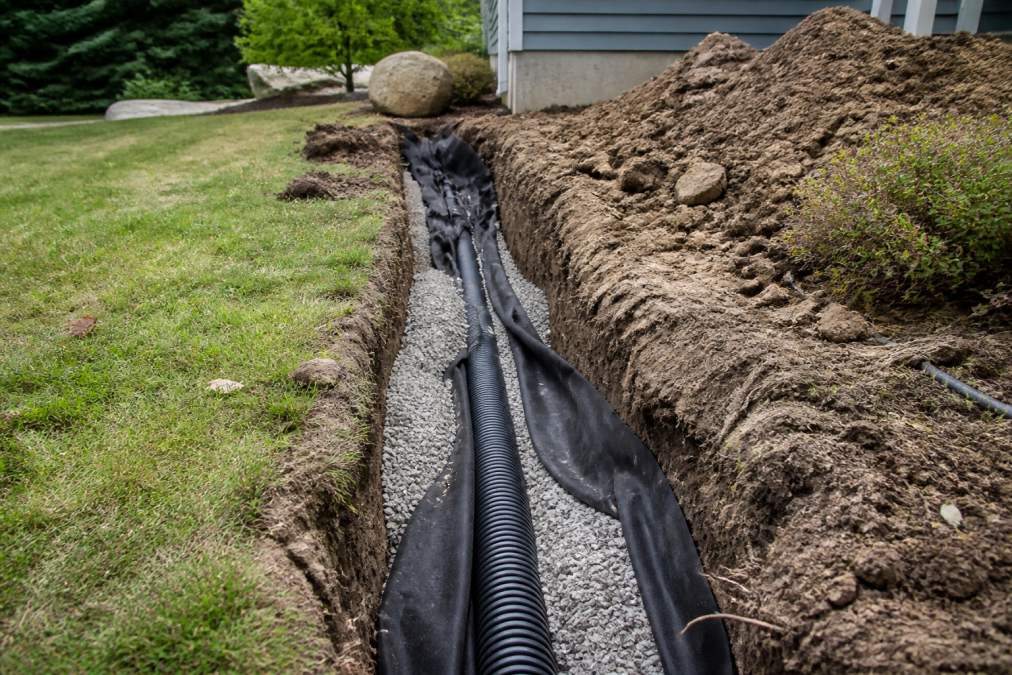
French drain installation requires excavation along the problem area, typically 18 to 24 inches deep. The trench is lined with filter fabric to prevent soil from clogging the system, then filled with gravel aggregate around a perforated drainage pipe. The pipe slopes downward at about 1 percent, carrying water away from the yard to a ditch, dry creek bed, or storm drain.
The most common failure point is the discharge end. If water has nowhere to exit, the drain simply fills and floods. Before installation, confirm that your outlet is downhill and clear of obstructions. For guidance on drainage pipe specifications and installation standards, the EPA's stormwater management resources outline best practices for residential systems.
Extend Downspouts and Add Catch Basins for Surface Runoff
Surface runoff from your roof does more damage than rain falling directly on your lawn. A single downspout can dump hundreds of gallons of water against your foundation during one storm.
Extending downspouts is the cheapest and fastest drainage fix available. Add a solid extension that carries water at least 6 to 10 feet away from the house, or route it into a drainage swale or rain garden. Downspout extension alone resolves many minor pooling issues without excavation.
For larger volumes of water, install a catch basin at the low point of your yard. A catch basin is a grated box set flush with the ground that collects surface runoff and feeds it into an underground drainage pipe. This approach works well for patios, driveways, and low-lying lawn areas where water naturally gathers. Keep gutters clean as well, since gutter maintenance directly affects how much water your downspouts must handle.
Preventing Soil Erosion in Backyards With Permeable Surfaces
Not every drainage problem needs a pipe. Replacing impermeable surfaces with permeable options lets rainwater soak into the ground where it falls, reducing surface runoff and preventing soil erosion in backyards.
Permeable pavers, gravel paths, and dry creek beds are the most effective landscape drainage tools for San Antonio yards. Unlike solid concrete, permeable pavers have gaps that allow water to filter through to the soil below. A dry creek bed serves double duty: it channels water during storms and acts as an attractive landscape feature when dry.
Native Texas plants also help. Deep-rooted species like Gulf muhly and Texas sage break up clay soil and absorb water, reducing the load on your drainage system. A well-designed landscape combines permeable hardscaping with native plantings to manage water naturally.
DIY vs. Professional: What's Worth Your Weekend?
Some drainage fixes are genuinely DIY-friendly. Extending downspouts, cleaning gutters, and installing a dry creek bed are weekend projects for a capable homeowner. But before you decide, you need to factor in a layer that most online guides ignore: the legal and regulatory landscape in San Antonio.
The Hidden Variable: Permits and HOA Rules
Many homeowners don't realize that altering your yard's grade or installing a major subsurface drainage system can trigger local permitting requirements. The City of San Antonio's Development Services Department (DSD) has rules about stormwater management and erosion control, particularly if your project involves significant excavation or changes the flow of water onto a neighbor's property. While a simple French drain may not require a permit, a large-scale grading project that moves significant earth might.
If you live in a neighborhood with a homeowners association (HOA), you have another layer of rules. Most HOAs in the San Antonio area have architectural review committees that must approve any changes to your property's exterior, including drainage swales, dry creek beds, or visible catch basins. Failing to get approval can result in fines and a demand to remove the work.
The Cost-Benefit Reality of DIY
Beyond the legalities, there's the physical reality of the work. French drain installation and yard grading are not like building a deck. Both require excavation, precise slope calculations, and knowledge of local conditions. Getting the slope wrong by even a fraction redirects water toward your foundation instead of away from it.
Consider the equipment. A DIY French drain for a typical 50-foot run requires digging a trench 18 to 24 inches deep. In San Antonio's caliche, that's not a shovel job, it's a pickaxe and a rented trencher job. If you hit a solid caliche shelf, you might need a jackhammer. That's a significant amount of physical labor and a learning curve that comes with a risk of injury or a botched job.
What a Professional Brings to the Table
A professional landscape contractor brings more than just equipment. They bring a design plan tailored to your soil and topography, and they know the local regulations. They understand how to work with the San Antonio Water System (SAWS) guidelines if your project intersects with utility lines, and they know how to navigate the DSD permitting process when required.
A landscaping company also brings the experience to spot problems you might miss. For example, they can identify whether your pooling issue is a simple grade problem or a sign of a more serious foundation issue. They can also ensure that the discharge point for your drainage system is legal and won't cause problems for your neighbors.
At Lawnscapingsa.com, we design and install drainage solutions that work with San Antonio's challenging clay and caliche soils. Our team of 16 years specializes in individualized landscape design plans that manage water while incorporating native plants and permeable hardscaping. Contact us for a consultation and let us stop the flooding before it reaches your foundation.
Conclusion: Stop Water Pooling Before It Reaches Your Foundation
Water pooling in your yard is not just an eyesore. It is a slow threat to your foundation, your landscaping, and your home's value. The fix starts with understanding your soil and your grade, then choosing the drainage method that matches both.
At Lawnscapingsa.com, we design and install drainage solutions that work with San Antonio's challenging clay and caliche soils. Our team of 16 years specializes in individualized landscape design plans that manage water while incorporating native plants and permeable hardscaping. Contact us for a consultation and let us stop the flooding before it reaches your foundation.
Frequently Asked Questions
How much does it cost to fix backyard drainage in San Antonio?
Costs vary depending on the severity of the problem and the solution. A simple downspout extension is a minor expense, while a full French drain installation or comprehensive yard grading project involves excavation and materials. Because of San Antonio's dense clay and caliche, a proper site assessment is critical before pricing. Contact Lawnscapingsa.com for a detailed quote based on your yard's specific needs.
Can poor yard drainage damage my home's foundation?
Yes. When water pools against your foundation, it increases hydrostatic pressure. Over time, this pressure can cause cracks in the foundation and lead to basement or crawl space flooding. Proper landscape drainage, including yard grading that slopes away from your house and functioning gutter downspouts, is your first line of defense to divert surface runoff and protect your investment.
What is the difference between a French drain and a surface drain?
A French drain is a subsurface drainage system. It uses a perforated pipe in a gravel-filled trench to capture groundwater and redirect it away from problem areas. A surface drain, or catch basin, collects standing water pooling on top of the ground and channels it through a pipe to a safe discharge point. Many San Antonio yards need a combination of both to manage heavy rainfall.
Are there DIY solutions for minor backyard drainage problems?
Yes. Simple fixes include extending gutter downspouts at least 5 to 10 feet from the foundation and adding a dry creek bed to channel minor surface runoff. However, problems caused by expansive clay soil or a negative yard slope usually require excavation and professional expertise. Attempting a complex French drain installation without proper planning can fail quickly in San Antonio's soil conditions.