 ultimate-guide
Hiring Professional Landscape Design Services: A 2026 Guide
Table of Contents
- Why Hiring Professional Landscape Design Services Pays Off
- Landscape Designer vs. Landscape Architect: What's the Difference?
- What to Look for in a Landscape Design Company
- The Landscape Design Consultation Process Explained
- Essential Questions to Ask Landscape Designers
- Understanding Landscape Design Fees and Budgets
- Red Flags and Contract Pitfalls to Avoid
- Conclusion: Start Your Landscape Project Right
- Frequently Asked Questions
Last Updated: September 6, 2026
Why Hiring Professional Landscape Design Services Pays Off
A well-planned landscape can transform how you use and enjoy your property, yet many homeowners skip the design phase entirely and jump straight to installation. Hiring professional landscape design services is the difference between a yard that simply looks planted and an outdoor living space that functions beautifully year-round. The Lawnscapingsa.com team has spent 18 years designing landscapes for Texas properties, and the most common regret we hear is not investing in a proper plan sooner.
Professional landscape design services begin with a thorough site analysis. A designer evaluates soil health, drainage patterns, sun exposure, and existing vegetation before drawing a single line. This upfront work prevents costly mistakes like planting sun-loving natives in deep shade or installing hardscaping that directs water toward your foundation. A master plan also gives you a phased roadmap, so you can install in stages without wasting money on work that later needs to be redone.
Beyond aesthetics, a professional plan protects your investment. Curb appeal directly influences property value, and thoughtful plant selection reduces long-term water and maintenance costs.
Landscape Designer vs. Landscape Architect: What's the Difference?
Many homeowners use the terms interchangeably, but landscape design services and landscape architecture are distinct professions with different scopes. A landscape architect is licensed to handle complex grading, drainage engineering, and large-scale commercial projects, often requiring a state license and adherence to zoning regulations. A landscape designer focuses on the aesthetic and horticultural side: plant selection, garden layout, hardscape design, and creating a livable outdoor space.
For most residential projects, a skilled landscape designer offers everything you need. Designers bring deep horticultural knowledge and practical experience with native plant selection, irrigation design, and project management. They coordinate with contractors during installation and ensure the vision translates from 3D rendering to reality. Architects become necessary when your project involves significant structural engineering, major grade changes, or permitting processes beyond typical residential scope.
A common mistake is assuming you need an architect when your project is primarily about plants, pathways, and outdoor living. A designer with strong installation oversight experience delivers the same result at a more accessible investment level.
What to Look for in a Landscape Design Company
Choosing the right firm requires more than browsing a portfolio. You need a team that understands your regional climate, your soil, and your maintenance expectations. Start by assessing their horticultural knowledge: do they specify native and well-adapted plants, or do they rely on water-hungry species that struggle in your area?
Experience matters, and so does the range of services offered. A firm that handles both design and installation, often called design-build, provides seamless accountability. When one team owns the project from consultation to final planting, there is no finger-pointing between designer and contractor. Look for a company that offers individualized plans rather than template designs, and confirm they can handle both softscape planning and hardscape elements like flagstone patios or paver walkways.
Verify their credentials. Ask about licensing, insurance, and any relevant certifications. Review their portfolio assessment process: a reputable firm will want to visit your property, understand your goals, and discuss your budget before proposing solutions. They should also demonstrate familiarity with local zoning regulations and any permitting processes your project might require.
The Landscape Design Consultation Process Explained
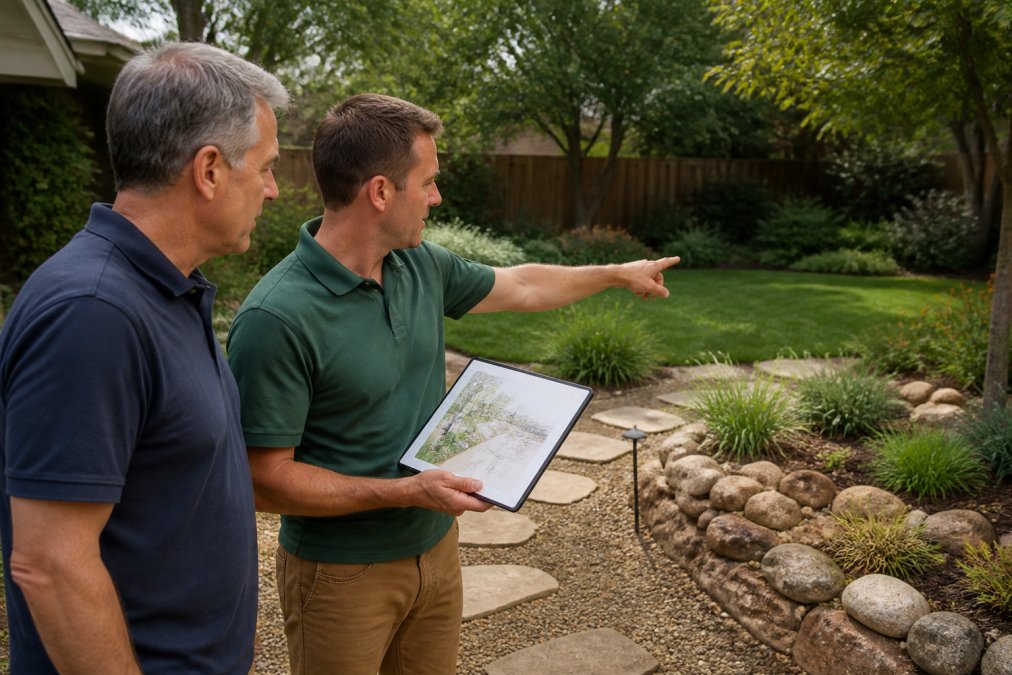
The consultation is where a professional landscape design project takes its first concrete shape. It's more than a casual chat; it's a structured discovery phase that typically unfolds in three distinct stages: the site visit, the concept review, and the detailed plan delivery. Understanding this progression helps you know what to expect and how to prepare.
Stage 1: The Site Visit and Needs Assessment
This is the designer's fact-finding mission. Expect them to spend 45 to 90 minutes on your property, not just looking but measuring. They will use a measuring wheel or laser distance measurer to document the dimensions of your house, setbacks, and property lines. They'll note the location of utility lines, downspouts, and existing irrigation heads. A thorough designer will also perform a simple soil test, checking for clay content, drainage, and pH, right in front of you. They are observing sun patterns, not just guessing; they'll ask which side of the house gets morning sun and which bakes in the afternoon heat.
This is also when they should ask you the 'lifestyle' questions: Do you want a space for large gatherings or quiet mornings? Do you have pets that need a fenced run? Are you planning to sell in five years, or is this your forever home? The answers directly influence plant selection and hardscape placement.
Stage 2: The Concept Plan and Review
After the site visit, the designer will synthesize their findings into a conceptual plan. This is not a final blueprint but a visual conversation starter. It typically includes a scaled site plan with bubble diagrams showing proposed zones, like 'patio', 'lawn', 'planting bed', and may include a 3D rendering or a simple sketch to convey the feel of the space. This is your chance to make changes. The designer should walk you through their reasoning, explaining why they placed a patio on the east side for afternoon shade or why they sited a tree to block a neighbor's view. This iterative process is where the design is refined based on your feedback.
Stage 3: The Master Plan and Deliverables
Once you approve the concept, the designer produces the final master plan. This is the 'construction document' for your landscape. It should be a detailed package that includes:
- A planting plan: This specifies the exact species, size, and quantity of every plant, often with a numbered key for reference.
- A hardscape plan: This details the dimensions, materials, and construction notes for patios, walkways, retaining walls, and other structures.
- An irrigation plan: This shows the location of sprinkler heads, drip lines, and valves, ensuring efficient water coverage.
- A lighting plan (if applicable): This outlines the placement of fixtures for ambiance and safety.
- A phasing plan: This breaks the project into logical, budget-friendly stages, allowing you to install the most critical elements first.
A good designer will not just hand you a PDF and walk away. They should schedule a walkthrough to explain the plan, answer questions, and provide guidance on how to proceed with installation, whether through their own team or a separate contractor. This handoff is critical for ensuring the design is implemented correctly.
By understanding this three-stage process, you can better evaluate a designer's professionalism and ensure you are getting a comprehensive plan, not just a pretty picture.
Essential Questions to Ask Landscape Designers
Before signing any agreement, interview prospective designers with a clear checklist. The landscape design consultation process is your chance to vet expertise, so come prepared. Start with logistics: How long have you been designing landscapes in this region? Are you licensed and insured? Can you provide client references from similar projects?
Dig into their process. Who will be my primary point of contact? Do you handle installation, or do you coordinate with outside contractors? How do you manage installation oversight? Ask about their experience with drainage correction and grading, especially if your property has known issues. A designer who only plans pretty gardens but cannot engineer water flow will leave you with a flooded patio.
Discuss their design fee structure openly. Ask whether they charge a flat fee or an hourly rate, and confirm what deliverables are included: concept drawings, planting plans, 3D renderings, or construction documents. Clarify how revisions are handled and what happens if the project scope changes mid-stream. Finally, ask about maintenance. A knowledgeable designer plans for the garden's evolution, specifying plants that will thrive without constant intervention.
Understanding Landscape Design Fees and Budgets
Budget conversations make many homeowners uncomfortable, but transparency here prevents disappointment later. A common rule of thumb in the industry is to allocate 5% to 10% of your home's value to your overall landscaping budget. From that total, design fees typically represent a smaller, but crucial, portion. Understanding the different fee structures is the first step to comparing proposals fairly.
Landscape design fees generally follow one of three distinct structures:
-
Flat Fee for a Master Plan: This is the most common model for residential projects. The designer charges a single, fixed price to produce the complete set of plans. This fee is often tiered based on project complexity. A simple front-yard refresh might be a few hundred dollars, while a comprehensive backyard overhaul with multiple zones could be several thousand. The advantage is predictability; you know the total cost upfront.
-
Hourly Rate: This is often used for consultations, smaller projects, or when a homeowner only needs specific advice rather than a full plan. Rates can vary widely based on experience and geographic location. This model is best for getting targeted answers, but it can be unpredictable if the scope isn't clearly defined.
-
Percentage of Installation Cost: In this model, the design fee is calculated as a percentage of the total cost of the installed project. This aligns the designer's incentive with the project's scale. However, it can be a point of contention if the installation budget is not clearly defined upfront. It is more common with landscape architects on larger projects.
What Your Design Fee Should Include
Before you sign, ask for a detailed breakdown of what the fee covers. A comprehensive design package should include:
- Initial site analysis and consultation
- Conceptual drawings and revisions (typically one or two rounds of changes)
- A final master plan with planting and hardscape details
- An irrigation plan
- A phasing or implementation plan
Be wary of designers who charge extra for every revision or who quote a low base fee but then add on charges for '3D renderings' or 'final construction documents' as separate line items. A transparent fee structure should be all-inclusive.
Budgeting for Installation
Your design fee is an investment, not an expense. A comprehensive plan typically costs a fraction of the overall installation budget, yet it ensures that budget is spent wisely. For example, a $2,000 design fee on a $20,000 installation is a 10% cost that can prevent thousands in wasted spending on misplaced plants or poorly graded hardscapes. A good designer will also provide a budget estimate for the installation, helping you phase the project. This allows you to complete high-impact areas first, like a new patio or front walkway, without compromising the overall vision.
When you receive proposals from different firms, compare them line-by-line. Ensure each includes the same scope of work: the same number of revisions, the same level of detail in the plans, and the same types of deliverables. A lower quote might simply mean a less detailed plan, which could cost you more in the long run during installation. Ask each firm to clarify their payment schedule, typically a deposit to begin and a final payment upon delivery of the plans, and confirm what happens if you decide to pause the project mid-design.
Red Flags and Contract Pitfalls to Avoid
Not every landscape professional operates with your best interests in mind. Watch for contractual red flags during the vetting process. A designer who pressures you to sign immediately, demands a large upfront deposit, or cannot provide proof of insurance should raise immediate concern. Similarly, be wary of vague contracts that lack a detailed scope of work, clear timeline, or specific payment milestones.
Another common pitfall is poor communication around change orders. Projects evolve, and unexpected site conditions surface, but a reputable firm documents every change in writing with associated cost implications. Avoid verbal agreements; insist on written amendments to the contract. Confirm who holds responsibility for permits and whether the contract specifies compliance with local zoning regulations.
Sustainability is another area where contracts can fall short. If you want native plant selection and water-efficient irrigation, ensure these are written into the scope of work rather than assumed. A designer who dismisses your sustainability goals or pushes water-intensive turf may not be the right fit for your values or your water bill.
Conclusion: Start Your Landscape Project Right
A successful landscape project begins with a thoughtful plan, and hiring professional landscape design services is the smartest first step you can take. The right designer brings horticultural expertise, practical experience, and a collaborative process that turns your outdoor living space into a true extension of your home. When evaluating firms, prioritize regional experience, transparent communication, and a genuine interest in sustainable, low-maintenance solutions. At Lawnscapingsa.com, we bring 18 years of landscape design expertise to every project, creating individualized plans that balance your aesthetic goals with the practical realities of Texas soil and climate. Our team focuses on native and well-adapted plants, offers solutions for yards with or without existing vegetation, and ensures quick, smooth project implementation from consultation to final planting. Contact us to schedule a design consultation and start building the landscape you have been imagining.
Frequently Asked Questions
What should I look for when hiring professional landscape design services?
Look for a designer with verifiable experience in your region, a portfolio that matches your style, and strong communication skills. Ask about their knowledge of native plants, soil conditions, and drainage issues in your area. Confirm they carry proper licensing and insurance. A good designer will ask about your needs before proposing solutions and will provide a clear scope of work and timeline.
Is there a difference between a landscape architect and a landscape designer?
Yes. A landscape architect is licensed and trained to handle complex projects involving significant grading, drainage engineering, and structural elements. A landscape designer focuses on plant selection, garden layouts, and aesthetic planning. For most residential projects, a skilled landscape designer offers the right balance of expertise and cost. Architects become necessary for major terrain changes or large-scale commercial work.
How do landscape designers charge for their services?
Landscape designers typically charge either an hourly rate, a flat design fee, or a percentage of the total project cost. Hourly rates are common for consultations, while flat fees usually cover a complete design plan. Some firms bundle design fees with installation costs. Always ask for a detailed fee structure in writing before starting work so you understand what your investment includes.
What questions should I ask before hiring a landscape designer?
Ask about their experience with projects like yours, their familiarity with local soil and climate conditions, and who will handle installation. Request references from recent clients and ask to see a full portfolio. Clarify how they handle revisions, what the project timeline looks like, and who will be on site during installation. Also ask about their approach to irrigation and drainage.
How long does a professional landscape design project take?
The design phase typically takes two to six weeks depending on project complexity. Installation timelines vary based on scope, weather, and material availability, ranging from a few days for simple plantings to several months for full hardscape installations. A professional designer will provide a detailed project timeline during the consultation process so you know what to expect at each phase.