 ultimate-guide
Xeriscaping Installation Services: Your 2026 Guide
Table of Contents
- Why Xeriscaping Installation Services Are Growing in Demand
- Drought-Tolerant Landscape Design: The Planning Phase
- What to Expect From Professional Xeriscaping Installation Services
- Low Water Xeriscaping Ideas That Transform Your Yard
- Xeriscape Maintenance Tips for Year-Round Health
- Cost Considerations and Local Incentive Programs
- DIY vs. Professional Installation: Which Path Is Right?
- Conclusion: Start Your Xeriscaping Project With Confidence
- Frequently Asked Questions
Last Updated: September 9, 2026
Xeriscaping is a landscaping approach designed to reduce or eliminate the need for supplemental water from irrigation. As drought conditions and water restrictions become more common, homeowners are looking beyond traditional turf lawns toward sustainable, water-wise alternatives. This guide from Lawnscapingsa.com explains what xeriscaping installation involves, how to plan a drought-tolerant landscape, and what to expect when you hire professionals.
The demand for xeriscaping installation services near me continues to climb as property owners recognize that a beautiful yard does not have to come at the cost of high water bills. Below, we break down the planning process, the installation experience, and the long-term maintenance that keeps a xeriscape thriving, plus costs, local incentives, and the DIY versus professional question.
Why Xeriscaping Installation Services Are Growing in Demand
Traditional lawns consume significant water, fertilizer, and weekly maintenance time. Xeriscaping flips that model by favoring plants adapted to the local climate, meaning less watering, fewer chemicals, and reduced mowing. Municipalities increasingly encourage this shift through rebate programs and water-use restrictions.
Property values also factor into the equation. A well-designed xeriscape with mature native vegetation and quality hardscaping can enhance curb appeal just as effectively as a conventional lawn. For homeowners considering resale, a low-water landscape that looks intentional and polished is an asset, not a compromise. The Environmental Protection Agency's WaterSense program notes that landscape irrigation accounts for nearly one-third of all residential water use, a figure that drives both conservation efforts and homeowner interest in change.
Drought-Tolerant Landscape Design: The Planning Phase
Successful xeriscaping installation starts long before any plants go into the ground. The planning phase is where you define how the space will be used, how it drains, and which plants will thrive in your microclimate. Skipping this step leads to xeriscapes that look sparse or become weed-filled gravel patches.
A professional design consultation typically covers your aesthetic preferences, soil condition, sun exposure, and existing drainage patterns. The goal is a plan that balances visual interest with practical function.
Site Assessment and Hydro-Zoning
A thorough site assessment examines soil type, slope, existing vegetation, and how water moves across your property. Landscape grading may be needed to direct runoff away from foundations or fix areas where water pools after heavy rain.
Hydro-zoning groups plants with similar water needs together. Instead of running one irrigation schedule across the entire yard, you divide the landscape into high-water areas near the house, moderate zones for flowering perennials, and low-water zones for established native shrubs and ground cover.
Plant Selection and Soil Preparation
Native plants are the backbone of any drought-tolerant landscape design because they have evolved to survive on natural rainfall once established. A regional plant database or consultation with a local specialist helps you choose species suited to your area's hardiness zone, soil, and sun conditions.
Soil preparation matters just as much as plant choice. Many urban soils are compacted or lack organic matter, preventing roots from establishing deeply. Soil amendment with compost improves drainage in clay and water retention in sandy soils. A 2-to-3-inch layer of mulch then suppresses weeds, moderates soil temperature, and reduces evaporation.
What to Expect From Professional Xeriscaping Installation Services
Professional xeriscaping installation services near me typically follow a structured sequence once the design is approved. The first step is site preparation, which includes removing existing turf, addressing grading issues, and amending the soil. Turf removal can be done mechanically or through sheet mulching.
Next comes hardscape installation. Patios, walkways, and decorative rock features are placed before planting so heavy equipment does not damage new vegetation. Permeable surfaces allow rainwater to soak into the ground rather than running off. After hardscaping, drip irrigation systems are installed to deliver water directly to plant root zones.
Planting is the final major step. Professionals place plants according to the hydro-zoning plan, install mulch, and perform an initial deep watering. A reputable installer will walk you through the finished landscape, explain the irrigation schedule, and provide guidance on the establishment period.
Low Water Xeriscaping Ideas That Transform Your Yard
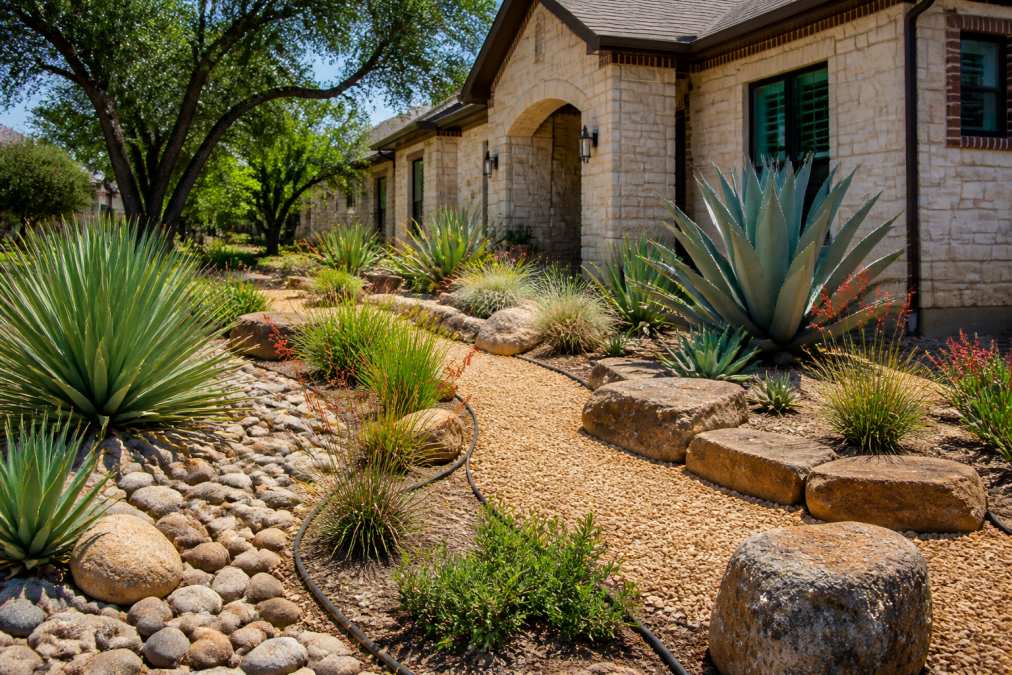
A common misconception is that low water xeriscaping ideas mean a yard full of rocks and a few cacti. In practice, a well-designed xeriscape is layered, textured, and colorful. Ornamental grasses add movement, agave and yucca provide sculptural focal points, and flowering perennials like salvia and lavender attract pollinators.
Ground cover is another versatile tool. Instead of mulch alone, consider low-growing native plants that spread to form a living carpet, reducing weed pressure and creating a softer look than gravel. For pathways, flagstone or permeable pavers set in decomposed granite complement native plantings.
Vertical interest comes from shrubs and small trees like desert willow, Texas sage, and redbud. Grouping these elements into distinct planting beds with clean edges gives the yard a deliberate, designed feel. The result is an outdoor space that looks lush, supports local wildlife, and requires a fraction of the water of a traditional lawn.
Xeriscape Maintenance Tips for Year-Round Health
Xeriscaping is often described as low-maintenance, but that does not mean no-maintenance. The first year is the most demanding, as new plants need regular watering to establish deep root systems. After that, the workload drops considerably, but seasonal tasks remain.
The Establishment Period: Months 1-24
The single most important maintenance phase is the establishment period, lasting one to two full growing seasons. A common pattern among professional installers is a tapering irrigation schedule: water daily for the first two weeks, every other day for the next month, then twice weekly for the remainder of the first season. Overwatering during this phase encourages shallow roots that cannot survive summer heat.
Seasonal Task Calendar
Spring (March-May): This is the primary pruning window for most native shrubs and ornamental grasses. Cut back dead growth before new shoots emerge, check drip emitters for clogs, and replenish mulch to a 2-to-3-inch depth, keeping it pulled back from plant stems.
Summer (June-August): The focus shifts to weed suppression and irrigation monitoring. Pulling weeds when they are small cuts total weeding time dramatically. Watch for leaf scorch, wilting, or discoloration, these often indicate an irrigation issue, not a plant failure.
Fall (September-November): This is the ideal time for planting new additions, as cooler temperatures and winter rains give roots a head start. Reduce irrigation frequency and clear fallen leaves from gravel areas and permeable pavers.
Winter (December-February): The workload is lightest. Inspect hardscape for shifting, check irrigation valves for freeze damage, and plan design changes for spring. In colder zones, frost cloth may be needed for tender succulents.
The Long-Term ROI of Proper Maintenance
The financial case for consistent maintenance is compelling. A well-maintained xeriscape should require roughly 50-75% less water than a traditional lawn of the same size, according to the Environmental Protection Agency's WaterSense program. That translates to real dollar savings on monthly utility bills. But the bigger return comes from avoiding replacement costs. A neglected xeriscape that becomes overrun with weeds or loses plants to drought stress can require a full reinstallation within five years, erasing the initial investment. In contrast, a landscape that receives even modest seasonal attention can last decades with only occasional plant replacement.
Common Maintenance Mistakes to Avoid
- Over-fertilizing: Native plants are adapted to lean soils. Fertilizer promotes soft, lush growth that is more susceptible to pests and drought stress. Most practitioners recommend no fertilizer at all after the establishment period.
- Letting mulch get too deep: A layer thicker than 3 inches can suffocate roots and create a hydrophobic barrier that repels water.
- Ignoring irrigation system checks: A single clogged emitter or broken line can kill a mature plant within weeks during a heat wave.
- Pruning at the wrong time: Cutting back spring-blooming shrubs in the fall removes the flower buds for the next season. Know your plant's bloom cycle before you prune.
These xeriscape maintenance tips keep the landscape healthy, protect your investment, and ensure that the water savings you planned for actually materialize on your utility bill.
Cost Considerations and Local Incentive Programs
The upfront cost of xeriscaping installation varies widely based on yard size, the extent of hardscaping, plant selection, and whether grading or drainage work is required. Because every project is unique, the most accurate way to understand your budget is to request a site-specific quote from a professional installer.
What Drives the Price Tag
While every project is different, most professional installers structure their quotes around a few key variables:
- Turf removal method: Mechanical removal is faster but leaves behind root systems that can regrow. Sheet mulching (layering cardboard and compost) is more labor-intensive but organic and thorough. The choice affects both cost and long-term success.
- Hardscape scope: Patios, walkways, and decorative rock are the most expensive line items. Permeable pavers and flagstone cost more than poured concrete but offer drainage benefits that align with xeriscape principles.
- Grading and drainage work: If your yard has low spots where water pools, or if you need to redirect runoff away from your foundation, earthwork adds significant cost. This is not the place to cut corners, poor drainage will undermine the entire landscape.
- Plant size and maturity: Smaller plants cost less upfront but take longer to fill in. Larger, more mature specimens create an instant landscape but can double the plant budget.
The Financial Case for Making the Switch
The long-term return on a xeriscape investment is where the financial picture becomes compelling. The Environmental Protection Agency's WaterSense program estimates that landscape irrigation accounts for nearly one-third of all residential water use. For a typical single-family home, that means a significant portion of your monthly water bill is going to keep grass alive. A xeriscape that cuts outdoor water use by 50-75% delivers recurring savings month after month, year after year. Over a 10-year horizon, those savings can amount to thousands of dollars, often exceeding the initial installation cost.
Property value is the second half of the ROI equation. Real estate professionals in drought-prone regions increasingly note that water-wise landscaping is a selling point. A mature, well-designed xeriscape signals to buyers that the property is lower-maintenance and more sustainable than a traditional lawn.
How to Navigate Local Incentive Programs
Many municipalities and water utilities in drought-prone states offer financial incentives for replacing turf with water-efficient landscaping. These programs vary by region, funding availability, and application deadlines. Research what is available before you start, as most rebates require pre-approval.
A common structure is a per-square-foot rebate for turf removal. Some programs pay a flat rate per square foot of grass converted, while others offer tiered incentives based on the percentage of your yard converted. A few utilities provide free design consultations or discounted native plants through partnerships with local nurseries. The Environmental Protection Agency's rebate finder and water conservation resources and your local water utility's website are good starting points to see what is available in your area.
A Strategic Approach to Budgeting
A practical approach is to layer your resources: research available rebates, get a detailed quote from a professional installer, and compare that against projected water savings over 5 and 10 years. In many cases, the recurring savings and potential property value increase offset a significant portion of the upfront investment.
DIY vs. Professional Installation: Which Path Is Right?
A small xeriscape project, such as converting a single planting bed, is a manageable weekend project for a confident DIYer. The savings come from your labor, but you take on the risk of design mistakes and the physical effort of hauling materials.
Larger projects are where professional installation earns its keep. Full-yard conversions involve significant grading, potentially complex drainage solutions, and irrigation systems that must meet local code. Mistakes at this scale are expensive to fix. A professional team handles the logistics, has access to better plant sourcing, and completes the work in days rather than weeks.
Conclusion: Start Your Xeriscaping Project With Confidence
A thoughtfully planned xeriscape reduces water consumption, lowers maintenance demands, and creates an outdoor space that feels intentional and welcoming. The key is to start with a solid design, choose plants suited to your climate, and decide whether the scope of work suits your skills or calls for professional help.
At Lawnscapingsa.com, we bring years of experience to drought-tolerant landscape design and installation across Texas properties. Our team creates individualized plans that balance your aesthetic goals with practical, sustainable solutions, whether you are starting from bare soil or renovating an existing yard. Contact us to schedule a design consultation and take the first step toward a landscape that thrives on less.
Frequently Asked Questions
What is the cheapest way to xeriscape?
The most budget-friendly approach starts with a phased plan. Begin by replacing the lawn areas that require the most water with drought-tolerant ground cover or mulch. Choose native plants that are already adapted to local rainfall, since they need less supplemental irrigation and fewer replacements. Installing a simple drip system on a timer reduces water waste compared to sprinklers. Many homeowners also find that removing turf themselves and hiring professionals only for the design and plant installation keeps costs down while ensuring the layout is sound.
Does xeriscaping increase home value?
Yes, a well-designed xeriscape can boost property value, especially in regions where water costs are high or drought conditions are common. Homes with water-efficient landscapes appeal to buyers who want lower utility bills and reduced outdoor maintenance. A mature, thoughtfully planned xeriscape adds curb appeal just like a traditional lawn, but with the added benefit of sustainability. The key is professional design and proper installation. Poorly executed rock-and-gravel yards can hurt value, so working with an experienced service ensures the result looks intentional and inviting.
How much does it cost to xeriscape a front yard?
Project costs vary widely based on yard size, plant selection, hardscaping materials, and whether you hire professionals or do the work yourself. A full-service installation includes design consultation, soil preparation, grading, irrigation setup, and planting. Because every property has different conditions, most companies provide a custom quote after a site visit. Factors like removing existing turf, installing permeable pavers, or adding drainage solutions increase the total. Contact local xeriscaping installation services directly for a detailed estimate tailored to your property.
What are the disadvantages of xeriscaping?
The main drawbacks are the upfront cost and the transition period. Replacing an established lawn requires an investment in design, materials, and labor. Some homeowners also miss the feel of a traditional grass lawn for children or pets. Initial establishment of new plants still requires regular watering for the first year. Finally, poor planning can lead to a yard that feels sparse or looks unfinished. Hiring a professional who understands plant spacing, bloom timing, and hardscape balance avoids these issues and creates a landscape that looks full and intentional year-round.