 listicle
Best Native Plants for Clay Soil: 12 Resilient Choices
Table of Contents
- Why Clay Soil Is a Challenge (and an Opportunity)
- Top Native Plants for Clay Soil: Our 12 Picks
- Native Plants for Wet Clay Soil: Rain Garden Heroes
- Drought Tolerant Native Plants for Clay That Adapt
- Improving Clay Soil for Native Plants: Amendments That Work
- How to Plant and Establish in Heavy Soil
- Which Native Plants Should You Pick?
- Conclusion: Build a Resilient Clay Garden
- Frequently Asked Questions
Last Updated: September 8, 2026
Clay soil gets a bad reputation among gardeners, but the real problem is usually a mismatch between the plants chosen and the site conditions. Heavy soil that stays soggy in spring and bakes hard in summer will defeat most imported ornamentals, yet it supports a remarkable range of native species that evolved precisely for those stresses. The best native plants for clay soil combine deep root systems with genuine tolerance for poor drainage, and this guide from Lawnscapingsa.com walks through 12 proven choices plus the planting techniques that help them establish.
Gardeners often fight clay instead of working with it, which is a common mistake. The fix is not replacing your soil; it is selecting native plants for clay that treat heavy ground as home. Below, we cover wet-site heroes, drought-tolerant standouts, soil amendments that actually help, and the establishment steps that separate thriving plantings from struggling ones.
Why Clay Soil Is a Challenge (and an Opportunity)
Clay soil is dense, moisture-retentive, and slow to drain because its tiny particles pack tightly together, leaving little room for air. That combination creates two distinct failure modes: waterlogged roots in wet seasons and rock-hard, cracked ground in dry ones. Most non-native plants lack the physiological adaptations to handle either extreme, which is why they yellow, rot, or simply stall.
The opportunity is that clay is also nutrient-rich and moisture-retentive, two qualities that native species can exploit brilliantly. Plants with fibrous roots, rhizomes, or taproots that can punch through compacted layers will find a steady water supply that sand-based soils cannot hold. Native plant gardening on clay is less about rescue and more about choosing the right partners.
Visual Identification of Clay Soil
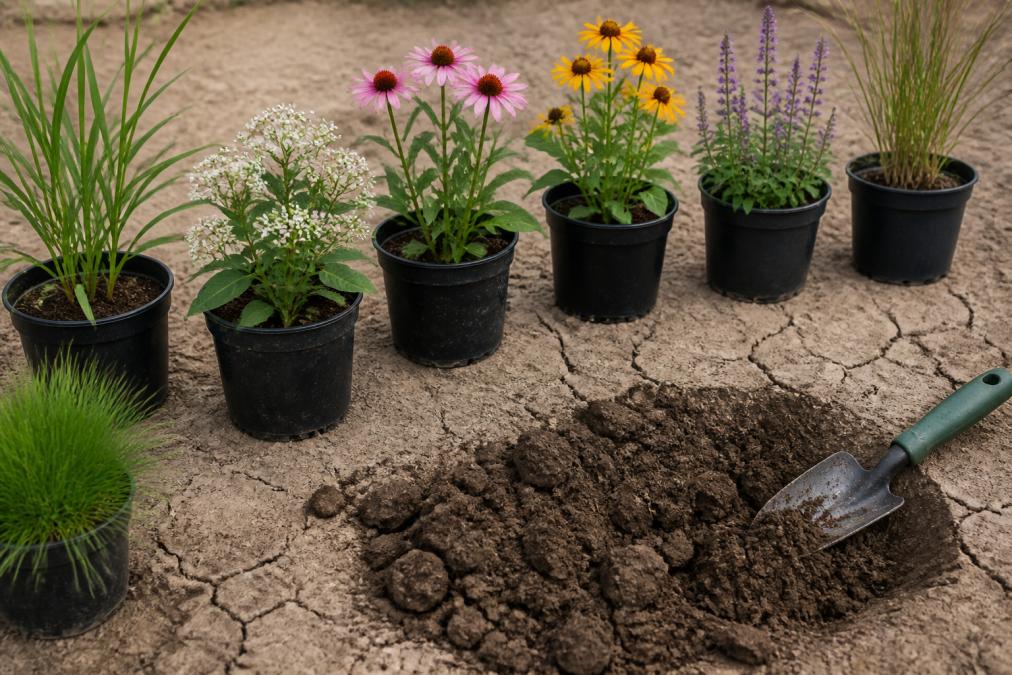
Before choosing plants, confirm what you are working with. Clay soil feels slick and sticky when wet, forms a smooth ribbon when squeezed between thumb and finger, and develops deep cracks during dry spells. Water pools on the surface after rain and drains slowly, and the soil often has a distinct reddish or gray hue depending on your region. A simple jar test, where you shake soil with water and let it settle, will show clay particles as the top, slowest-settling layer.
Top Native Plants for Clay Soil: Our 12 Picks
These 12 native species handle heavy soil with minimal fuss, and several offer the bonus of feeding local pollinators. They are grouped by their moisture preferences so you can match them to your specific site conditions.
- Black-Eyed Susan (Rudbeckia hirta), A forgiving perennial that tolerates both clay and drought once established. It blooms for months and draws native bees.
- Great Blue Lobelia (Lobelia siphilitica), A moisture-loving plant that thrives in heavy, poorly drained ground and supplies late-season nectar.
- Cardinal Flower (Lobelia cardinalis), Similar to blue lobelia but with vivid red spikes that hummingbirds cannot resist; it needs consistent moisture.
- Bee Balm (Monarda), A vigorous spreader with showy flowers that attract hummingbirds and bees; give it good air circulation to avoid mildew.
- Bebb's Oval Sedge (Carex), A hardy native grass-like sedge that excels in compacted, heavy soil and provides excellent erosion control.
- Foamflower (Tiarella), A shade-loving woodland plant that adapts well to the moisture-retentive nature of clay in darker corners.
- Sweet Woodruff (Galium odoratum), A low groundcover that forms a dense, weed-suppressing mat in damp, shaded areas.
- Swamp Milkweed (Asclepias incarnata), A rain-garden staple that feeds monarch caterpillars and thrives in wet clay.
- Ironweed (Vernonia), A tall, late-blooming perennial that anchors wet meadows and draws butterflies by the dozen.
- Joe Pye Weed (Eutrochium), A towering moisture lover that adds structure and feeds pollinators in low-lying ground.
- Switchgrass (Panicum virgatum), A native grass with fibrous roots that break up compacted clay while providing habitat and erosion control.
- Wild Bergamot (Monarda fistulosa), A drought-tolerant relative of bee balm that handles drier clay sites once settled.
Native Plants for Wet Clay Soil: Rain Garden Heroes
Wet clay is the hardest condition to garden, because most plants cannot survive waterlogged roots for long. The native plants for wet clay soil that excel here share one trait: they evolved in floodplains and stream banks where saturated ground is normal. Cardinal flower, great blue lobelia, and swamp milkweed are the standouts, each tolerating soggy feet that would rot a typical garden perennial.
Rain gardens are the ideal home for these species. A shallow depression that collects runoff gives them the consistent moisture they crave while slowing water infiltration and reducing erosion. Native grasses and sedges like Bebb's oval sedge reinforce the planting with fibrous root systems that knit the soil together. According to guidance from the Lady Bird Johnson Wildflower Center on rain gardens, selecting species matched to your site's drainage is the difference between a functioning rain garden and a muddy pit.
Drought Tolerant Native Plants for Clay That Adapt
Clay's reputation for being wet overlooks its opposite problem: in summer, it hardens into a brick that sheds water. Drought tolerant native plants for clay solve this by sending roots deep enough to reach moisture trapped below the crust. Black-eyed Susan and wild bergamot both handle this cycle gracefully, going dormant or simply waiting out dry spells without complaint.
The key is establishment. A newly planted perennial in dry clay needs regular watering through its first season to grow roots deep enough to self-sustain. Once those roots reach two feet or more, the plant taps into clay's moisture reserve and shrugs off heat that would kill shallow-rooted neighbors. Mulching with organic matter helps by keeping the surface from crusting and slowing evaporation.
Improving Clay Soil for Native Plants: Amendments That Work
Improving clay soil for native plants is a matter of structure, not chemistry. The goal is to create pores that let water drain and roots breathe, which means adding organic matter such as compost, shredded leaves, or aged bark. Spread two to three inches across the surface and work it into the top six to eight inches before planting.
Soil Amendment vs. Plant Selection
Here is the honest truth: amending clay is worthwhile, but it will not transform your soil into loam, and it should not be the foundation of your strategy. Tilling large areas of clay often does more harm than good by destroying soil structure and bringing buried clay to the surface. The more reliable path is choosing native plants for clay that tolerate the native soil texture, then using targeted amendment only in each planting hole. The USDA Natural Resources Conservation Service on soil health emphasizes that working with existing soil structure beats fighting it.
How to Plant and Establish in Heavy Soil
Planting in clay requires different timing and technique than sandy ground. Dig the hole only as deep as the root ball but two to three times wider, which loosens the surrounding soil so roots can expand. Break up any glazed sides of the hole, as smooth clay walls act like a pot and trap water around the roots.
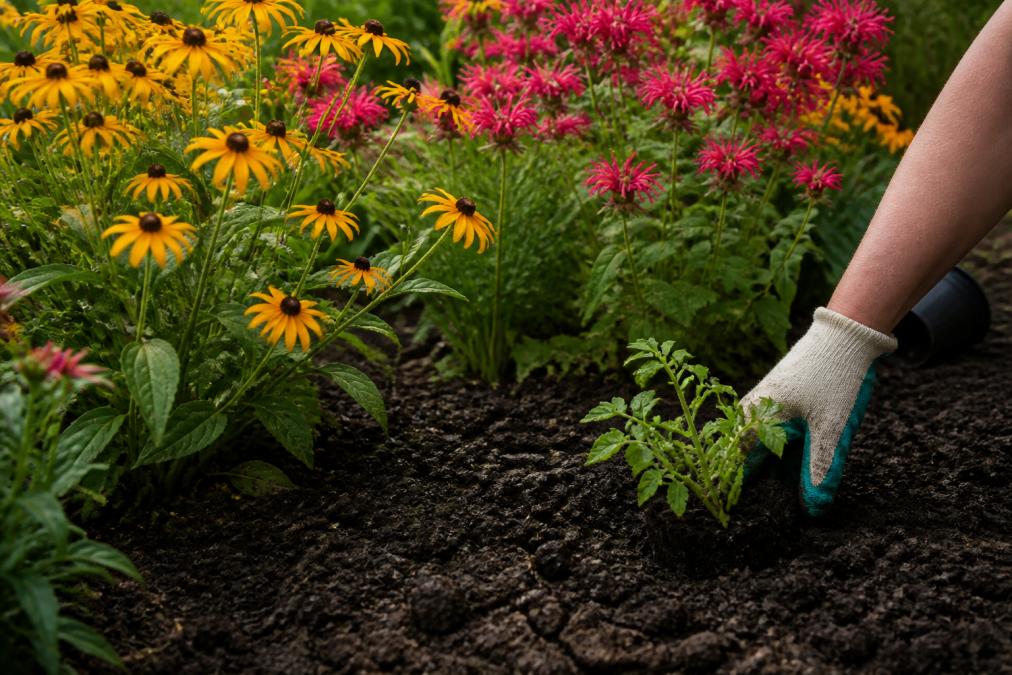
Set the plant so the crown sits slightly above grade, then backfill with native soil mixed with a little compost. Water deeply and slowly to saturate the root zone without flooding it. For the first season, water weekly during dry periods to encourage deep root growth. A layer of mulch two to three inches thick keeps the soil cool and prevents surface crusting, but keep it pulled back from the stems to avoid rot.
| Plant | Moisture Preference | Root Type | Best Use |
|---|---|---|---|
| Black-Eyed Susan | Dry to medium | Fibrous | Borders, beginner plantings |
| Great Blue Lobelia | Wet | Fibrous | Rain gardens, low spots |
| Cardinal Flower | Wet | Fibrous | Rain gardens, hummingbird areas |
| Bee Balm | Medium to wet | Spreading rhizomes | Pollinator borders |
| Bebb's Oval Sedge | Wet to medium | Fibrous | Erosion control, ground cover |
| Foamflower | Medium, shade | Fibrous | Shaded clay corners |
| Wild Bergamot | Dry to medium | Fibrous | Dry clay, prairie gardens |
Which Native Plants Should You Pick?
Match your selection to the specific conditions of your site rather than picking purely for looks. Walk your property after a rain and note where water collects, where it drains quickly, and where shade falls. Wet, low-lying areas call for lobelias, milkweed, and sedges; drier slopes suit black-eyed Susan and wild bergamot. For most homeowners, a mix of wet-site and drought-tolerant species creates a resilient garden that handles whatever the season brings.
Soil compaction and site conditions matter more than hardiness zones alone. A plant rated for your zone will still fail if its roots sit in standing water or bake in reflected heat. Native species are the safest bet because they evolved in your regional climate and soil types. For gardeners who want a tailored plan without the guesswork, a professional design service can map your property's drainage and sun exposure to the right plant palette. The National Wildlife Federation's native plant finder is a useful starting point for identifying species native to your specific county.
Conclusion: Build a Resilient Clay Garden
Clay soil is not a limitation; it is a foundation for a garden that needs less water, fewer inputs, and more resilience than a conventional lawn. The challenge is choosing the right native plants for clay and giving them a proper start, and the reward is a landscape that supports local pollinators, resists drought, and improves year after year.
Designing a native garden that thrives in heavy soil takes experience with local conditions, drainage patterns, and plant behavior. At Lawnscapingsa.com, we bring over 18 years of hands-on experience creating customized outdoor spaces with native and well-adapted Texas plants, and we offer individualized landscape design plans tailored to your yard. Contact us to build a clay garden that looks beautiful, handles your drainage issues, and saves water for years to come.
Frequently Asked Questions
What plants do well in heavy clay soil?
Native plants with fibrous root systems or taproots perform best in heavy clay. Black-eyed Susan, bee balm, and native sedges are top choices. These species break up soil compaction over time and tolerate the moisture-retentive nature of clay. Look for plants naturally found in prairies or woodland edges, as they've adapted to dense soil conditions.
What should you avoid planting in heavy clay soil?
Avoid plants with shallow, delicate root systems like lavender, rosemary, and many Mediterranean herbs. These species need sharp drainage and will develop root rot in wet clay. Also skip bulbs like tulips that require dry summer conditions. Instead, choose native prairie plants and sedges that evolved in clay-rich environments.
How do native plants improve clay soil structure?
Native plants improve clay soil through their root systems. Deep taproots like those on butterfly weed create channels for water infiltration. Fibrous roots from native grasses bind clay particles together, improving soil structure. As roots die back each season, they add organic matter that feeds beneficial soil organisms, gradually making the soil looser and more workable.
Are there low-maintenance native plants for clay soil?
Yes. Many native plants for clay soil need minimal care once established. Black-eyed Susan, bee balm, and native sedges are reliable choices that require little intervention. After the first growing season, these plants tolerate drought and resist pests. Skip fertilizing and let spent foliage stand through winter to support native bees and birds.
How do I improve drainage before planting natives in clay?
Start by testing drainage: dig a 12-inch hole, fill it with water, and time how long it takes to drain. If water remains after 24 hours, consider a rain garden approach. Amend planting holes with compost, but avoid sand, which creates concrete-like conditions in clay. For severe drainage issues, raise planting beds or choose plants that tolerate wet feet.