 listicle
Native Texas Plants for San Antonio: 9 Best Picks
Table of Contents
- Why Native Texas Plants Thrive in San Antonio's Climate
- 9 Native Texas Plants for San Antonio Landscapes
- Agarita (Mahonia trifoliolata)
- Turk's Cap (Malvaviscus arboreus var. drummondii)
- Texas Mountain Laurel (Sophora secundiflora)
- Flame Acanthus (Anisacanthus quadrifidus var. wrightii)
- Inland Sea Oats (Chasmanthium latifolium)
- Texas Lantana (Lantana urticoides)
- American Beautyberry (Callicarpa americana)
- Texas Gold Columbine (Aquilegia chrysantha var. hinckleyana)
- NPSOT Native Plant Database
- Drought-Tolerant Landscaping: Designing for Water Conservation
- Pollinator-Friendly Garden Design with Native Plants
- Native Plant Maintenance Tips for San Antonio Gardens
- Conclusion
- Frequently Asked Questions
Last Updated: September 25, 2026
Why Native Texas Plants Thrive in San Antonio's Climate
Native Texas plants for San Antonio landscapes succeed because they evolved here. Species like agarita and Texas mountain laurel developed deep root systems and waxy leaves over thousands of years, long before irrigation systems existed. They handle the region's caliche soil, months of triple-digit heat, and sudden downpours without the constant watering, fertilizing, and pampering that non-native ornamentals demand.
9 Native Texas Plants for San Antonio Landscapes
Each plant below earns its place for a different reason: deer resistance, shade tolerance, pollinator value, or sheer toughness. Match them to your site's sun exposure and soil drainage, and they'll reward you for decades.
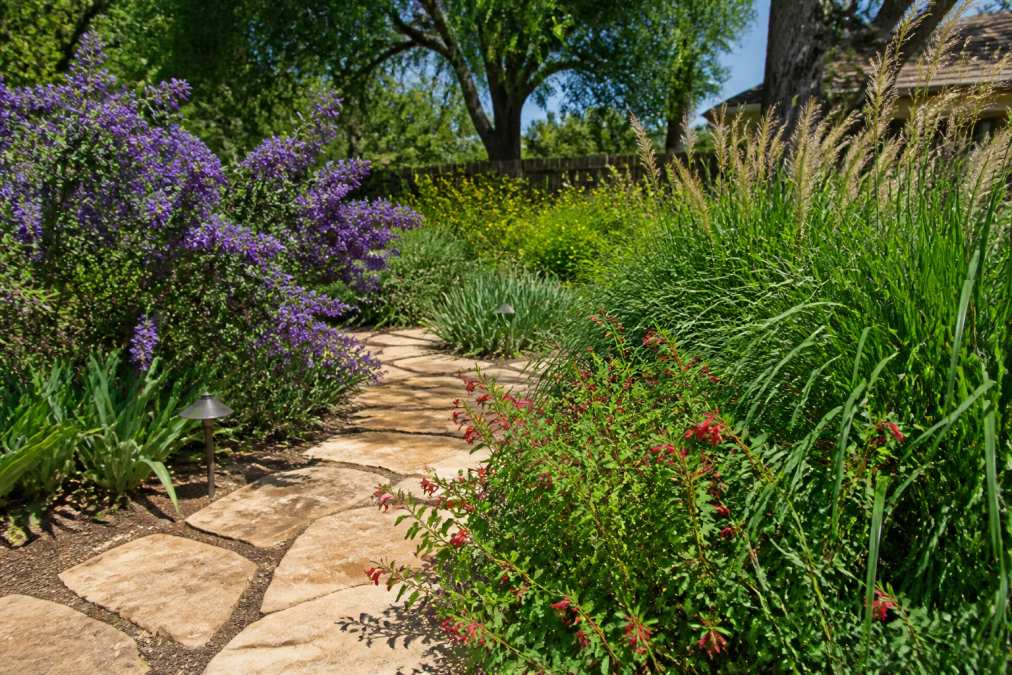
Agarita (Mahonia trifoliolata)
Agarita is an evergreen shrub with holly-like leaves and bright red spring berries. It's highly drought-proof once established and naturally deer-resistant thanks to its prickly foliage. The tradeoff: pruning is unpleasant without thick gloves. Use it as a low hedge or barrier planting.
Turk's Cap (Malvaviscus arboreus var. drummondii)
Turk's Cap produces distinctive red flowers that never fully open, and hummingbirds love them. It blooms from summer through fall and thrives in both sun and shade, which makes it one of the most versatile natives available. It can spread aggressively, so give it room or plan to manage runners.
Texas Mountain Laurel (Sophora secundiflora)
Texas Mountain Laurel is a slow-growing evergreen tree known for grape-scented purple spring blossoms. It works beautifully as a specimen tree or focal point in small to medium yards. Patience is required; it grows slowly, but its fragrance and evergreen structure justify the wait.
Flame Acanthus (Anisacanthus quadrifidus var. wrightii)
Flame Acanthus delivers brilliant orange-red tubular flowers and blooms repeatedly after rainfall. It's built for full-sun xeriscaping and attracts hummingbirds all summer. In hard freezes it may die back to the ground, but it reliably returns.
Inland Sea Oats (Chasmanthium latifolium)
Inland Sea Oats is an ornamental grass with unique drooping seed heads that add movement to shady borders. It thrives in shade and partial shade, provides winter interest, and naturalizes well. It self-seeds prolifically, so site it where spreading is welcome.
Texas Lantana (Lantana urticoides)
Texas Lantana produces clusters of orange, yellow, and red blooms on a rugged, sun-loving perennial. It's extremely drought and heat tolerant, deer-resistant, and supports butterflies and bees. Note that it can be toxic if ingested by pets.
American Beautyberry (Callicarpa americana)
American Beautyberry is a deciduous shrub famous for clusters of vivid purple berries in late summer. It thrives in understory or partial shade and feeds songbirds. It loses its leaves in winter, so pair it with evergreens for year-round structure.
Texas Gold Columbine (Aquilegia chrysantha var. hinckleyana)
Texas Gold Columbine is a Texas Superstar perennial with fragrant yellow spring blooms. It performs best in partial shade and needs more moisture than desert-adapted plants, making it a good choice for shaded beds near downspouts or irrigation zones.
NPSOT Native Plant Database
The Native Plant Society of Texas native plant database is a free, searchable resource for identifying region-specific plants. You can filter by region, plant type, and cultural requirements. It doesn't sell plants, but it's the best planning tool available before you visit a nursery.
| Plant | Sun Needs | Deer-Resistant | Best For |
|---|---|---|---|
| Agarita | Full sun to part shade | Yes | Hedges, barriers |
| Turk's Cap | Sun or shade | Moderate | Shady color, pollinators |
| Texas Mountain Laurel | Full sun | Yes | Specimen tree |
| Flame Acanthus | Full sun | Yes | Xeriscape beds |
| Inland Sea Oats | Shade, part shade | Yes | Shady borders |
| Texas Lantana | Full sun | Yes | Pollinator gardens |
| American Beautyberry | Part shade | Moderate | Seasonal color |
| Texas Gold Columbine | Part shade | Moderate | Spring beds |
Drought-Tolerant Landscaping: Designing for Water Conservation
Drought-tolerant landscaping succeeds or fails on two decisions made before you ever pick a plant: how you read your soil, and how you group plants by water need. Most guides stop at "add compost and hydrozone." That advice breaks down the moment you hit caliche, and caliche is what most yards here sit on.
Read your soil before you dig
There are three soil situations in local yards, and each demands a different approach:
- Caliche. A cemented calcium-carbonate layer, often 6 to 24 inches down. It sheds water, locks up iron and zinc, and drowns roots sitting in a perched water table above it. Test by soaking a hole overnight, if water still stands the next morning, you have caliche. Break it with a digging bar or mattock, plant in raised mounds 12 to 18 inches tall, and choose species that tolerate alkaline, low-organic soil (agarita, Texas mountain laurel, Texas lantana).
- Heavy clay. Expansive, slow-draining, and slick when wet. It holds nutrients well but suffocates roots in winter. Amend with 3 to 4 inches of compost worked into the top 8 inches, and never plant into a smooth-sided auger hole, roughen the sides so roots can escape.
- Limestone with thin topsoil. Common on hillside lots. Fast-draining and alkaline, which is actually ideal for most natives. The risk is drought stress on slopes, so plant on contour and mulch heavily.
Hydrozone by water need, not by looks
Hydrozoning means clustering plants with similar water demands on the same irrigation valve. Group your toughest species (agarita, lantana, flame acanthus) on the hottest, driest zone, often a west or south exposure, and put your thirstier natives (Texas gold columbine, inland sea oats) in shaded beds near downspouts or on a separate, less-frequent valve.
- Structure layer. Evergreen shrubs, agarita for a low hedge, Texas mountain laurel as a specimen, anchor the bed year-round.
- Texture layer. Inland sea oats in shade or a native grass in sun adds movement and softens hard edges.
- Color layer. Flame acanthus and Texas lantana carry the summer and fall bloom.
- Accent layer. A single Texas gold columbine in a shaded pocket gives a spring focal point.
Pollinator-Friendly Garden Design with Native Plants
Most pollinator advice stops at "plant flowers and skip pesticides." That's true but incomplete. A pollinator garden only works if it feeds insects across their entire life cycle, nectar for adults, foliage for caterpillars, and if it's laid out so those insects can actually find and use it.
The Monarch Waystation Garden
Monarchs need two things: nectar for the adults and milkweed for the caterpillars. A waystation layout pairs them in a sunny, sheltered bed roughly 6 by 10 feet:
- Back row (structure): Texas mountain laurel for early-spring nectar and a windbreak.
- Middle row (nectar): flame acanthus and Texas lantana, which bloom through summer and into fall when monarchs migrate.
- Front row (host + nectar): a native milkweed species suited to your soil, plus Turk's Cap for hummingbirds.
- Edge: inland sea oats in the shadiest corner for texture and cover.
The Hummingbird and Songbird Garden
This layout trades some butterfly value for bird activity across the seasons:
- Spring: Texas gold columbine in a shaded pocket for early hummingbird nectar.
- Summer: Turk's Cap and flame acanthus, both hummingbird magnets with tubular red flowers.
- Late summer and fall: American beautyberry, whose purple berry clusters feed songbirds after the blooms fade.
- Winter structure: agarita, which holds its evergreen form and produces red berries that birds use in late winter.
Why bloom succession matters more than bloom volume
A single spectacular spring shrub feeds insects for about three weeks. A layered mix of natives with staggered bloom times feeds them for eight months or more. Map your bloom calendar before you plant:
- Early spring: Texas mountain laurel, Texas gold columbine
- Late spring to summer: Turk's Cap, flame acanthus
- Summer to fall: Texas lantana
- Late summer to winter: American beautyberry berries, agarita berries
Host plants, not just nectar
Caterpillars can't eat just any leaf. Many butterflies and moths need specific native foliage, milkweed for monarchs, for example, and those host plants are often the ones big-box stores don't stock. If you want butterflies, not just bees, include at least one host species per butterfly you're targeting.
Native Plant Maintenance Tips for San Antonio Gardens
Native plant maintenance is lighter than conventional landscaping, but it isn't zero. The first year matters most: water deeply and infrequently to push roots down, then taper off as plants establish.
- Prune deciduous shrubs like beautyberry in late winter before new growth
- Cut ornamental grasses back in early spring, not fall, to preserve winter interest
- Let flame acanthus and lantana stand through winter; wait for new growth before trimming dead stems
- Refresh mulch annually, but keep it away from trunks to prevent rot
- Resist fertilizing established natives; they perform worse with rich soil
Conclusion
Building a landscape that survives local heat, clay, and drought takes the right plant list and an honest look at your yard's drainage and sun patterns. Lawnscapingsa.com offers Landscape design services that pair custom native and xeriscape plans with your property's specific conditions. Our team brings years of local experience to every project, from plant selection to hardscaping and drainage solutions.
Frequently Asked Questions
What are some good native plants for landscaping in San Antonio?
San Antonio's climate supports many native Texas plants that thrive with minimal care. Top choices include Agarita for evergreen structure and deer resistance, Turk's Cap for shade tolerance and hummingbird appeal, and Texas Mountain Laurel for fragrant spring blooms. For sunny spots, Texas Lantana and Flame Acanthus deliver bold color and drought tolerance. These plants evolved in local conditions, so they handle caliche soil, heat, and limited rainfall better than non-native alternatives.
How do native plants help with water conservation in local landscapes?
Native Texas plants developed deep root systems and drought-adapted leaves that reduce watering needs once established. Unlike thirsty non-natives, species like Agarita and Texas Lantana survive on rainfall alone after the first year or two. This makes drought-tolerant landscaping a practical way to cut outdoor water use. Many homeowners find their irrigation bills drop significantly when they replace turf grass with native shrubs, perennials, and groundcover suited to the region.
Which native plants attract the most pollinators to local gardens?
For pollinator-friendly garden design in San Antonio, focus on plants with tubular flowers and long blooming seasons. Turk's Cap, Flame Acanthus, and Texas Lantana are standouts for hummingbirds, butterflies, and native bees. These plants provide nectar from summer through fall. Inland Sea Oats and American Beautyberry support wildlife with seeds and berries. Including a mix of blooming seasons ensures pollinators have food sources across the year, not just in spring.
Do native plants require less fertilizer than non-native species?
Yes. Native Texas plants evolved in local soils and do not need the heavy feeding that non-native ornamentals often require. Agarita, Texas Mountain Laurel, and most native perennials perform well with little to no fertilizer. Over-fertilizing can actually harm them by encouraging weak growth and reducing bloom. If your soil is especially poor, a light application of organic compost at planting time is usually enough. Native plant maintenance tips often emphasize leaving them alone rather than pampering them.
What are the easiest native perennials to maintain?
Texas Lantana, Flame Acanthus, and Turk's Cap rank among the easiest native perennials for San Antonio gardens. They tolerate heat, need minimal watering after establishment, and bloom reliably without deadheading. Inland Sea Oats adds texture in shade and self-seeds readily. These plants benefit from a light cutback in late winter to encourage fresh growth. For homeowners wanting low-maintenance color, these species deliver results with very little ongoing effort.