 comparison
Xeriscaping vs Traditional Lawn Maintenance Costs
Table of Contents
- Xeriscaping vs Traditional Lawn Maintenance Costs: Side-by-Side Comparison
- How the Two Landscapes Differ in Upkeep
- Upfront Investment: Sod and Turf vs Xeriscape Installation
- Annual Operating Costs: Water, Fertilizer, and Labor
- Xeriscaping Maintenance Requirements: What You Actually Do Each Season
- Drought-Tolerant Landscaping ROI: When the Savings Catch Up
- DIY vs Professional Installation: Where the Money Goes
- Transitioning an Existing Lawn: Hidden Removal and Disposal Costs
- HOA Rules and Local Ordinances: What to Check Before You Switch
- Frequently Asked Questions
Last Updated: September 20, 2026
Xeriscaping vs Traditional Lawn Maintenance Costs: Side-by-Side Comparison
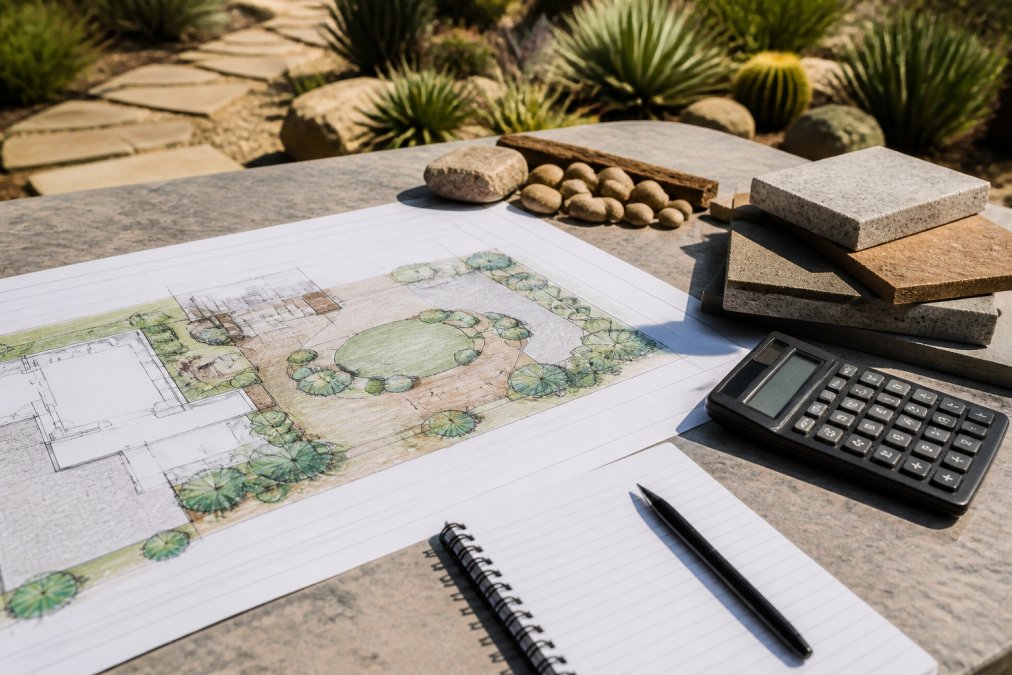
Xeriscaping is a landscaping approach built around drought-tolerant and native species, designed to cut water use and long-term upkeep rather than simply swapping grass for gravel. For homeowners weighing xeriscaping vs traditional lawn maintenance costs, the honest answer is that a xeriscape usually costs more in year one and less every year after.
How the Two Landscapes Differ in Upkeep
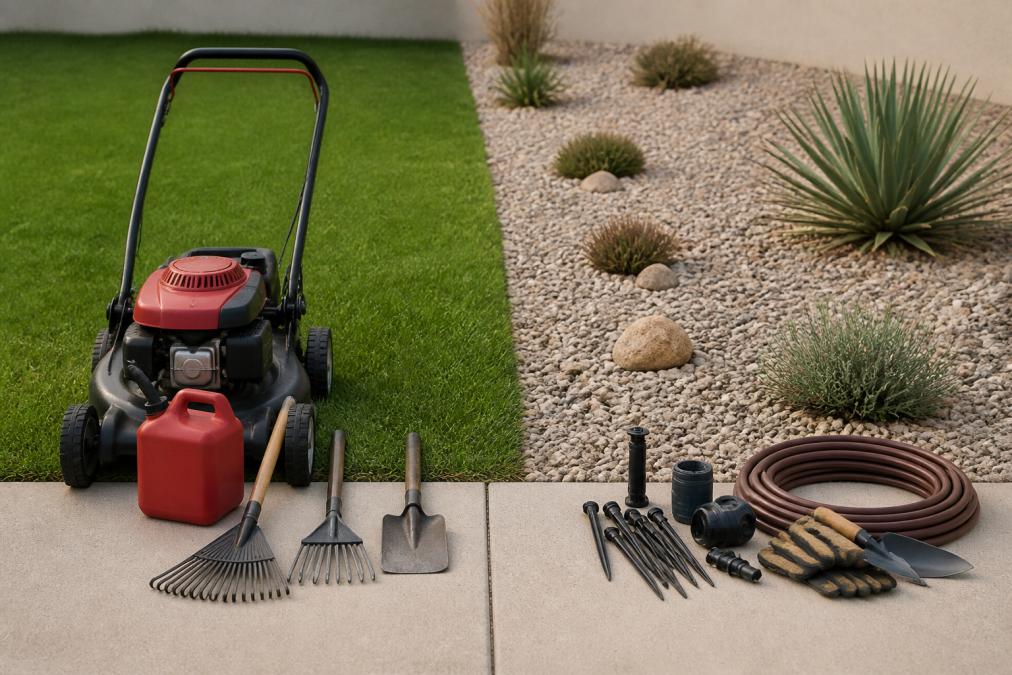
Traditional turf is a high-input system: regular mowing, seasonal fertilizer, weed control, and irrigation to stay green through summer. A xeriscape replaces that cycle with drought-tolerant plantings, mulch, ground cover, and hardscaping, so maintenance shifts from weekly chores to occasional seasonal work.
Upfront Investment: Sod and Turf vs Xeriscape Installation
Sod and seed usually carry a lower upfront investment than a designed xeriscape, because you're buying grass and water, not plants, stone, and labor. A xeriscape front yard typically costs more on day one: soil amendment, plant selection, mulch, and hardscaping all add line items turf doesn't have.
Annual Operating Costs: Water, Fertilizer, and Labor
Annual operating costs are where xeriscaping pulls ahead. A traditional lawn's recurring expenses stack up across water, fertilizer, weed control, mowing, and equipment upkeep. A xeriscape trims most of those lines to irrigation checks, occasional pruning, and mulch refresh.
| Cost Category | Traditional Lawn | Xeriscape |
|---|---|---|
| Water usage | High, seasonal peaks | Low after establishment |
| Fertilizer | Regular applications | Minimal to none |
| Mowing labor | Weekly in growing season | Rare or none |
| Weed control | Ongoing | Mulch and density do the work |
| Replacement plants | Frequent | Occasional |
| Equipment upkeep | Mower, trimmer, irrigation | Irrigation checks only |
Xeriscaping Maintenance Requirements: What You Actually Do Each Season
Xeriscaping maintenance requirements are lighter than turf care, but not zero. The first year or two demands attention while plants establish; after that, the workload drops sharply.
Plant Establishment and Soil Amendment
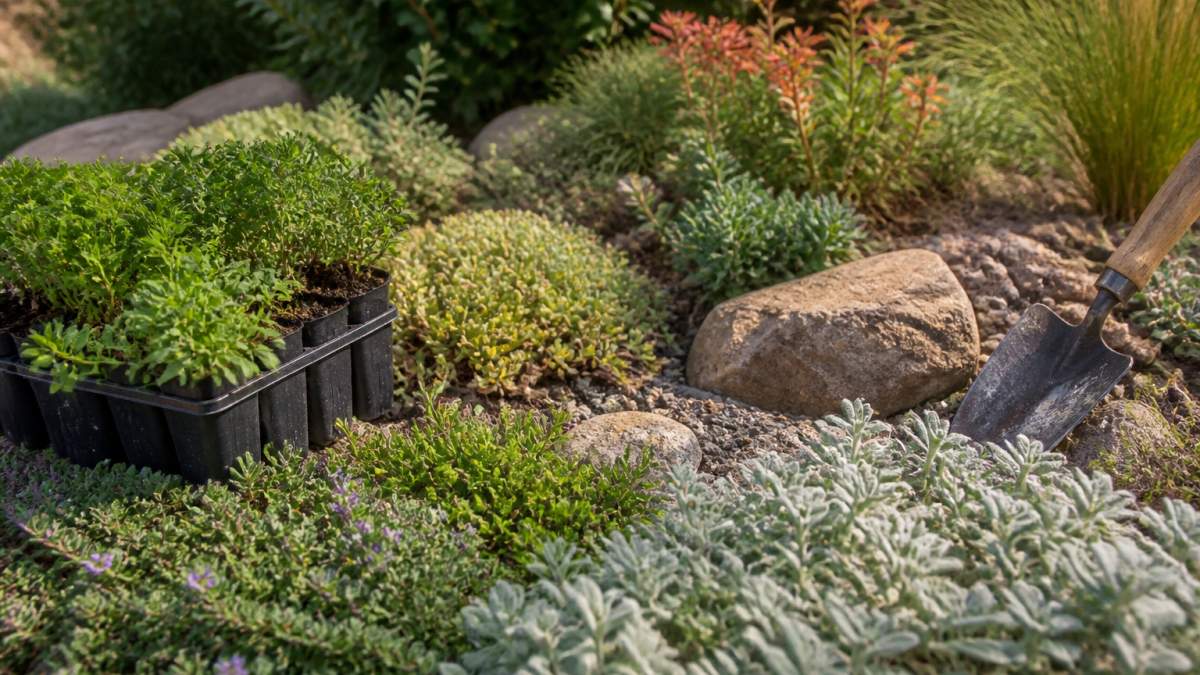
New xeriscape plants need watering through their first establishment period, even though they're drought-tolerant. Soil amendment before planting shortens that window and strengthens roots; skip it and you'll water longer and lose more plants.
Weed Suppression, Mulch, and Ground Cover
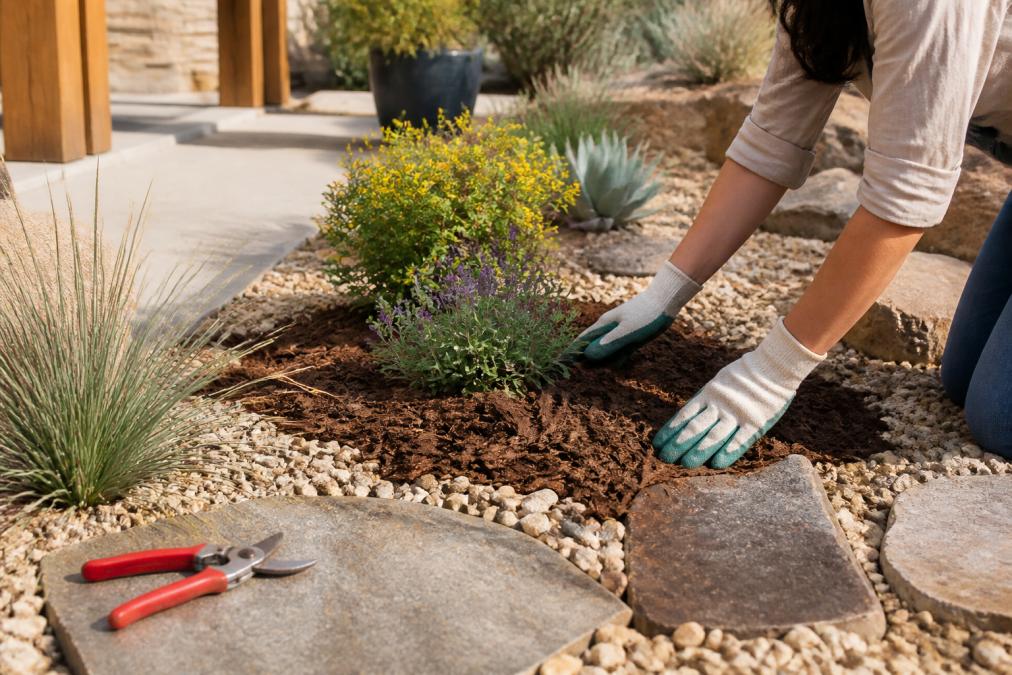
Mulch and dense ground cover are your weed suppression system. A two-to-three-inch mulch layer blocks most weed seeds; bare gravel alone doesn't. The most common xeriscape mistake we see is rock everywhere, no mulch, and a weed problem by month four.
Drought-Tolerant Landscaping ROI: When the Savings Catch Up
Drought-tolerant landscaping ROI is a timeline, not a single number. Savings compound annually through lower water usage and reduced labor, so the gap widens every year you own the property. Savings compound annually through lower water usage and reduced labor, so the gap widens every year you own the property.
Water Usage Reduction and Utility Bills
Water usage reduction is the biggest recurring win. A xeriscape with hydro-zoning, which groups plants by water need, and efficient irrigation delivers water only where it's used. Utility bills drop accordingly, and the reduction holds even in a dry year when turf would need heavy watering.
Property Value and Curb Appeal
Curb appeal matters to buyers, and a mature, well-designed xeriscape reads as low-maintenance and intentional rather than bare. Property value impact varies by market, but a landscape that signals lower water bills and less weekend work is a genuine selling point.
DIY vs Professional Installation: Where the Money Goes
DIY vs professional installation comes down to where the money goes. DIY saves on labor but shifts cost into plant selection mistakes, failed establishment, and rework. Professional installation front-loads design and execution so the landscape performs the first time.
| Factor | DIY | Professional |
|---|---|---|
| Labor cost | Your time | Quoted per project |
| Design risk | High | Low |
| Plant survival | Variable | Higher with soil prep |
| Timeline | Weeks to months | Scheduled and fast |
| Rework cost | Common | Rare |
Transitioning an Existing Lawn: Hidden Removal and Disposal Costs
Transitioning an existing lawn hides costs most estimates miss, and it is the single largest omission in the cost guides ranking for this comparison. Those articles price a xeriscape as if the old turf vanishes. It doesn't. Removal, hauling, and disposal are real line items that land before a single plant goes in, and on a large lot they can rival the planting budget itself.
Why Removal Is a Separate Line Item
Turf removal is not a landscaping task bolted onto installation, it is a demolition and hauling job with its own equipment, labor, and disposal chain, which is why it gets scoped separately rather than buried in a lump sum. Its three costs, labor, hauling, and tipping fees, all scale with square footage and access.
The Four Phases of a Turf-to-Xeriscape Transition
Phase 1, Kill or strip the existing turf. Two routes:
- Mechanical removal, a sod cutter lifts the turf and a shallow layer of roots. Fast, clean, and the most expensive option per square foot because of the labor and the volume of material produced.
- Solarization or smothering, clear plastic or heavy mulch over the turf for a full growing season, using heat and light deprivation to kill it. Cheap in materials, expensive in time, and it delays the entire project by months.
- Herbicide followed by scalp and till, a non-selective application, then mowing low and tilling the dead thatch into the soil. Lowest removal cost, but it leaves root material behind and demands a longer establishment window.
What Drives Removal Cost Up or Down
| Factor | Low End | High End |
|---|---|---|
| Turf type | Fine fescue, thin stand | Bermuda or St. Augustine, thick thatch |
| Lot access | Wide gate, equipment can reach the bed | Narrow side yard, hand-carry only |
| Removal method | Herbicide and till | Sod cutter plus haul-off |
| Disposal distance | Nearby green waste facility | Long haul to a permitted site |
| Soil condition | Loose, workable | Compacted clay, needs amendment |
| Timing | Off-season, flexible schedule | Peak season, crew scarcity |
Bermuda grass deserves its own warning. Its rhizomes and stolons survive shallow stripping, and any fragment left behind will push through new mulch within a season. Where Bermuda is present, plan on either a deeper strip or a full smothering cycle before installation.
DIY Removal vs. Hiring It Out
DIY removal is realistic on small beds and thin turf, especially with a rented sod cutter and a nearby green waste drop-off. It stops being realistic when the yard is large, access is narrow, the turf is Bermuda, or the disposal site is far away, the labor, equipment rental, and multiple hauling trips usually erase the savings, and the timeline stretches from a weekend into a month.
How to Sequence the Budget
Build the numbers in this order, because each phase depends on the one before it:
- Removal and disposal
- Soil amendment and grading
- Irrigation and hydro-zoning
- Plants and mulch
- Hardscape
HOA Rules and Local Ordinances: What to Check Before You Switch
HOA rules and local ordinances can block a xeriscape before it starts, and this is the most common reason homeowners abandon the switch after getting a quote. The top-ranking cost guides skip this step entirely, which is why so many people budget for plants and stone and then discover their covenants cap non-turf coverage, ban gravel in front yards, or require a minimum percentage of living plant material.
Read These Four Documents Before You Design Anything
Most disputes trace back to language the homeowner never read. Pull these in order:
- CC&Rs (Covenants, Conditions, and Restrictions), the governing document. Search it for the words landscaping, ground cover, turf, grass, gravel, rock, and maintenance. Those six terms surface nearly every relevant clause.
- Architectural guidelines or design standards, often a separate document with the actual plant lists, mulch requirements, and coverage ratios. This is where a 50% turf minimum usually hides.
- The architectural review application, the form you must submit, plus its stated review window and any fee schedule.
- State and local water-wise landscaping provisions, many states have adopted some form of water-efficient landscape standard, and a growing number of jurisdictions restrict how far an HOA can go in banning drought-tolerant landscaping. Your city or county planning office can confirm what applies to your address.
The Restrictions That Actually Stop Projects
In practice, the same handful of clauses derail xeriscape plans:
- Turf minimums, a required percentage of live turf, often expressed as a fraction of the front yard.
- Gravel and rock caps, limits on how much inorganic surface material is allowed, sometimes with a maximum percentage of the visible yard.
- Plant coverage minimums, a required density of living plants, which rules out an all-rock design.
- Approved plant lists, some associations maintain one; native and drought-tolerant species are frequently missing from it because the list was written decades ago.
- Height and sightline rules, ornamental grasses and shrubs above a set height near corners or driveways.
- Maintenance standards, dead plant replacement deadlines and mulch depth requirements.
How to Get Approval on the First Submission
A complete package moves through review far faster than a concept sketch. Submit:
- A scaled plan showing turf areas, plant beds, hardscape, and the percentage of each.
- A plant list with botanical names and the water needs of each species.
- A mulch and ground-cover specification, including depth.
- A simple irrigation note describing drip or hydro-zoned coverage.
- A short cover letter explaining the water savings and the maintenance reduction.
If You Get Denied
A denial is usually a request for revision, not a final answer. Ask for the specific clause cited, revise only what that clause requires, and resubmit. If the board cites a rule conflicting with a state or local water-wise landscaping provision, your city or county planning office is the right first call, many jurisdictions have a process for exactly this situation.
Where Local Ordinances Come In
Even without an HOA, city and county rules can shape the design: limits on irrigation days or hours during drought stages, restrictions on artificial turf in front yards, stormwater or runoff requirements affecting hardscape coverage, and permits for certain retaining or grading work.
The Cost of Skipping This Step
The financial case for doing the paperwork first is straightforward: redesign fees, resubmission cycles, and, worst case, removal and reinstallation all land on the homeowner. Approval costs nothing but time. Skipping it can cost the entire project.
Frequently Asked Questions
What are the disadvantages of xeriscaping?
The main drawbacks are upfront cost and slower visual payoff. Removing an existing lawn, hauling away sod, and amending soil often costs more at the start than laying new turf. New plants need regular watering through their first year or two before they are fully established. Some HOAs also restrict gravel-heavy designs, so check your covenants first. Once established, though, xeriscaping maintenance requirements drop sharply compared with mowing, edging, and fertilizing turf every month.
Does xeriscaping actually save money on water bills?
It can, especially in hot, dry climates where irrigation drives summer utility bills. Replacing thirsty turf grass with drought-tolerant native species, mulch, and hydro-zoning cuts the volume of water a landscape needs. Actual savings depend on your plant choices, irrigation efficiency, and how much lawn you keep. A landscape designer can model expected water usage reduction for your specific yard before you commit, so you are not guessing at the payoff.
How does the initial installation cost of xeriscaping compare to traditional sod?
Sod usually costs less on day one because it is a thin layer of turf laid over prepared soil. Xeriscaping typically costs more upfront because it involves removing existing lawn, amending soil, installing hardscaping or permeable surfaces, and buying larger specimen plants. That gap narrows over time as lower water, fertilizer, and landscape labor costs accumulate. Ask for a written breakdown of removal, disposal, soil work, and plant material so you can compare the true totals.
Is xeriscaping considered low maintenance compared to grass?
Generally yes, but low maintenance is not no maintenance. You still prune shrubs, refresh mulch, pull weeds, and check drip lines. The difference is frequency and cost: no weekly mowing, far less fertilizer, and much less watering once plants are established. Turf grass needs consistent mowing, edging, watering, and pest treatment through the growing season. A xeriscape shifts that work into a few seasonal tasks instead of a year-round schedule.
Does a xeriscaped yard impact property resale value?
It can help in markets where water costs and drought restrictions matter to buyers. A well-designed, tidy xeriscape signals lower utility bills and less weekend work, which appeals to relocating homeowners. A poorly planned one, all gravel with few plants, can read as bare and hurt curb appeal. The deciding factor is design quality: layered plantings, native species, and clean hardscaping hold value far better than rock alone.