 listicle
Professional Landscape Installation for Commercial Properties
Table of Contents
- What Professional Landscape Installation for Commercial Properties Includes
- Why Professional Landscaping Pays Off for Commercial Property Value
- Commercial Xeriscaping Benefits for Texas Properties
- Hiring a Commercial Landscape Contractor: What to Look For
- Commercial Landscape Design Cost: What Drives the Price
- Hardscape and Softscape Integration for Commercial Sites
- Seasonal Maintenance Programs That Protect Your Installation
- Frequently Asked Questions
Last Updated: September 18, 2026
What Professional Landscape Installation for Commercial Properties Includes
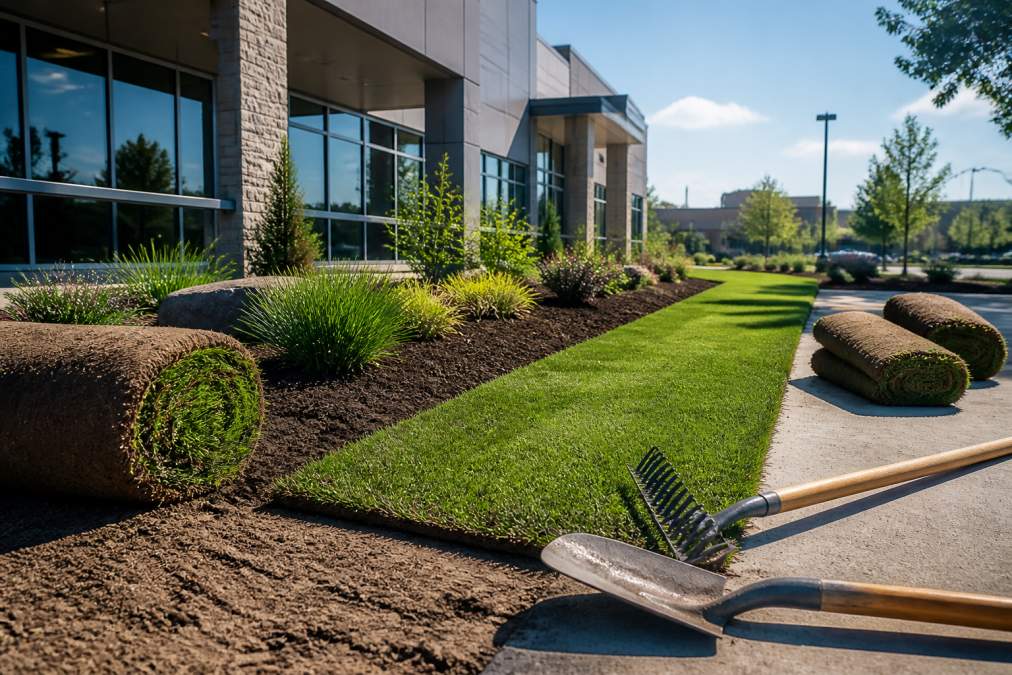
Professional landscape installation for commercial properties is the full process of designing, building, and planting an outdoor environment that serves a business, not just a household. At Lawnscapingsa.com, we've spent 18 years installing these systems, and the scope is broader than most property managers expect.
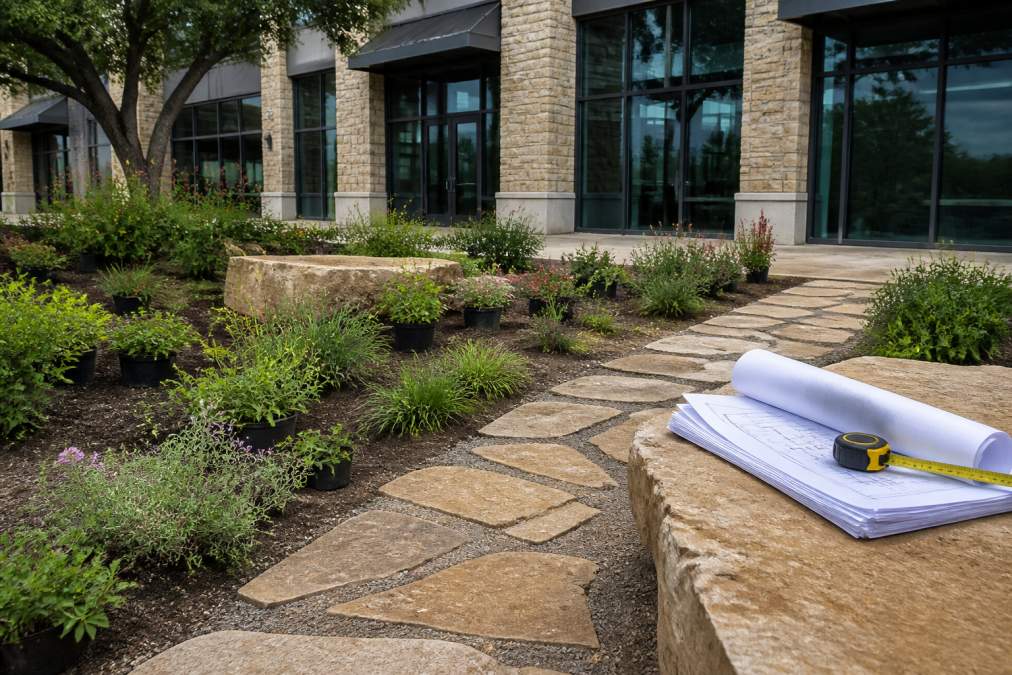
The work usually moves through five stages:
- Site assessment - soil, slope, sun exposure, and existing drainage patterns
- Design and permitting - landscape architecture plans, plant selection, project estimation
- Site development - grading, retaining walls, walkway design, lighting design
- Installation - hardscape, turf management zones, native plantings, irrigation
- Handoff - documentation, seasonal maintenance schedule, plant health care plan
Why Professional Landscaping Pays Off for Commercial Property Value
Landscaping is one of the few capital improvements that touches curb appeal, tenant retention, and property value at the same time. For commercial property owners, that combination is hard to find anywhere else in a budget.
Commercial Xeriscaping Benefits for Texas Properties
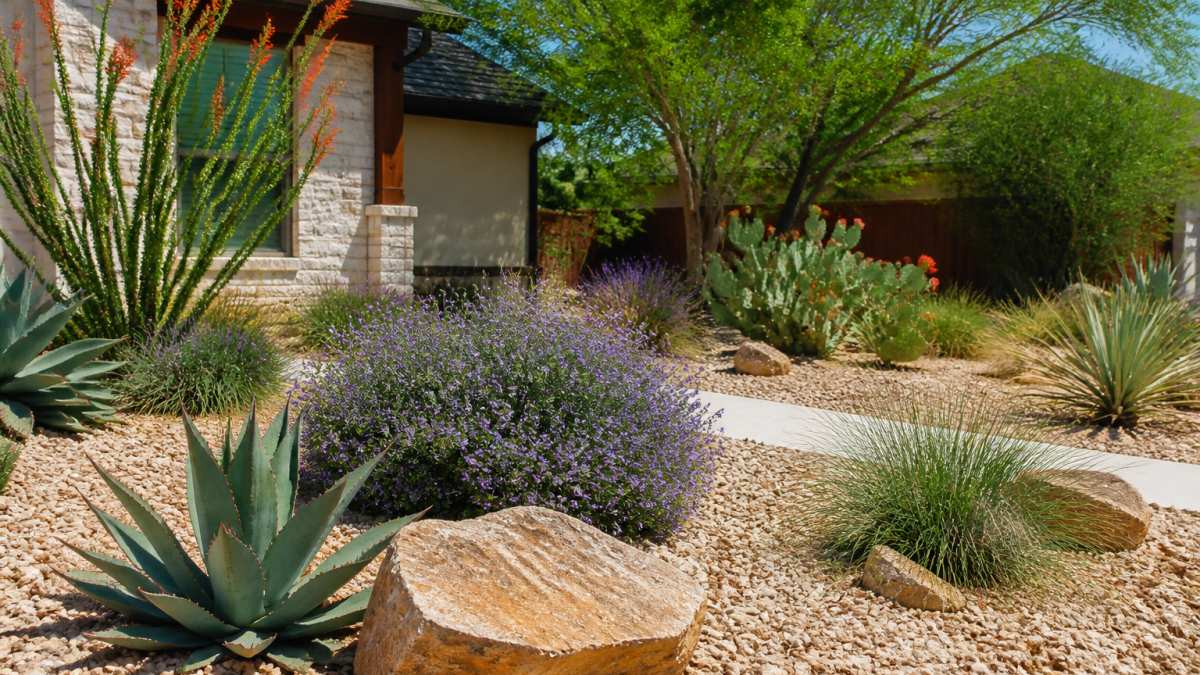
Commercial xeriscaping is a water-wise landscape design approach built around native and well-adapted plants, efficient irrigation, and reduced turf. It is not rocks and gravel scattered across a lot, and it does not have to look like a desert.
For commercial sites, the benefits stack up quickly:
- Lower water use through drip irrigation and drought-tolerant plantings
- Lower maintenance cost because native plants need less mowing, fertilizing, and replacing
- Better stormwater performance when paired with proper site grading and drainage solutions
- Stronger curb appeal using seasonal color and structured native plantings instead of bare ground
Hiring a Commercial Landscape Contractor: What to Look For
Hiring a commercial landscape contractor means evaluating a business partner, not just a bid. The lowest number on a proposal is often the most expensive decision a property manager makes, because a cheap installation that fails in two seasons costs more than a properly designed one that lasts.
Ask these questions before signing anything:
- Do they have documented experience with commercial properties, not just residential?
- Can they show a portfolio of comparable site development projects?
- Do they handle design, installation, and ongoing property maintenance, or only one?
- How do they handle drainage solutions and site grading?
- Do they provide a clear plant health care and seasonal maintenance plan?
- Are they insured and licensed for commercial work in your area?
- Will they walk you through plant selection and explain why each choice fits your site?
- How do they handle ADA-compliant walkways and stormwater requirements in the design?
- Do they understand local water-use ordinances and how those affect plant selection?
- Can they phase the work across fiscal years without breaking the design?
Vetting for Compliance, Not Just Craft
A contractor who can install plants but cannot read a site plan against ADA walkway requirements or local stormwater rules will leave the property owner holding the risk. Ask for examples of how they handled compliance on past commercial projects, specifically walkway slopes, ramp transitions, and drainage that meets local stormwater standards. A contractor who has done this before will answer in specifics, not generalities.
Reading the Bid
Two proposals for the same property can look similar on the bottom line and be very different in scope. A bid that omits drainage, irrigation zones, or first-year maintenance is not cheaper, it is incomplete. Ask for an itemized estimate broken into design, installation, and first-year maintenance so proposals can be compared fairly.
Local Knowledge and Continuity
Local knowledge matters more than most buyers realize. A contractor who understands regional soil, rainfall patterns, and native plantings will design a landscape that survives, not one that needs constant rescue. And a contractor who installs and then maintains the property has an advantage: they know the site's quirks, the plant selections, and the drainage behavior, which means faster response when something needs attention.
Commercial Landscape Design Cost: What Drives the Price
Commercial landscape design cost depends on scope, site conditions, and the level of customization, not a flat rate. Two properties of the same size can land in very different ranges once the details are on the table. What most cost guides skip is the business case behind the number, how the spend converts into property value, tenant retention, and avoided repair costs.
The biggest cost drivers are:
| Cost Driver | What It Covers | Why It Moves the Price |
|---|---|---|
| Site assessment and grading | Soil, slope, drainage evaluation | Complex terrain needs more earthwork |
| Hardscape installation | Retaining walls, walkways, pavers | Material choice and square footage |
| Softscape and plantings | Trees, shrubs, native plantings | Plant size and maturity at install |
| Irrigation management | Drip lines, controllers, zones | Site size and water efficiency goals |
| Lighting design | Path and accent lighting | Fixture count and electrical scope |
| Project management | Scheduling, permits, oversight | Project duration and complexity |
| Compliance work | ADA-compliant walkways, stormwater controls, water-use ordinance compliance | Retrofits and permitting add scope |
The ROI Side of the Ledger
Cost only tells half the story. A well-executed commercial landscape installation can pay back through three channels:
- Rent and occupancy, properties with mature trees, defined walkways, and healthy turf tend to command stronger rents and see fewer vacancies, because tenants and their customers judge a property in the first few seconds.
- Avoided maintenance, proper grading, drainage solutions, and irrigation management prevent erosion, foundation moisture, and turf failure that otherwise show up as emergency repairs.
- Appraisal support, documented landscape renovation and plant health care give appraisers and lenders concrete improvements to point to at refinance or sale.
Phasing the Work Across Fiscal Years
Not every property manager can fund a full installation in one cycle. Phasing is a legitimate strategy, not a compromise, as long as the design is done first and the phases follow the design rather than the budget.
A typical phasing sequence:
- Design and permitting, completed once, up front, so every later phase fits the same plan.
- Drainage and grading, done first, because everything else depends on water moving correctly.
- Hardscape, walkways, retaining walls, and lighting installed as one phase.
- Softscape, plantings and turf installed after hardscape so beds and irrigation zones are final.
- Maintenance handoff, a seasonal program begins the day installation ends.
Compliance Costs Are Part of the Estimate
Regulatory and compliance requirements are a real line item, not an afterthought. ADA-compliant walkways, stormwater controls, and water-use ordinance compliance can add scope to a project, and a contractor who does not price them up front will pass the surprise to the property owner later. Ask specifically how compliance work is handled in the estimate.
ADA Standards for Accessible Design, walkway and ramp requirements
Hardscape and Softscape Integration for Commercial Sites
Hardscape and softscape integration is what makes a commercial landscape look intentional instead of assembled. Hardscape covers the built elements: retaining walls, walkway design, paver plazas, and lighting. Softscape covers the living elements: turf, native plantings, trees, and seasonal color.
- Sightlines - hardscape and plantings must not block signage or parking visibility
- Drainage - grading and hardscape must move water away from the building and walkways
- Durability - commercial hardscape takes heavier foot traffic than residential
- Maintenance access - equipment needs to reach every planting bed
Seasonal Maintenance Programs That Protect Your Installation
Seasonal maintenance is what protects the investment you just made. A commercial landscape installation is not a finished product on day one; it's a living system that needs consistent care to perform.
A solid program covers four seasonal cycles:
- Spring - mulching, pruning, seasonal color installation, irrigation startup
- Summer - turf management, plant health care, irrigation adjustments
- Fall - leaf management, native plantings establishment, drainage checks
- Winter - structural pruning, hardscape inspection, irrigation winterization
Frequently Asked Questions
What is included in professional commercial landscape installation?
A full commercial landscape installation typically covers site assessment, landscape architecture and design, site grading and drainage solutions, irrigation management, hardscape installation (walkways, retaining walls, lighting), softscape planting with native or adapted species, and mulching. It also includes project estimation and construction management. After installation, many firms offer seasonal maintenance programs that handle pruning, turf management, plant health care, and seasonal color so the landscape matures as designed.
How does commercial landscaping differ from residential landscaping?
Commercial projects serve HOAs, retail centers, office parks, and multi-family properties, so they demand larger-scale site development, stricter compliance with local codes, and documented maintenance schedules. Residential work is usually a single yard with one decision-maker; commercial work involves facility management teams, budget cycles, and liability concerns. Commercial landscape installation also emphasizes durable hardscape, irrigation management across broad areas, and designs that hold up to high foot traffic and visibility from the street.
What are the benefits of xeriscaping for commercial properties?
Xeriscaping cuts outdoor water use by replacing thirsty turf with native plantings and efficient irrigation management. For commercial sites, that means lower utility bills, less mowing and pruning labor, and a landscape that stays presentable through drought restrictions. Native plantings also support pollinators and reduce fertilizer runoff. Many property managers find that a well-designed xeriscape improves curb appeal while lowering long-term property maintenance costs, making it a practical choice for large campuses and parking islands.
How does professional landscaping increase commercial property value?
A maintained commercial landscape improves curb appeal, which influences tenant satisfaction, lease rates, and how quickly spaces fill. Appraisers and buyers look at the outdoor environment as part of the overall asset, and a landscape with healthy turf, clean hardscape, and functional drainage signals that the property is well managed. Investing in professional landscape installation and a seasonal maintenance program helps protect that value over time rather than letting plantings decline and repairs pile up.
What should I look for in a commercial landscape installation contract?
Look for a clear scope covering site assessment, design, installation, and warranty terms. Confirm who handles irrigation management, drainage solutions, and plant replacement if something fails to establish. Check that the contractor carries proper licensing and insurance for commercial work. Ask about the project timeline, change-order process, and whether seasonal maintenance is included or billed separately. A detailed project estimation with line items for hardscape, softscape, and site grading makes it easier to compare bids fairly.