 listicle
Natural Stone Patio Installation San Antonio: 7 Best Pros
Table of Contents
- Quick Comparison: Top Natural Stone Patio Installers in San Antonio
- How We Evaluated These Natural Stone Patio Contractors
- 1. Lawnscapingsa.com: Custom Stone Patios With Native Texas Design
- 2. Archadeck of San Antonio: High-End Natural Stone and TPC Overlays
- 3. Easter Concrete Contracting: Flagstone Patio Specialists
- 4. The Paver Pros: Dedicated Paver Patio Installation
- 5. System Pavers: Full-Service Hardscape and Masonry
- 6. Allied Outdoor Solutions: Moisture-Resistant Stone Construction
- What to Check Before You Hire
- Frequently Asked Questions
Last Updated: September 16, 2026
Quick Comparison: Top Natural Stone Patio Installers in San Antonio
Choosing a natural stone patio installation san antonio contractor comes down to matching the right specialist to your project. Some firms build flagstone patios exclusively, others handle full outdoor living builds. The comparison below covers what each does best and where they fall short.
| Contractor | Specialty | Best For | Watch Out For |
|---|---|---|---|
| Lawnscapingsa.com | Native Texas design with hardscape | Sustainable, custom stone patios | Custom consultation required |
| Archadeck of San Antonio | High-end stone and TPC overlays | Premium outdoor living builds | Higher project cost |
| Easter Concrete Contracting | Flagstone patios and walkways | Flagstone-focused projects | Narrow material range |
| The Paver Pros | Paver patio installation | Paver-based systems | Limited natural slab work |
| System Pavers | Full hardscape and masonry | Large-scale renovations | Better for bigger jobs |
| Allied Outdoor Solutions | Moisture-resistant stone builds | Drainage-sensitive sites | Consultation-heavy process |
A natural stone patio installation san antonio homeowners can rely on starts with a clear scope.
How We Evaluated These Natural Stone Patio Contractors
We scored each installer on five factors: material range, site assessment, drainage and sub-base methods, project management, and how well they handle native planting alongside hardscape. A patio is only as good as what sits under it, contractors who skip sub-base preparation or ignore drainage produce patios that shift within a few seasons.
What Natural Stone Actually Costs by Material
The material you choose drives the biggest swing in your budget. The ranges below reflect common patterns for installed patios in this market and are meant for planning, not as quotes:
| Material | Typical Installed Range (per sq ft) | Look and Behavior |
|---|---|---|
| Flagstone (sandstone or limestone) | $15 - $30 | Irregular, natural cleft surface; excellent drainage; needs a thicker base |
| Travertine | $18 - $35 | Uniform, cooler underfoot; more sensitive to acid cleaners |
| Bluestone | $20 - $40 | Dense and durable; darker color; higher shipping cost |
| Concrete pavers | $8 - $20 | Uniform, predictable timelines; not natural stone |
| Stamped concrete | $8 - $18 | Lowest upfront cost; cracks and fades faster in intense sun |
- Site access. If a wheelbarrow cannot reach the backyard, labor climbs fast.
- Excavation depth. Clay soil often requires deeper removal and more base material.
- Drainage work. French drains, channel drains, and grading add cost but prevent the failures that force a rebuild.
- Edging and borders. Mortared stone edging costs more than plastic edge restraint but lasts longer.
- Sealing. Often quoted separately; budget for it as a recurring cost, not a one-time add-on.
How to Compare Bids Without Getting Burned
Ask each contractor for a line-item bid, not a lump sum: excavation, base material, bedding, stone, joint filler, sealer, and cleanup broken out. A dramatically lower bid usually means thinner base, less excavation, or no sealer, the three places where cutting corners shows up two years later. Ask what the bid excludes, and get the warranty in writing.
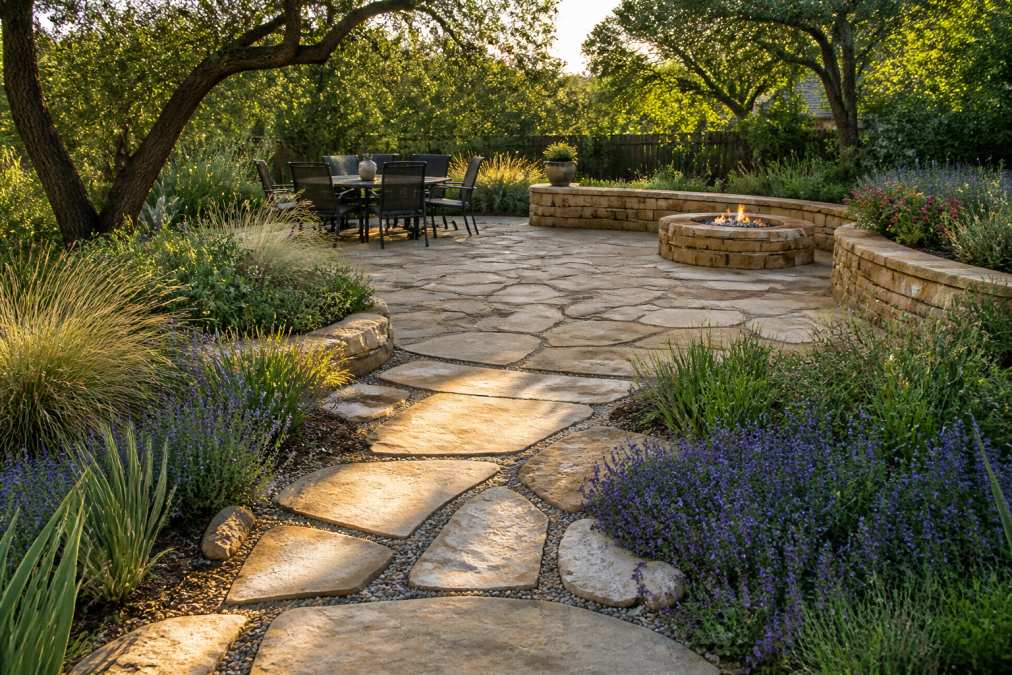
1. Lawnscapingsa.com: Custom Stone Patios With Native Texas Design
2. Archadeck of San Antonio: High-End Natural Stone and TPC Overlays
Archadeck of San Antonio targets the premium end of the market, with natural stone patio construction, TPC overlay installation, and custom paver patio design. If you want a covered patio, fire pit, or outdoor kitchen, this builder manages the whole scope under one contract.
3. Easter Concrete Contracting: Flagstone Patio Specialists
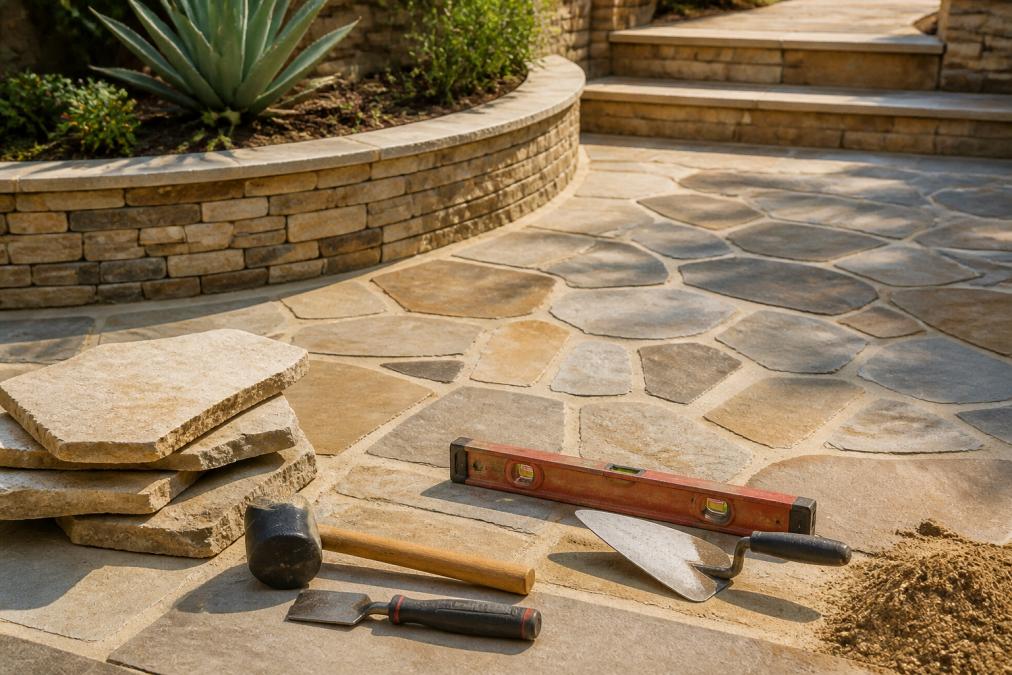
Easter Concrete Contracting focuses tightly on custom flagstone patio design and installation, plus walkway and path construction. Flagstone remains one of the best stones for outdoor patios because its irregular surface handles freeze-thaw movement and drains well over a properly graded base.
4. The Paver Pros: Dedicated Paver Patio Installation
The Paver Pros does one thing thoroughly: professional paver patio installation. The team handles site assessment and preparation, custom layout and design options, and material sourcing, keeping quality control in-house from the base layer up.
5. System Pavers: Full-Service Hardscape and Masonry
System Pavers operates at scale, offering full-service hardscape and masonry installation, landscape architecture and design services, and extensive material selection. For large-scale renovations, that breadth is useful because design, permitting coordination, and installation run through one team.
6. Allied Outdoor Solutions: Moisture-Resistant Stone Construction
Allied Outdoor Solutions builds natural stone and kiln-fired brick patios with a deliberate focus on moisture-resistant installation and structural integrity. Covered patio support design is included, which matters if you plan to add a roof structure over the stone later.
What to Check Before You Hire
Ask every contractor the same questions and compare answers side by side. The list below goes past the standard "are you licensed and insured" script into the details that decide whether a stone patio survives a decade of Texas weather.
- How deep do you excavate, and what goes into the sub-base? (Expect at least 4 to 6 inches of compacted crushed stone over native soil, plus a bedding layer.)
- How does the patio slope water away from the house? (A 1 to 2 percent slope away from the foundation is standard; anything flatter ponds, anything steeper feels unstable underfoot.)
- What joint sand or polymeric filler do you use, and is it rated for freeze-thaw and heavy rain?
- Will the patio be sealed, what sealer do you use, and how often does it need resealing?
- How do you handle clay soil expansion and contraction?
- Do you pull permits, and who handles HOA design approval?
- Can you show three completed patios in the area from the last two years?
Sealing and Maintenance in a Hot, Wet Climate
Sealing is the most misunderstood part of owning a natural stone patio here. A penetrating sealer soaks into the stone and blocks water and oil stains, while a topical sealer sits on the surface and adds a sheen. For flagstone, sandstone, and limestone, most practitioners recommend penetrating sealer because it does not trap moisture or peel.
A realistic maintenance rhythm looks like this:
- Reseal every 2 to 3 years. Intense summer UV and heavy spring rain break down sealer faster than in milder climates. If water stops beading on the surface, it is time.
- Clean with a pH-neutral stone cleaner. Avoid muriatic acid and bleach on natural stone; both etch the surface and strip sealer.
- Sweep or blow off debris weekly. Leaf tannins and dirt settle into joints and feed weeds.
- Re-sand joints as needed. Polymeric sand can fail at the edges first; top it off before weeds take hold.
- Check for efflorescence. A white, chalky haze on the surface is mineral salt rising from moisture below. It usually means water is getting under the stone, which is a drainage problem, not a cleaning problem.
Permits and HOA Approval
Structural work, retaining walls above a certain height, covered structures, and sometimes patios attached to a foundation, typically requires a permit. Many HOAs also require design review before hardscape goes in, and some restrict material color, patio size, or street visibility. Confirm both with your permitting office and HOA before signing a contract; a contractor who works the area regularly will know which submittals your project needs.
Frequently Asked Questions
How much does it cost to build a 20x20 natural stone patio?
The cost of a 20x20 natural stone patio depends on the stone type, site preparation needs, and local labor rates. Flagstone, travertine, and granite each carry different material costs. Additional factors like drainage solutions, sub-base preparation, and sealing add to the total. Because pricing varies by project, contact local installers for a detailed quote based on your specific yard and material choices.
Is it cheaper to pour concrete or install natural stone pavers?
Concrete typically has a lower upfront cost than natural stone pavers. However, concrete can crack in Texas heat and may need replacement sooner. Natural stone patios last decades with proper sealing and maintenance, offering better long-term value. Flagstone and travertine are popular choices for outdoor patios in San Antonio because they handle temperature swings well and resist fading.
How do you prepare the ground for a natural stone patio in San Antonio?
Proper sub-base preparation is critical in San Antonio's clay-heavy soil. Contractors excavate 6 to 8 inches, compact a gravel base, and add a leveling layer of sand or decomposed granite. Because how to fix backyard drainage issues often starts before patio installation, many projects include French drains or grading to direct water away from the foundation. Skipping these steps leads to settling, cracks, and pooling.
Which types of natural stone hold up best in the local climate?
Flagstone, travertine, and granite perform well in San Antonio's heat and occasional freezes. Flagstone offers a rustic look and handles temperature swings. Travertine stays cool underfoot, making it popular for pool decks. Granite pebbles and slabs resist staining and wear. Sealing your stone patio every two to three years protects it from moisture and UV damage, extending its lifespan significantly.
How long does a professional stone patio installation typically take?
Most natural stone patio installations take one to three weeks, depending on square footage, site access, and weather. Projects with complex drainage solutions, retaining walls, or custom masonry features take longer. Site assessment and project estimation happen before work begins, so your contractor should give you a timeline upfront. Permitting and HOA approvals in San Antonio can add time if required.