 listicle
Grounded Landscaping Alternatives for Residential Yards
Table of Contents
- Why Homeowners Are Moving Away From Traditional Lawns
- Low-Maintenance Ground Cover Options That Replace Turf
- Xeriscaping Design Ideas That Look Intentional, Not Barren
- Rock vs Mulch for Residential Yards: Which Ground Cover Wins
- Hardscaping and Permeable Surfaces for Drainage and Slope Control
- HOA Rules, Pet Safety, and What Most Guides Leave Out
- A Step-by-Step Plan for Converting Your Yard
- Frequently Asked Questions
Last Updated: September 23, 2026
Why Homeowners Are Moving Away From Traditional Lawns
Traditional turfgrass demands water, fertilizer, mowing, and patience, and in many parts of the country it delivers less and less in return. A conventional lawn is the thirstiest feature of most residential landscapes, and homeowners watching water bills climb are rethinking the whole approach. Grounded landscaping alternatives for residential yards replace that maintenance treadmill with plantings and surfaces that work with the local climate instead of against it.
Low-Maintenance Ground Cover Options That Replace Turf
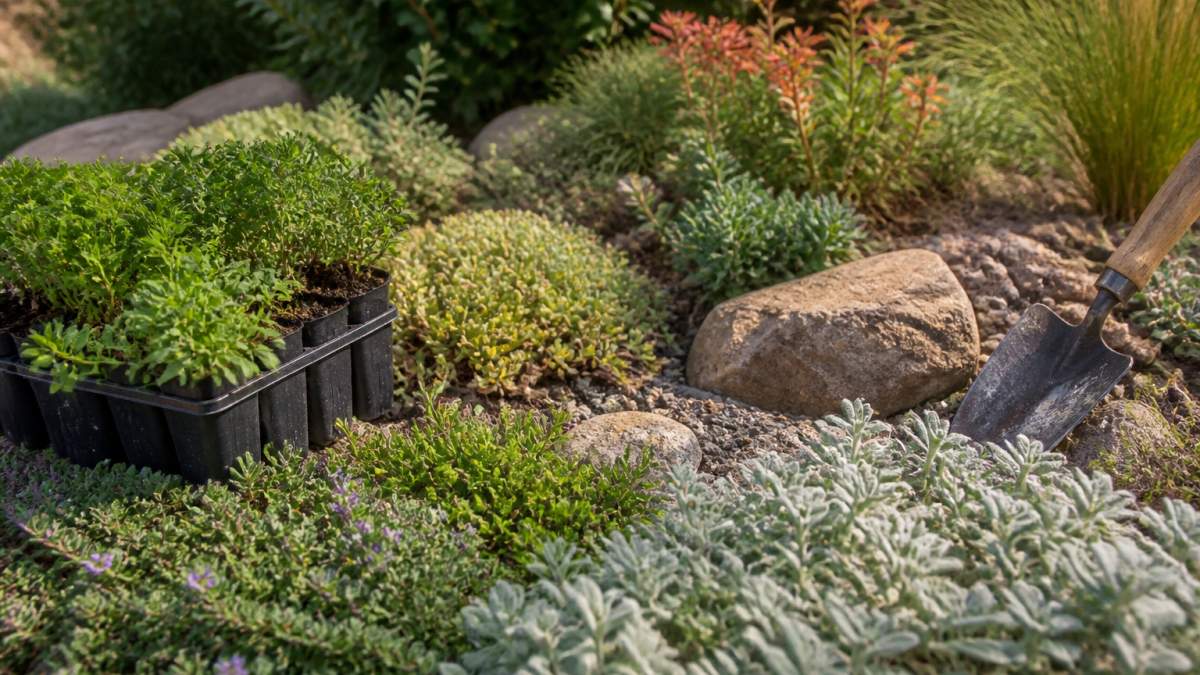
Low-maintenance ground cover is any low-growing plant that spreads to fill bare soil, suppresses weeds, and needs far less mowing and irrigation than turf. The best options are drought-tolerant, spread steadily, and tolerate foot traffic reasonably well.
| Ground Cover | Water Needs | Mowing | Best For |
|---|---|---|---|
| Microclover | Low | Rare | Full-sun lawn replacement |
| Creeping thyme | Very low | None | Paths, paver gaps |
| Sedum | Very low | None | Dry, sunny slopes |
| Fine fescue | Low | Occasional | Shade and low-traffic areas |
Microclover and Creeping Thyme: Living Carpets With Less Mowing
Microclover is a low-growing, nitrogen-fixing legume that blends into turf or stands alone as a living carpet. It reduces or eliminates nitrogen fertilizer and stays green through stretches that would brown out conventional grass. The limitation: it doesn't stand up to heavy foot traffic, so keep it out of your main path.
Sedum and Fine Fescue: Succulents and Slow-Growing Grasses for Tough Spots
Sedum, also called stonecrop, is a succulent ground cover built for dry, sunny spots where little else survives. It stores water in its leaves, needs minimal nutrients, and comes in a range of colors and textures. The catch is overwatering: plant it on slopes and well-drained beds, not low spots that collect water.
Xeriscaping Design Ideas That Look Intentional, Not Barren
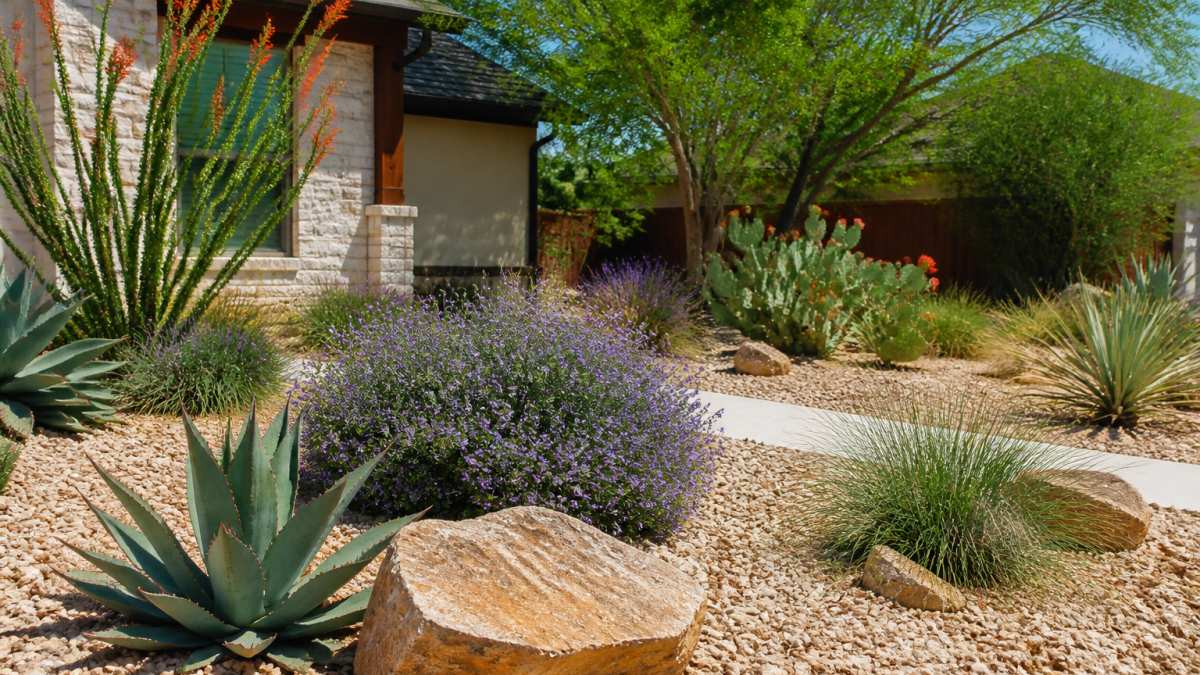
Xeriscaping reduces or eliminates supplemental irrigation by using drought-tolerant plants, efficient watering, and thoughtful placement. Done well, it reads as a designed garden, not a gravel lot. The fear that xeriscaping means rocks everywhere is the most common objection we hear, and it's based on bad examples.
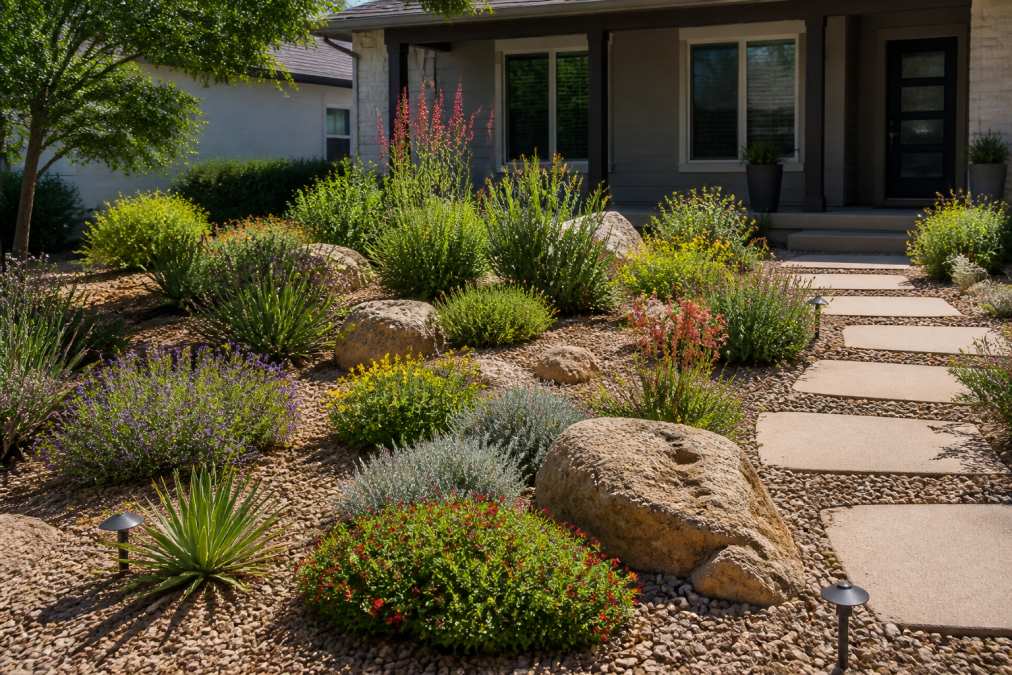
Layering Native Plants, Boulders, and Gravel for Depth
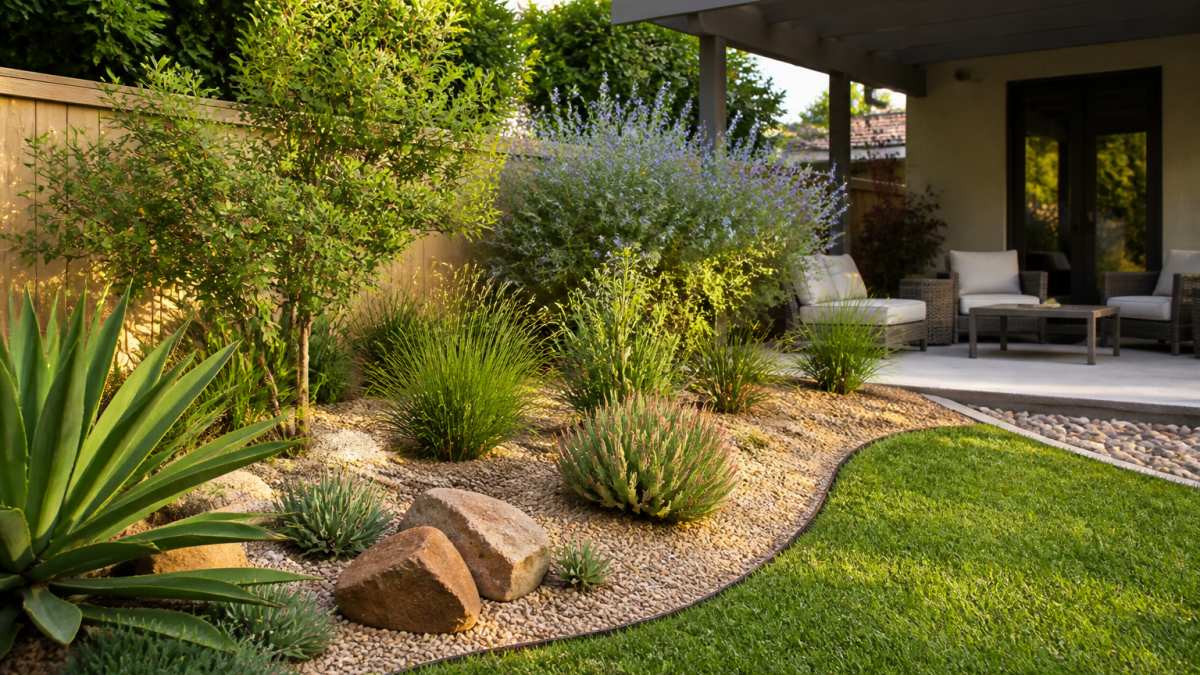
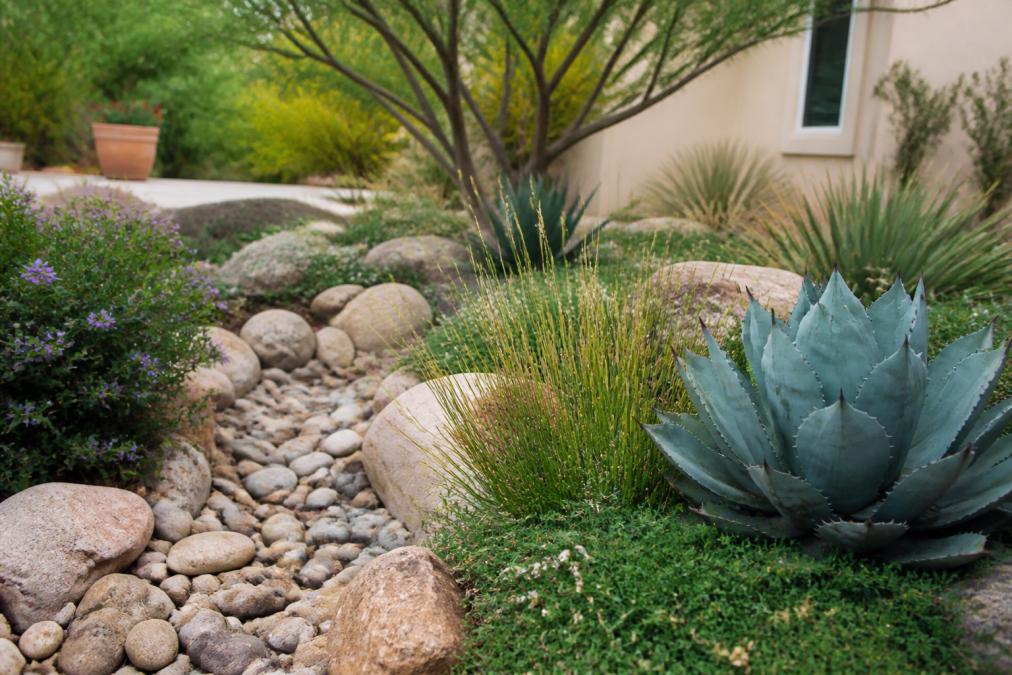
Depth comes from layering: larger boulders and specimen shrubs as the back or anchor layer, mid-height perennials in the middle, and low ground covers or gravel at the front edge. This mimics how natural landscapes stack and prevents the flat, sparse look that gives xeriscaping a bad name.
Pollinator Habitats and Seasonal Color Without Heavy Watering
A xeriscape can bloom from spring through fall if you plant for staggered bloom times. Drought-tolerant perennials and native flowering shrubs feed pollinators while delivering color with minimal irrigation. Group plants by water need, and use a drip system on a timer to deliver water at the root zone instead of losing it to evaporation.
Rock vs Mulch for Residential Yards: Which Ground Cover Wins
The choice between rock and mulch comes down to maintenance versus soil health. Decorative rock needs almost no upkeep and never decomposes, ideal for dry beds and drainage zones. Bark mulch breaks down over time, feeding the soil, but needs periodic topping up.
| Factor | Decorative Rock | Bark Mulch |
|---|---|---|
| Maintenance | Very low | Periodic topping up |
| Soil benefit | None | Adds organic matter |
| Weed suppression | Good | Good |
| Best for | Succulents, dry beds, drainage | Perennials, shrubs, trees |
| Heat retention | High (can stress plants) | Moderate |
Hardscaping and Permeable Surfaces for Drainage and Slope Control
Hardscaping refers to the non-plant elements of a landscape: patios, walkways, retaining walls, and edging. Permeable surfaces let water drain through rather than run off, solving two problems at once, they reduce stormwater runoff and put a functional surface where grass struggles.
HOA Rules, Pet Safety, and What Most Guides Leave Out
Before you remove a single square foot of turf, check your HOA covenants and local rules. This is the step most guides skip, and it kills projects after the plants are already in the ground. Many HOAs enforce turf-coverage minimums, restrict front-yard materials, or prohibit gravel and artificial surfaces outright.
How to Navigate HOA Approval Without a Fight
Start by pulling your covenants, conditions, and restrictions (CC&Rs) and any architectural guidelines. Look for language on turf percentage, approved ground covers, hardscape materials, and front-yard visibility. If it's ambiguous, request a written interpretation from the architectural review committee before you design.
Pet and Child Safety: What to Check Before You Plant
Pet and child safety matter too, and the risks are specific. Some common ground covers and ornamental plants are toxic if chewed. Before planting, confirm the toxicity of every species on your list. The ASPCA maintains a searchable database of toxic and non-toxic plants for dogs, cats, and horses, and it's the fastest way to screen a plant list.
A Step-by-Step Plan for Converting Your Yard
Converting a lawn is a sequence, not a weekend project, and skipping steps is the fastest route to a failed planting. Here's the full process.
Step 1: Audit Your Yard
Map sunlight, slope, drainage patterns, and soil type. Watch your yard morning, midday, and late afternoon to see how shade moves, and note where water pools after rain and where it sheets off. A soil test from your local extension office gives you pH, texture, and nutrient levels, the single most useful data point for choosing plants.
Step 2: Check HOA and Local Rules
Confirm what's allowed before designing. Pull your CC&Rs, check local ordinances on turf removal and water use, and get written approval if your HOA requires it. Doing this first prevents the worst-case scenario: a finished installation you have to tear out.
Step 3: Set Your Goals
Decide how much space goes to ground cover, hardscape, and planted beds. A common split is 40% planted beds, 30% ground cover, 20% hardscape, and 10% mulch or gravel. Adjust based on how you use the yard, a play area needs different treatment than a front slope you never walk on.
Step 4: Remove the Existing Turf
You have three main options, each with trade-offs.
- Solarization. Cover the turf with clear plastic for four to six weeks in the hottest part of summer. The heat kills grass and many weed seeds without chemicals. It's slow but effective and cheap.
- Smothering. Layer cardboard or newspaper, then top with mulch or compost. It takes two to three months and works well for small areas and beds.
- Mechanical removal. Rent a sod cutter or use a spade to strip the top layer. It's fast but labor-intensive, and you lose the organic matter in the removed turf unless you compost it.
Herbicides are an option, but they're rarely necessary for a residential conversion and they complicate the timeline. If you use one, follow the label exactly and wait the full interval before planting.
Step 5: Amend the Soil
Work organic matter into planting areas to give roots a head start. Two to three inches of compost tilled into the top six to eight inches of soil is a common target. For heavy clay, this is the difference between plants that establish and plants that sit and sulk.
Step 6: Install Hardscape and Drainage First
Grade, permeable surfaces, and retaining structures go in before plants. If water still flows toward the house, pretty pavers won't fix it, get the drainage plan right first.
Step 7: Plant in Layers
Boulders and shrubs back, perennials mid, ground cover front. Plant in fall where climate allows, cooler air and warm soil give roots the best start and you'll water less. Space ground covers by mature spread, not nursery-pot size; crowding looks full immediately but causes disease and die-off within a year.
Step 8: Irrigate Efficiently
Drip lines and timers, adjusted as plants establish. New plantings need consistent water the first season; after that, taper back and water deeply but infrequently to encourage deep roots. A drip system on a timer delivers water at the root zone instead of losing it to evaporation.
Step 9: Maintain for the First Season
If the planning, grading, and plant selection feel like more than you want to take on alone, landscape design can turn your goals into a workable layout before the first shovel hits the ground. Whether you DIY the installation or hand it off, a solid design is what keeps a grounded landscape looking intentional for years instead of turning into a patchwork of experiments.
Frequently Asked Questions
What are some good alternatives to ground cover for my lawn?
You can replace turf with living ground covers like microclover, creeping thyme, or sedum, or with hardscape options such as permeable pavers and gravel. Each choice changes how much water, mowing, and upkeep the area needs. Living covers suit yards where you want greenery and pollinator habitat; hardscape works for paths, patios, and high-traffic zones. Many homeowners combine both, using plants for softscape and pavers for structure.
What are the best low-maintenance ground cover options for residential yards?
Microclover, creeping thyme, sedum, and fine fescue are among the best low-maintenance ground cover options. Microclover fixes nitrogen and needs less mowing; creeping thyme is drought-tolerant and fragrant; sedum thrives in dry, sunny spots; fine fescue tolerates shade and poor soil. All four reduce watering and fertilizing compared to traditional turfgrass. The right pick depends on sun exposure, foot traffic, and whether you want flowers or a uniform green carpet.
How do I choose between rock and bark for residential ground cover?
Rock and bark serve different purposes. Rock, including gravel and decorative stone, lasts for years, resists wind and decay, and works well for drainage and xeriscaping. Bark mulch breaks down, adds organic matter to soil, and suits planting beds with perennials and shrubs. For high-wind areas or around succulents, rock is often better. For vegetable gardens or beds you amend yearly, bark is the practical choice. Many designs use both, with rock for paths and mulch for planting zones.
Are there drought-tolerant ground covers suitable for residential yards?
Yes. Sedum, creeping thyme, and fine fescue are drought-tolerant once established. They need regular water during the first season to develop roots, then far less afterward. Pairing them with permeable pavers or gravel reduces runoff and supports water conservation. In regions with hot, dry summers, these plants can cut irrigation needs significantly compared to traditional lawns, especially when grouped by water need so you are not overwatering the whole yard.
What factors should I consider when replacing a lawn with ground cover?
Check sun exposure, soil type, drainage, foot traffic, and any HOA rules before you plant. Slopes may need erosion control measures like terraces or deep-rooted native species. Consider how the area will be used: play zones need tougher covers than decorative borders. Also plan for the transition period, since new ground covers take a season or two to fill in. A professional design consultation can map these factors and prevent costly replanting.
Rethinking a yard raises real questions about drainage, soil, and plant selection, and getting them wrong is expensive to undo. Lawnscapingsa.com offers landscape design built around your specific property, with 18 years of experience and a focus on native and well-adapted plants. As a woman-owned business, we provide individualized design plans and see projects through from consultation to installation. Contact us to plan a yard that looks intentional and holds up season after season.